

- Cooking
- Preservation
- Methods
- Pickles
Quick Pickles: Vinegar Strength, Cut Size and Refrigeration
Read the vinegar label, preserve a recipe's brine proportions and measure prepared vegetables for small refrigerator batches.
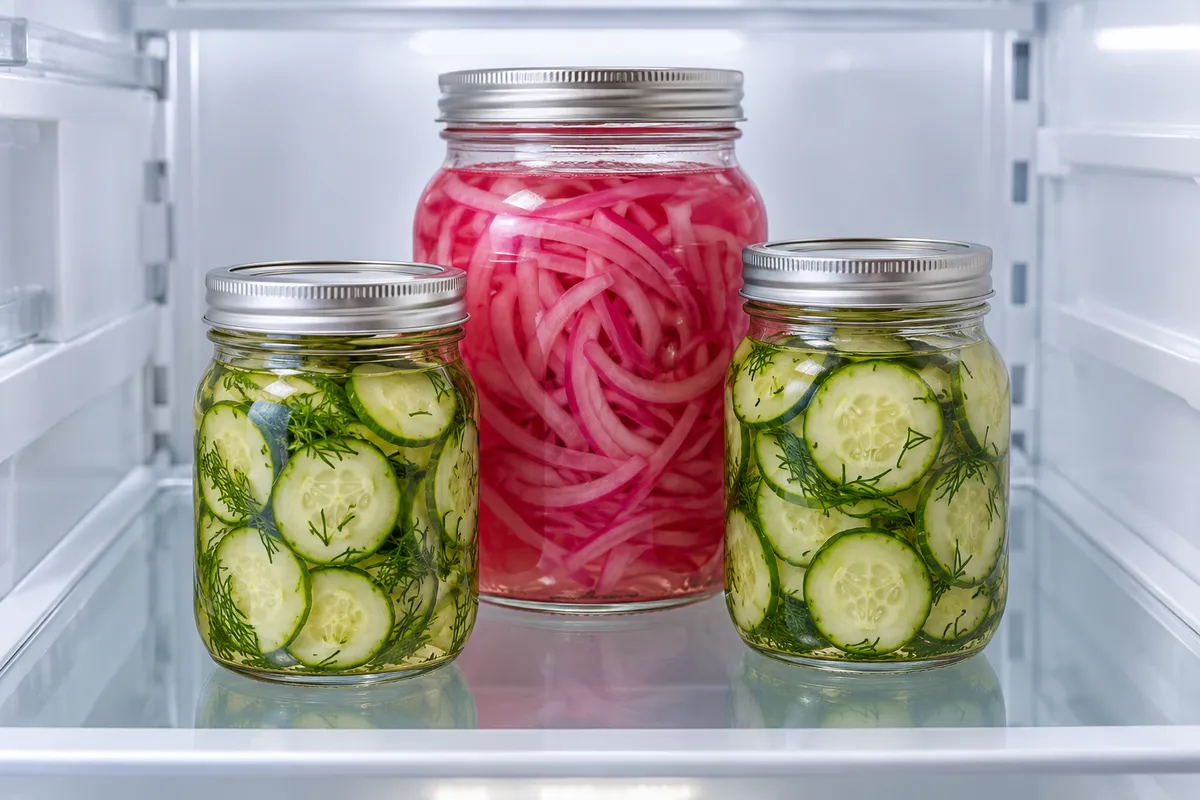
A jar of sliced onion can be ready before the next week’s sandwiches are planned. Cucumber rounds take only a little cutting and a saucepan of brine. The work is short, but the recipe still has three separate instructions to follow: what goes into the liquid, how the vegetables are prepared and where the jar waits.
Our new onion and cucumber preparations are refrigerator pickles. They are made for near-term serving, with covered cold storage from the start. Their names describe the food; the full method tells you how to handle it.
Start with the vinegar label
“White vinegar” identifies a type, but its acidity label supplies another necessary detail. Both recipes call for commercially produced vinegar labeled 5% acidity. Read the bottle before measuring.
Oregon State Extension’s pickling ingredient guidance specifies five-percent vinegar, warns against homemade vinegar of variable strength and says not to reduce vinegar or increase water in a recipe. Those are ingredient safeguards, not permission to borrow the publication’s canning processes for a different formula.
Our recipes use one US cup vinegar and one US cup water. That relationship belongs to these particular source-based preparations. It isn’t a universal formula for every vegetable, jar size or preserving method.
If you want another kind of pickle, choose its complete current recipe. A familiar brine ratio by itself doesn’t describe the vegetable, cut, packing, heating and storage needed for that preparation.
Onion quantity and cucumber quantity are written differently
Quick-Pickled Red Onions follows an unusual but explicit source choice. The UC Master Food Preserver sheet, page two, leaves the onion amount to the selected container and keeps the brine fixed.
Our version chooses red onions sliced thinly in a heatproof one-quart jar. It doesn’t turn “one jar” into an invented prepared weight. Pack the slices while leaving room for the liquid and the specified headspace.
Refrigerator Cucumber Pickles uses a measured quantity of prepared vegetable: three and a half US cups of thin rounds. Slice first, then measure. That amount comes from the lower end of Oregon State’s vegetable range.
Neither instruction is a whole-vegetable shopping count. Onion and cucumber sizes vary, and trimming removes material. Buy enough for preparation, then follow the source’s actual measure or packing instruction.
A cut is part of the ingredient
Thin onion slices are useful for lifting onto a sandwich. Cucumber rounds make a layer that sits flat in bread or beside a meal. Those are serving decisions as well as ways of preparing the jar.
Keep each batch’s cut reasonably consistent. Three-millimeter cucumber rounds and large spears occupy space differently, so replacing one with the other while retaining a cup measure would change the packed vegetable amount.
The recipes identify their selected cuts rather than giving a countdown for every possible shape. Changing a cut doesn’t authorize shortening the refrigerated development period or claiming that the center has reached a particular acidity.
Choose fresh, sound produce and wash it before cutting. Our cucumber version uses pickling cucumbers without a wax coating and trims the ends. Preparation details are more useful than a promise that any cucumber will produce the same crispness.
Keep the brine formula intact
Measure the salt as carefully as the vinegar. The recipes specify canning or pickling salt. A spoonful of coarse flakes and a spoonful of fine crystals needn’t have the same mass, so the salt name belongs with the unit.
The onion brine has two teaspoons of sugar. The cucumber version uses one tablespoon, selecting a source option. These are separate formulas; don’t combine their ingredient lines just because the jars will sit beside each other.
If the brine doesn’t cover the vegetables at the required headspace, repack sensibly or make more of the same complete formula. Plain water added at the end would change what you measured into the saucepan.
Have the heatproof jars and a clear work area ready before heating. Pour carefully, keep the vegetables covered and preserve the half-inch space at the top. A last slice doesn’t have to be forced into an overfilled jar.
The waiting place belongs in the recipe
The onion formula develops for one to two days in the refrigerator. The cucumber version follows a one-to-three-day refrigerated period. Write the preparation date on each jar and keep it cold between servings.
A lid keeps the contents covered. It doesn’t turn these preparations into canned food. University of Minnesota Extension distinguishes refrigerator pickles from processed shelf-stable pickles and warns against using vegetable brine for another batch.
Follow the specific preparation’s storage direction. Both new recipes call for using the small batch within two weeks. Keep the date visible on the jar.
Use clean utensils, lift out the portion you need and put the jar back. Adding fresh vegetables to an old batch changes the preparation and its age; a new batch should start with fresh measured brine.

Read the diagram as text
Two refrigerator recipes. Keep each formula.. Use commercial distilled white vinegar labeled 5% acidity. All cups and spoons below are US measures. Red onions. 2–3 mm onion slices; pack to fit one 1-quart jar Brine: 1 cup vinegar + 1 cup water 1 tbsp canning or pickling salt + 2 tsp sugar Leave 1/2 inch headspace; brine covers onions. Refrigerate 1–2 days before serving. Cucumber rounds. 3 1/2 cups of 3 mm rounds; two 1-pint jars Brine: 1 cup vinegar + 1 cup water 1 tbsp canning or pickling salt + 1 tbsp sugar Divide 2 tbsp chopped fresh dill between jars. Leave 1/2 inch headspace; cover with brine. Refrigerate 1–3 days before serving. Follow each complete recipe’s heating and packing method. Close, date and refrigerate promptly; keep cold and use within 2 weeks of preparation. Never top up with plain water, can these recipes or reuse vegetable brine. This is not a universal pickling ratio.
An old pickle can suggest a dish without supplying today’s process
Our Pickled Bananas (1914) show how far the word pickle reaches. Thick banana pieces are gently poached in a sweet spiced vinegar mixture. They aren’t raw onion slices or cucumber rounds.
The accepted recipe distinguishes its historical idea from modern refrigerator handling. The source year belongs to its reference, rather than proving that an old keeping instruction is suitable for a present-day kitchen.
That is the useful connection between the historical recipe and this guide: read the whole preparation. Fruit, vegetables, cut size, heating and sugar can differ substantially under the same broad name.
Choose the jar you want to eat from, then follow its complete recipe. A readable vinegar label, a defined vegetable form and a dated place in the refrigerator make the next serving straightforward.