
- Vintage
- Southern cooking
- 1881
- Abby Fisher
Abby Fisher's Southern Table: Four Recipes Adapted from Her 1881 Cookbook
Explore Abby Fisher's 1881 cookbook through chicken and ham Jumberlie, fresh corn fritters, stuffed eggplant, and orange-scented sweet potato pie.
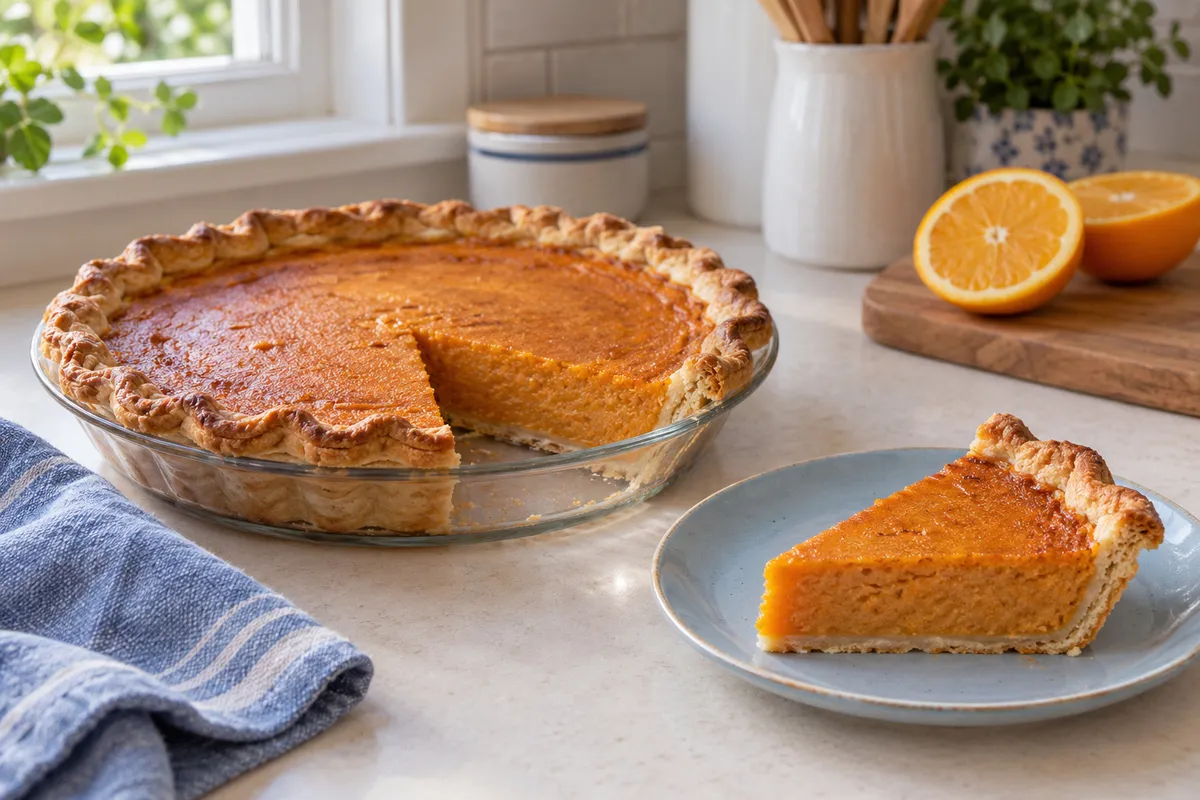
The orange is the detail that catches your eye. In Abby Fisher’s sweet potato pie, its juice and grated peel join the mashed potatoes, eggs, milk, and butter. The crust sits underneath, and the instruction at the end is wonderfully brief: bake quickly.
Turn a few pages and there are corn fritters made by cutting part of each kernel from the cob, then scraping out the rest. Elsewhere, chicken, ham, tomatoes, and rice share a pot with an instruction that makes a modern cook pause: add no water. These are the small surprises that make an old cookbook worth opening at the kitchen counter.
Fisher’s What Mrs. Fisher Knows About Old Southern Cooking was published in San Francisco in 1881. We have chosen four dishes from it, each with a modern recipe you can cook separately or combine into a generous meal. The pleasure is in getting to know the book through its food: how Fisher handles fresh corn, builds a savory filling, and gives sweet potatoes their orange accent.
Who Abby Fisher was
In her preface, Fisher describes more than thirty-five years of experience. Soups, gumbos, roasted meats, biscuits, pastries, preserves, and ice creams all appear in her account of what she knows. She signs herself as formerly of Mobile, Alabama, while naming friends and patrons in San Francisco and Oakland who had encouraged the book.
She also explains the difficulty of bringing that knowledge into print. Fisher could not read or write, and her husband had also been denied the advantages of an education. The preface describes a book made through dictation. Its authority rests on her experience and the recipes she chose to pass on.
The Library of Congress’s account of Fisher’s life places the cookbook within her work as a formerly enslaved cook who later built food businesses in San Francisco. The book’s own title page advertises awards for her pickles, sauces, jellies, and preserves. That range matters: she was recording an extensive body of cooking knowledge, reaching well beyond a few celebrated dishes.
A rice dinner, fried corn, stuffed eggplant, and a pie give four different views of that knowledge. The details that connect them are practical: which part of a kernel to cut, when to drain vegetable flesh, and what to add to sweet potatoes.
Fresh corn and the value of the scrape
The corn fritters begin with a precise instruction. Fisher cuts only partway through the kernels and then scrapes the remaining corn from the cob. It is easy to overlook that second action when you are eager to get the pan hot.
Scraping collects the soft corn pulp and juice along with the cut kernels. Both go into the batter, giving the finished fritter its mixture of small pieces and a softer interior. Use tender fresh corn, and collect what comes off the cob before weighing the batch. The number of ears is a shopping guide; ears differ in size and yield.
Eggs, powdered crackers, flour, and milk join the corn in her batter. Our smaller measured batch uses neutral frying oil instead of her lard or butter. The fine cracker crumbs belong alongside the flour, with fresh corn pulp still at the center of the fritter.
Fresh corn fritters
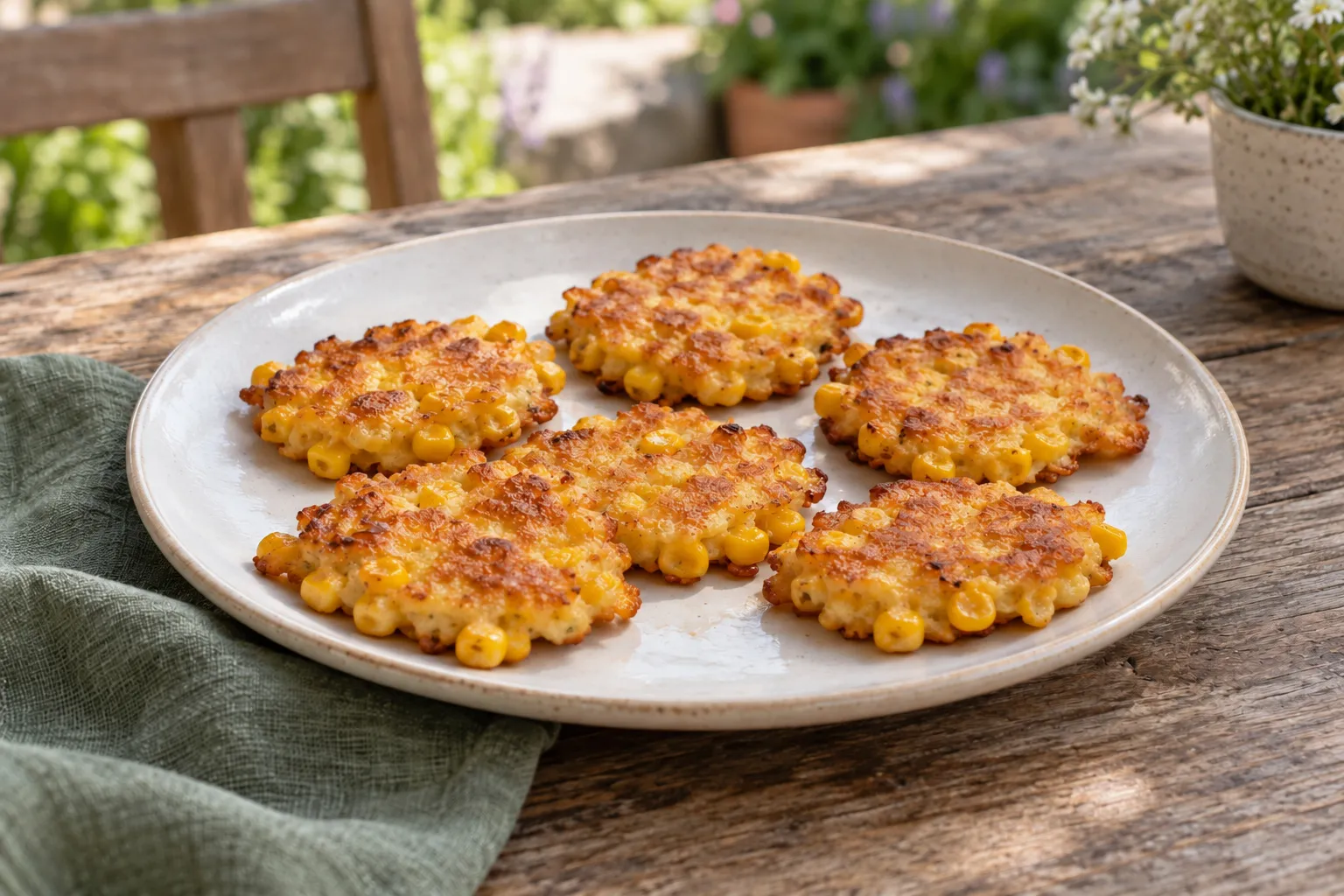
Make these when fresh sweet corn is the ingredient you most want to use. Our version produces about twenty-four small fritters, enough for six side portions. Small spoonfuls are easy to pass around and give the centers time to cook before the outsides darken.
Warm fritters can accompany chicken and rice or make a smaller meal with a crisp salad. Their softer corn centers contrast with the fried faces. Cook Abby Fisher’s fresh corn fritters.
The chicken and rice pot
Fisher calls her chicken-and-rice dish Jumberlie and identifies it as Creole. Her instructions bring together a jointed chicken, washed rice, peeled tomatoes, and sweet ham. Pepper and salt supply the seasoning, and no added water is called for.
That last instruction makes the tomatoes particularly important. Their juice is part of the cooking liquid, and their size and ripeness affect how much moisture enters the pot. A firm tomato and a very juicy one do different jobs once chopped. The chicken cut and the pan also affect what the rice needs as it cooks.
Our adaptation specifies boneless thighs and adds chicken stock. It also browns the chicken before assembling the rice pot. Chicken, ham, rice, and tomatoes still cook as one dish. The full recipe includes checks for both tender rice and cooked chicken, plus a small water allowance if the rice needs it.
Chicken and ham Jumberlie
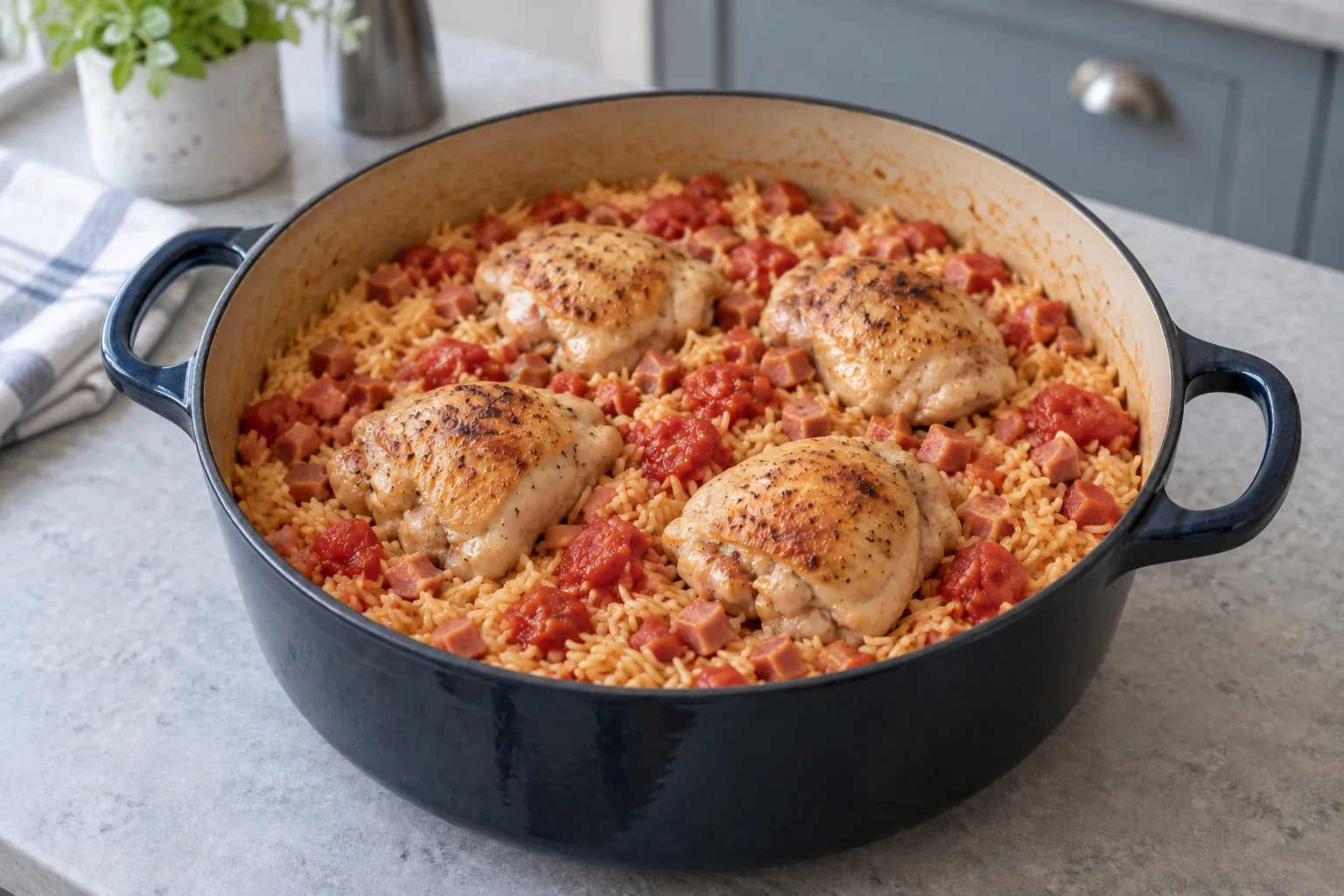
This is the main dish to choose when you want dinner from one substantial pot. Black pepper seasons the chicken, the ham lends its own salt, and the tomatoes carry their juice into the rice. Once everything is assembled, a tight-fitting lid and gentle heat do most of the work.
The recipe serves four. Allow for the covered rest at the end, then fluff the rice gently and serve the chicken over it. A green salad is enough alongside; corn fritters turn it into a more generous spread. Cook Abby Fisher’s chicken and ham Jumberlie.
Eggplant gets a savory filling
Stuffed eggplant gives Fisher another opportunity to use ham. She scoops out the flesh, boils and drains it, then cooks it with crumbs and butter before filling the shells. Pressing out the water gives the filling a chance to brown rather than simmer again.
The boiled-and-drained flesh and browned filling remain. The empty shells receive an initial bake in our version, so the vegetable is cooked as well as its stuffing. Brown crumbs alone can’t establish that the thickest part of the shell is tender.
Ham-stuffed eggplant
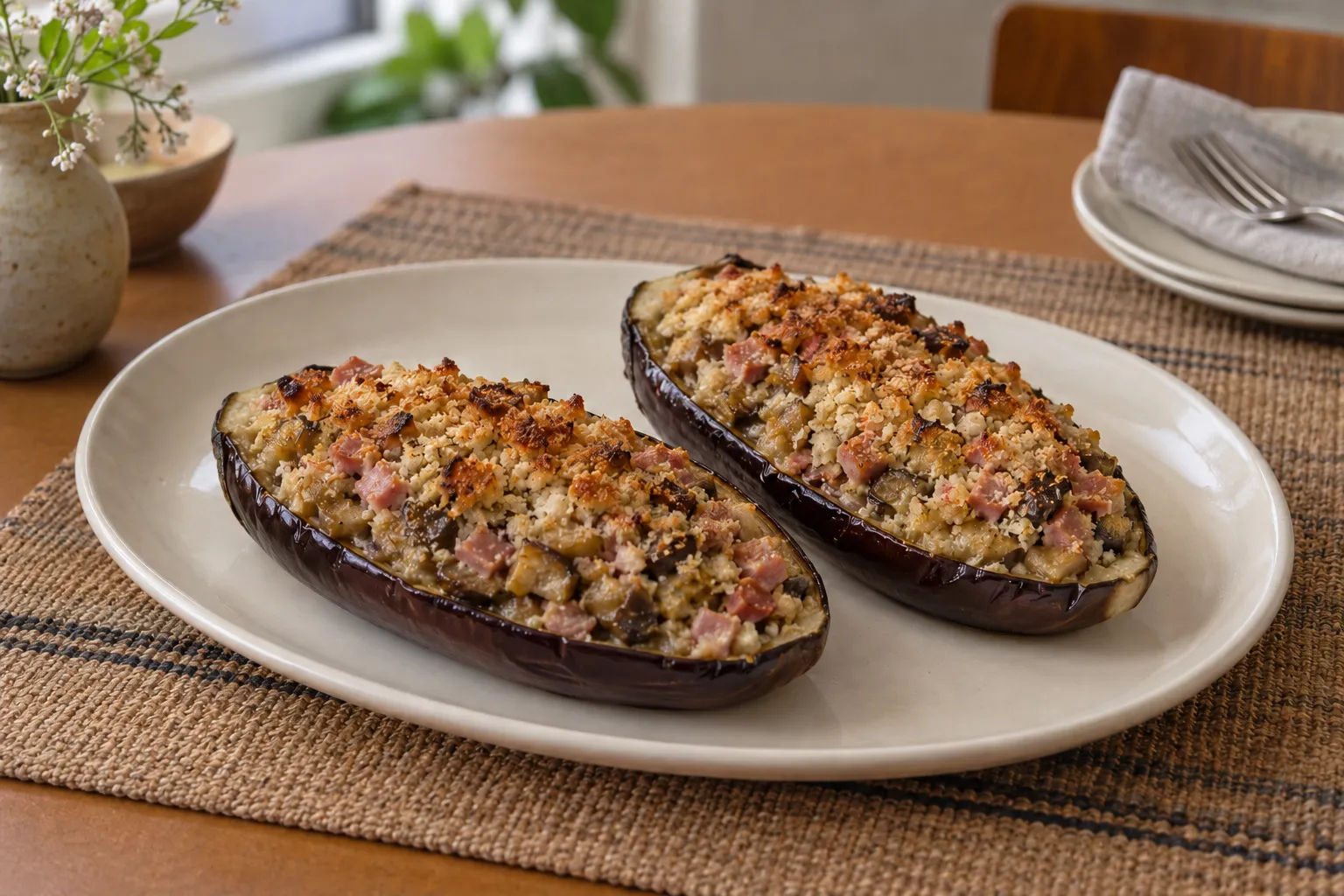
A browned bread-crumb topping covers the savory ham filling. Two medium eggplants become four filled halves: serve one as a substantial side, or two as a light lunch. Choose similarly sized eggplants so the halves cook at a similar pace. Cook Abby Fisher’s ham-stuffed eggplant.
An orange in the sweet potato pie
Fisher’s pie filling occupies a short passage with several specific choices. The potatoes are boiled and mashed, the eggs are beaten separately, and orange juice and grated peel go into the liquid. She specifies a bottom crust only.
The orange is worth keeping at the center of this version. Its juice goes into the filling, while the finely grated zest supplies another citrus accent. Cinnamon and vanilla aren’t in this passage. Keeping them out leaves room for the orange rather than turning the filling toward another sweet potato pie.
Our single-pie adaptation uses three eggs and a measured sugar baseline. It also includes a butter-and-lard crust drawn from Fisher’s general pastry recipe, with modern chilling and blind baking. That initial bake gives the crust a head start before the moist filling goes in.
Orange-scented sweet potato pie
Orange juice and zest give this standard nine-inch pie its citrus accent. Cut it into eight slices. The filling is smooth mashed sweet potato folded with beaten egg whites, and the pastry provides a firm base for cutting and serving.
Give the pie time to cool before slicing. A slice can finish the chicken dinner, or the pie can be the only recipe you make from this feature. Bake Abby Fisher’s orange-scented sweet potato pie.
A dinner or a single recipe
You can cook this selection in parts. Jumberlie and a salad make dinner on their own. The eggplant works for lunch, and the fritters make sense when fresh corn is particularly good. The pie offers a separate baking project with a clear flavor detail to follow.
For all four dishes, begin with the pie. Its pastry needs chilling, and the finished filling needs time to cool. Once it is out of the oven, the eggplant can take the oven space. Prepare the corn batter near the end. Allow about thirty minutes to fry the full batch, beginning while the chicken and rice are still cooking. The rice’s covered rest gives you time to finish the last fritters. Give both pans enough space and attention.
The yields don’t describe one matched four-person menu. There are four portions of Jumberlie and four eggplant halves, but six side portions of fritters and eight pie slices. Making all four leaves extra fried corn and dessert; choosing one main and one companion keeps the stove work smaller.
Source note
Abby Fisher, What Mrs. Fisher Knows About Old Southern Cooking: Soups, Pickles, Preserves, etc., Women’s Co-operative Printing Office, San Francisco, 1881. Jumberlie is recipe 119, pages 57–58; corn fritters are recipe 134, pages 62–63; stuffed eggplant is recipe 142, page 65; sweet potato pie is recipe 53, page 26. The pastry reference is recipe 48, page 24. The linked recipes are modern adaptations with specified quantities, equipment, and cooking guidance.
Explore the 1881 cookbook at the Library of Congress or the Internet Archive scan.