
- Vintage
- Titanic
- 1912
- British cooking
What They Ate on the Titanic: Three Classes, Three Tables
What 1912 Titanic menus served across three passenger classes, with home recipes for salmon mayonnaise, curried chicken and plum pudding.
A dish of cold salmon, a plate of chicken curry, and a helping of plum pudding: each has a place on a surviving Titanic menu dated April 14, 1912. They are familiar enough to imagine at your own table. Their settings aboard the ship, however, were very different.
Titanic’s food is often remembered through the elaborate first-class dinner, with its succession of courses and dishes whose names need a little explanation. There is another way into the story. Look across the three passenger classes, and the menus reveal luncheon buffets, substantial dinners, cold suppers, and the ordinary business of feeding people at sea.
We have chosen one dish from each class for three companion recipes: first-class salmon mayonnaise, second-class curried chicken and rice, and third-class plum pudding with sweet sauce. All three are documented menu dishes. Their recipes are home adaptations drawn from named period cookbooks; a menu tells us what was offered, without giving us the ship’s kitchen formula.
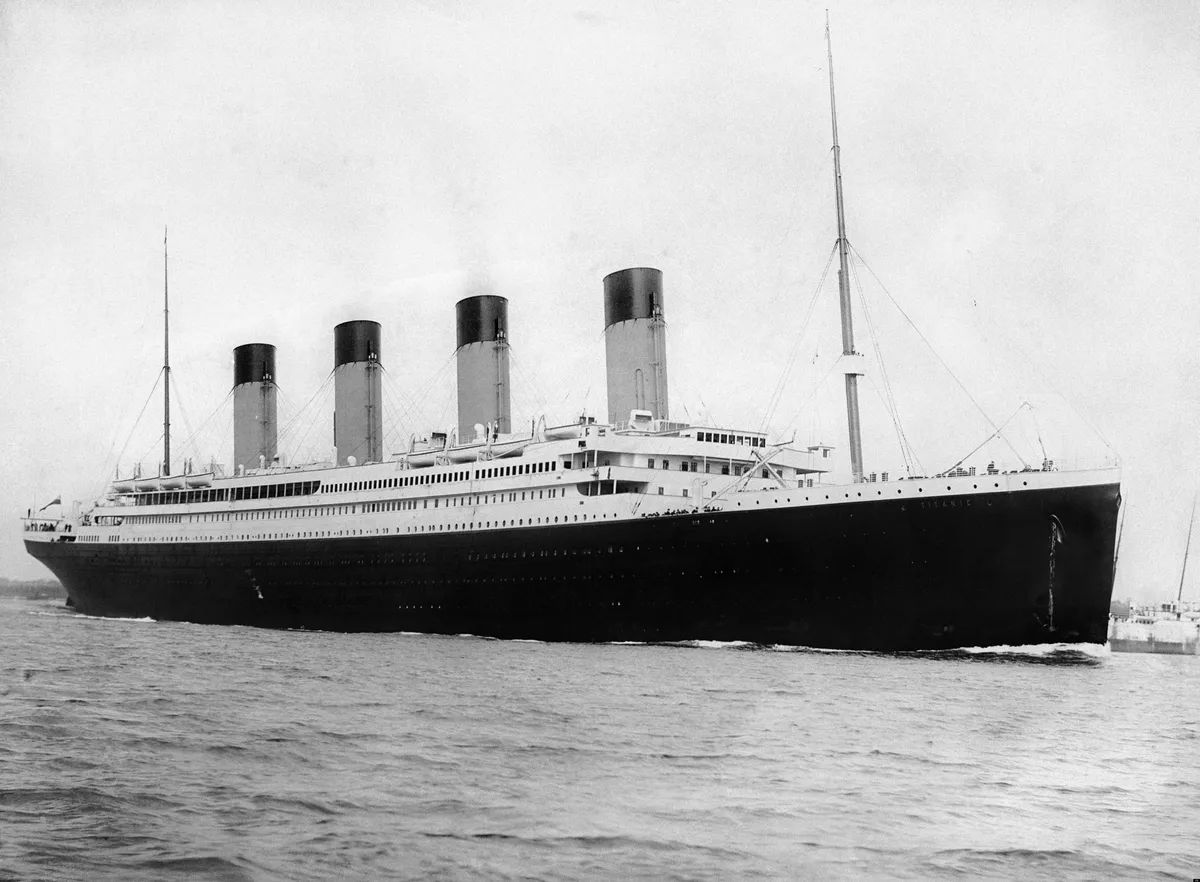
The photograph above shows Titanic departing Southampton on April 10, 1912. It is an original photograph by F. G. O. Stuart, reproduced from the Wikimedia Commons record. The modern food images below illustrate our companion recipes.
What a surviving menu can tell us
Menu cards identify dishes, dates, and meals, sometimes with a passenger’s inscription or an account of how the card survived. Here, the salmon comes from first-class luncheon; the curry and pudding come from dinner.
The Christie’s catalogue for the April 14 first-class luncheon menu identifies salmon mayonnaise among its buffet choices. Royal Museums Greenwich preserves a second-class dinner card from the same date, listing curried chicken and rice. An April 14 third-class card photographed by the Associated Press lists plum pudding and sweet sauce at dinner; that day’s meals are also discussed in Titanic Belfast’s account of food across the classes.
The class comparison also crosses meals: first-class luncheon beside second- and third-class dinner. A named dish was a choice offered, not proof of what every passenger ordered.
The recipes raise smaller cooking questions within that large shipboard story: what went around a cold salmon, why an apple might belong in curry, and which fruit was needed for a plum pudding.
First class: room for a quiet dish
The April 14 luncheon buffet included salmon mayonnaise among a range of cold choices. It is an appealing counterpoint to the more ornate dishes associated with Titanic. Fish cooked gently, cooled, and dressed with mayonnaise can be elegant without demanding a towering arrangement or a complicated finishing sauce.
The dining setting still needs a distinction. First-class passengers had the main dining saloon, while the ship also offered an extra-charge à la carte restaurant. Titanic Belfast describes these separate arrangements. The luncheon card here belongs to the main first-class menu evidence.
For our recipe, we turned to Fannie Merritt Farmer’s The Boston Cooking-School Cook Book of 1896 and Auguste Escoffier’s Le Guide Culinaire of 1903. Farmer gives directions for boiled salmon, with lemon and parsley among the serving details. Her particular recipe serves the fish hot with different sauces. Escoffier’s discussion of cold salmon supplies the cold-service context, including cold sauces and cucumber salad when served in the English style.
The home recipe combines those references in four fillet portions with purchased pasteurized-egg mayonnaise. Its cold service includes a refrigerator chill, not just a brief fish poach.
Salmon mayonnaise
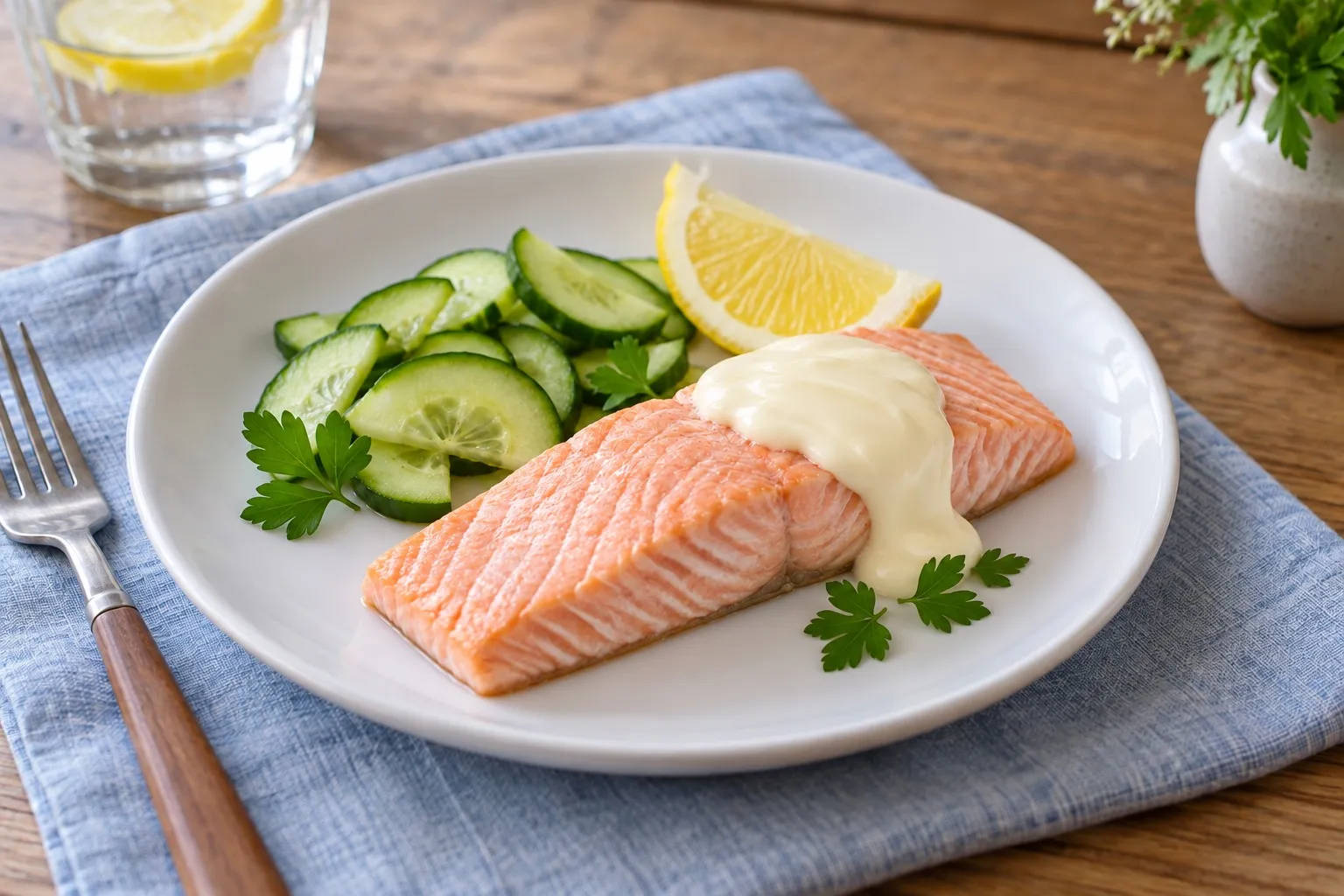
Our salmon mayonnaise recipe makes four luncheon servings. Cold fish, a modest spoonful of sauce, and thin cucumber slices give the plate soft and crisp textures without an elaborate arrangement.
Lemon and parsley finish the plate. The cucumber stays separate until serving, so its moisture doesn’t thin the dressing waiting in the refrigerator.
The cold salmon mayonnaise at luncheon is a different dish from the salmon with mousseline sauce listed on the first-class dinner menu.
Second class: curry, rice, and a substantial dinner
The second-class April 14 dinner card has a sense of abundance of its own. Alongside curried chicken and rice were fish and other meat choices, vegetables, and desserts. Royal Museums Greenwich records the surviving card as one kept by Bertha J. Marshall, née Watt.
“Curried chicken” sounds immediately recognizable, but the phrase does not settle the seasoning or sauce. To give our version a specific period foundation, we chose Isabella Beeton’s 1861 Curried Fowl. Her ingredients include onions, an apple, curry powder, gravy, cream, and lemon juice, with boiled rice served around or separately from the chicken.
Beeton cooks the apple into the sauce. The onions soften, the curry powder flavors the liquid, and cream and lemon come toward the end. The apple, cream, and lemon give this particular British cookbook curry its character.
We use boneless chicken thighs and chicken stock in place of the source’s whole fowl and veal gravy. The recipe makes four home servings, with cream and lemon still added near the end.
Curried chicken and rice
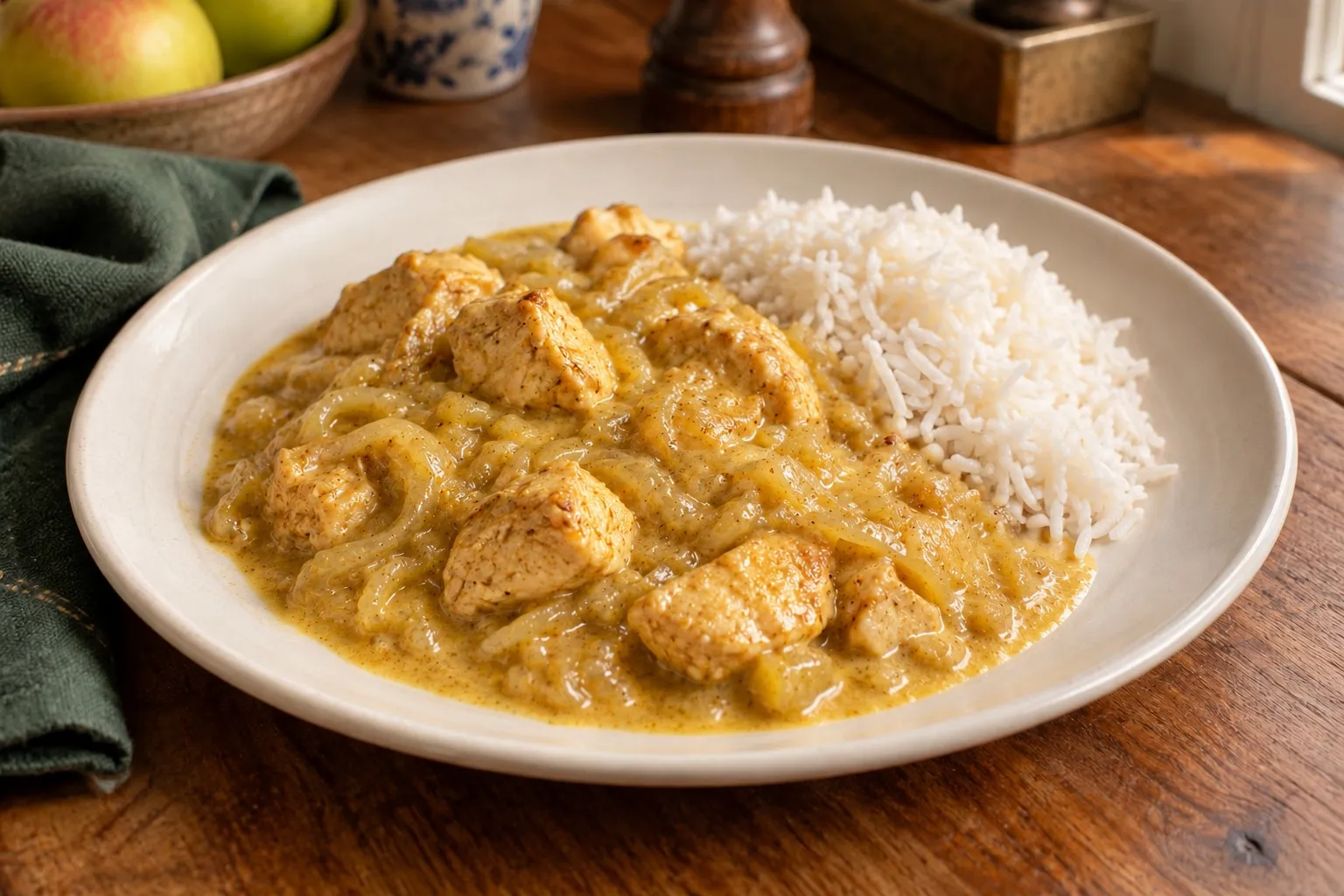
In the curried chicken and rice recipe, apple softens among the onions instead of appearing as a fruit garnish. Mild curry powder supplies the spice, while the creamy sauce has lemon at its finish.
Serve it as dinner on its own, with the apple softening into the sauce and the rice ready to catch the last spoonful.
Third class: pudding earns its place
The third-class April 14 dinner menu lists roast beef and gravy, vegetables, and plum pudding with sweet sauce. Across the day’s meals, there were also familiar staples such as bread, cheese, and porridge or gruel.
For the pudding, we chose a relatively plain Beeton recipe containing flour, fresh bread crumbs, suet, raisins, dried currants, eggs, candied peel, spice, and milk. The “plum” in this preparation belongs to the old pudding name. There are no fresh plums to buy.
The dried currants also need a little care at the shop. Here they are the small dried grapes sold as Zante or Corinth currants, rather than fresh red or black currants. Fresh fine bread crumbs and plain chopped beef suet are similarly specific: dry panko crumbs or a spreadable fat would change the mixture.
Our covered basin replaces Beeton’s floured cloth while retaining the long cook. The sweet sauce is a separate flour-thickened milk preparation flavored with lemon zest. In Beeton’s wording, its melted-butter base is a milk sauce, not a helping of pure melted fat.
Plum pudding with sweet sauce
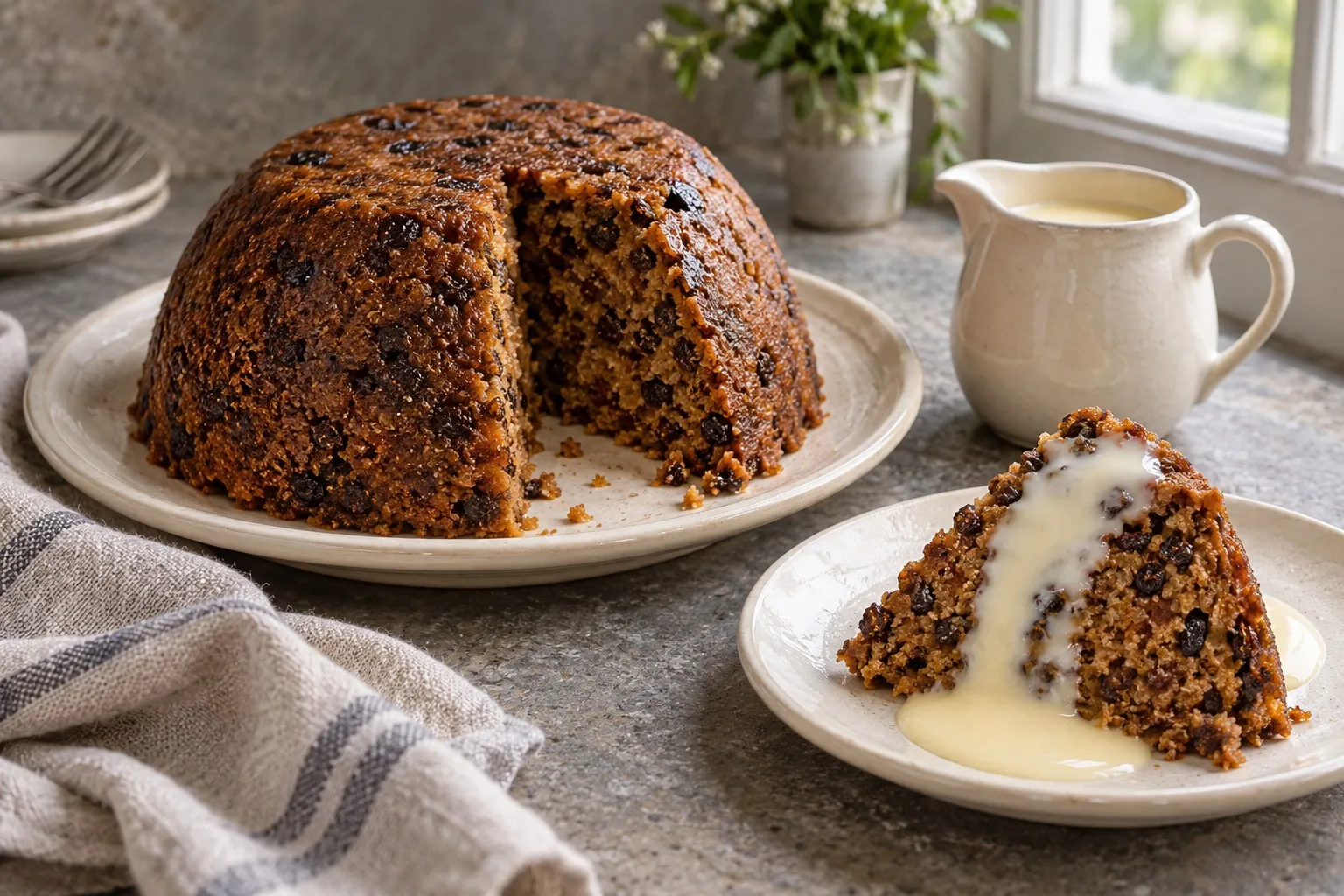
Our plum pudding with sweet sauce makes eight dessert portions. Halving the principal pudding quantities doesn’t halve the five-hour cooking period. The center still has to set, with room left above the mixture in its basin.
Serve a slice warm with sauce alongside or spooned over it. The fruit-studded crumb and simple milk sauce make a substantial finish to the meal.
Cool and refrigerate leftovers as directed in the recipe.
Three recipes, three schedules
You could cook all three recipes for a themed meal, or choose the one that interests you most. The salmon needs advance chilling; the curry is the most straightforward main dinner; the pudding rewards a morning start and a little attention to its steaming pot. Their schedules belong to modern home cooking, with temperatures and handling instructions supplied for today’s kitchen.
A cold buffet choice, curry with rice, and pudding with sweet sauce describe different ways food reached passengers. Cooking one of them at home can make that menu detail tangible without pretending that three classes shared the same table.
Sources and recipe notes
The menu sources are the linked Christie’s first-class luncheon card, Royal Museums Greenwich’s second-class dinner card, and the April 14 third-class card photographed by Chitose Suzuki for the Associated Press in the linked artifact coverage. Titanic Belfast supplies additional context.
The companion preparations draw on these period books:
- Fannie Merritt Farmer, The Boston Cooking-School Cook Book (1896), fish-cooking guidance on pp. 145–146 and Boiled Salmon on p. 148.
- Auguste Escoffier, Le Guide Culinaire, French edition (1903), cold salmon service on p. 587.
- Isabella Beeton, The Book of Household Management (1861), Curried Fowl, no. 941, p. 458; Plain Christmas Pudding for Children, no. 1327, p. 666; Sweet Sauce, no. 1360, pp. 683–684, with the milk-based melted-butter preparation, no. 380, p. 186.
These are separate period recipe sources; the menu cards name the dishes without supplying the ship’s cooking formulas. Each linked recipe explains the changes made for a home kitchen.