
- Vintage
- 1914
- Pickles
- American cooking
Bananas, Artichokes, and Watermelon Rind: Three Pickles from 1914
Pickled bananas, baby artichokes and watermelon rind from Marion Harris Neil's 1914 cookbook, adapted as small-batch refrigerator pickles.
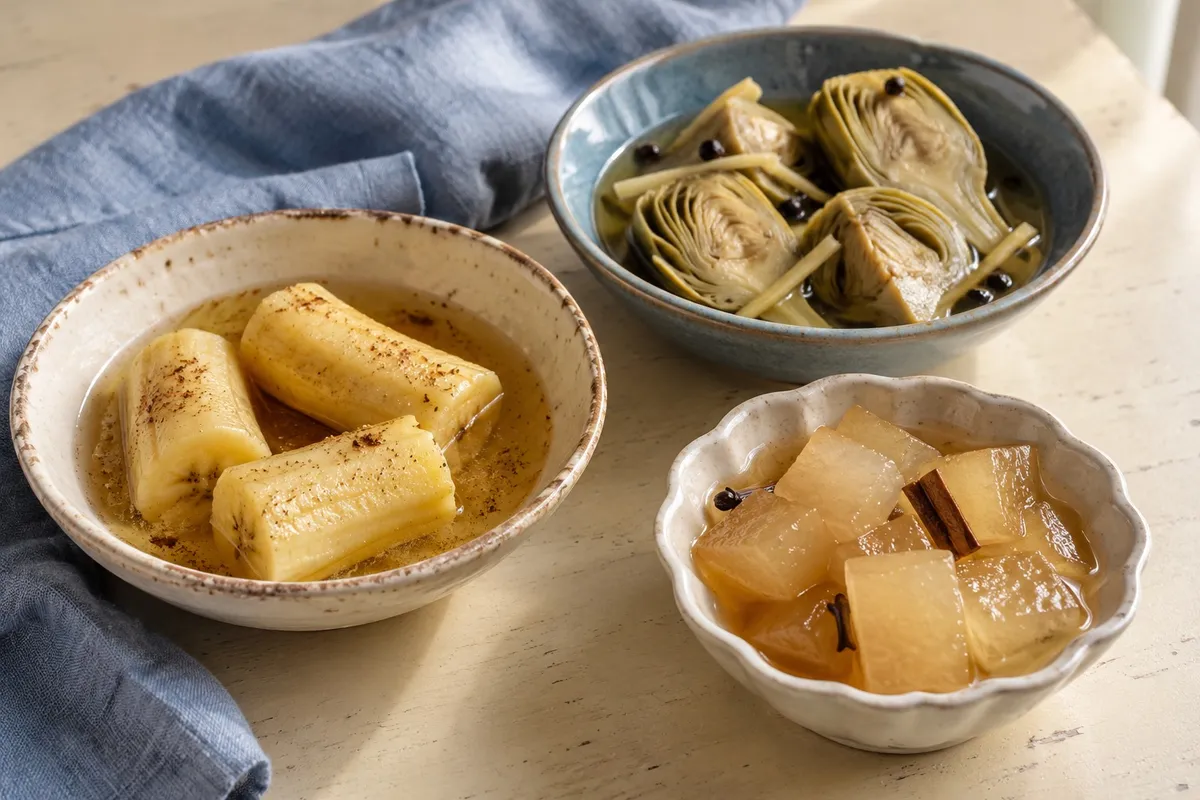
The banana recipe is the one that makes you stop turning the pages. Eight bananas, vinegar, sugar, mace, cinnamon, and cloves: Marion Harris Neil puts them together in her 1914 Canning, Preserving and Pickling, then tells the cook to test the fruit with a wooden skewer.
Nearby are young artichokes dressed with spiced vinegar. Farther on, the white rind of a watermelon becomes a sweet pickle, with cinnamon and cloves in the syrup. These are three good reasons to look beyond cucumbers when you open an old preserving book.
The companion recipes are small refrigerator batches for near-term serving. Each keeps a different part of Neil’s idea: the banana thirds and spice bundle, the young artichokes, or the white rind underneath a familiar fruit.
A preserving book with a cook’s eye
Neil’s title page identifies her as cookery editor of The Ladies’ Home Journal. In her preface, she says the recipes had been tested at her school of cookery.
The pickling discussion gives attention to sound produce, cleanliness, and suitable vessels. Her short recipes then turn quickly to the task at hand. There is little scene-setting around the banana dish: prepare the spices, boil the syrup, cut the fruit, and watch for tenderness.
Her directions assume judgment. A wooden skewer and a tender artichoke base tell the cook more than a clock can. The measured modern recipes keep that attention to the produce while supplying amounts and refrigerator handling.
The banana: familiar fruit in an unfamiliar setting
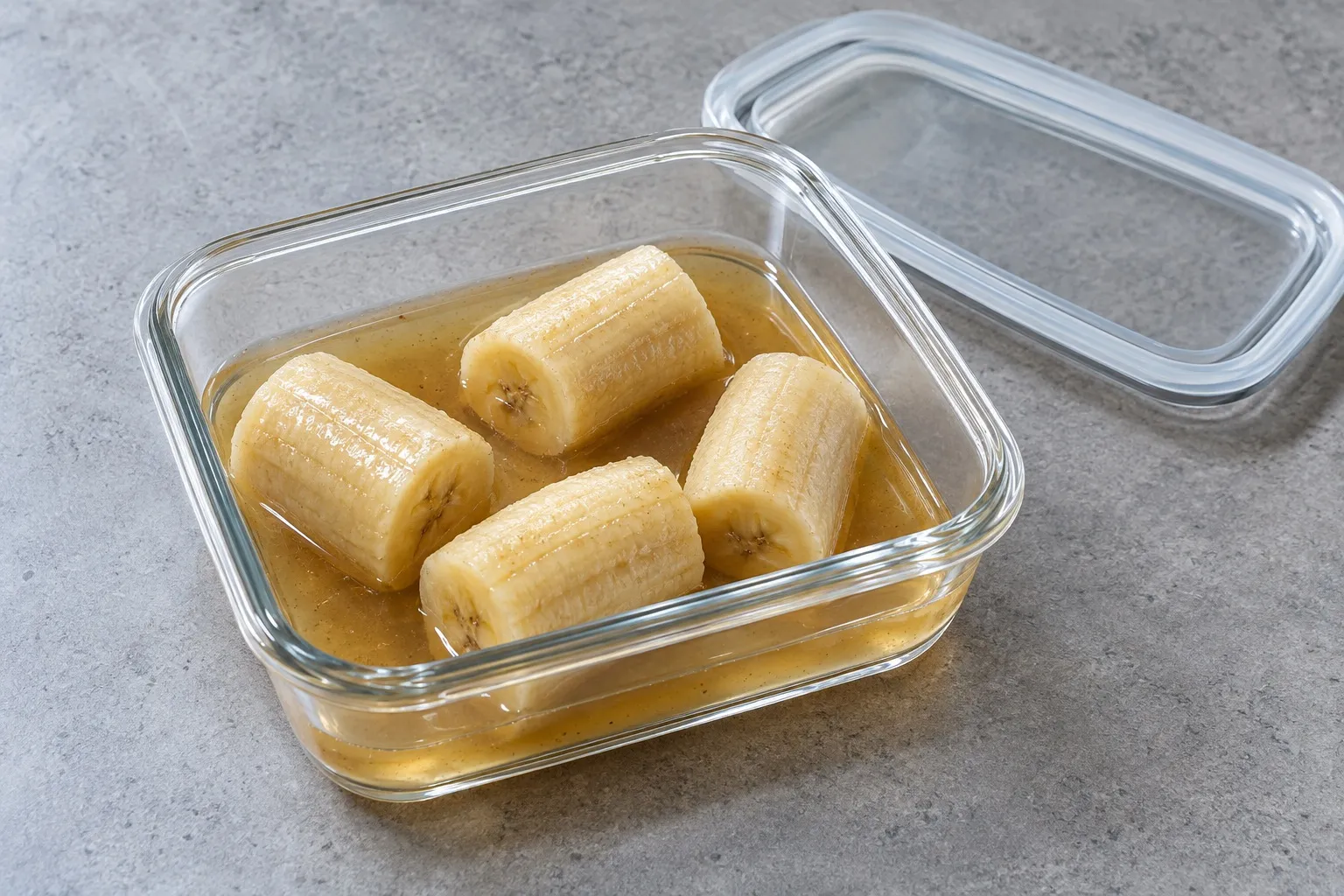
Neil ties the powdered spices in cloth before boiling them with the sugar and vinegar. That little bundle is worth noticing: it lets the seasonings spend time in the syrup without leaving every spoonful crowded with spice. Some fine sediment can still escape, especially with ground spices.
The fruit goes in afterward. She cuts each banana into three crosswise pieces and cooks until a skewer can enter easily. Our pickled bananas keep that generous piece size, with a gentle poach and firm fruit to help the pieces hold together.
Skin color alone can’t decide how long the fruit needs. Neil’s skewer test remains the useful cue.
The syrup has less sugar and added water in our version. Six side servings leave room for fruit and liquid in the containers; this is a changed refrigerator formula, not a pantry preserve.
Try a small helping with ham or sharp cheese. The pickle supplies a sweet-and-sour contrast. You can begin with one portion to see whether this unusual use of bananas suits your table.
The artichoke: trimming comes first
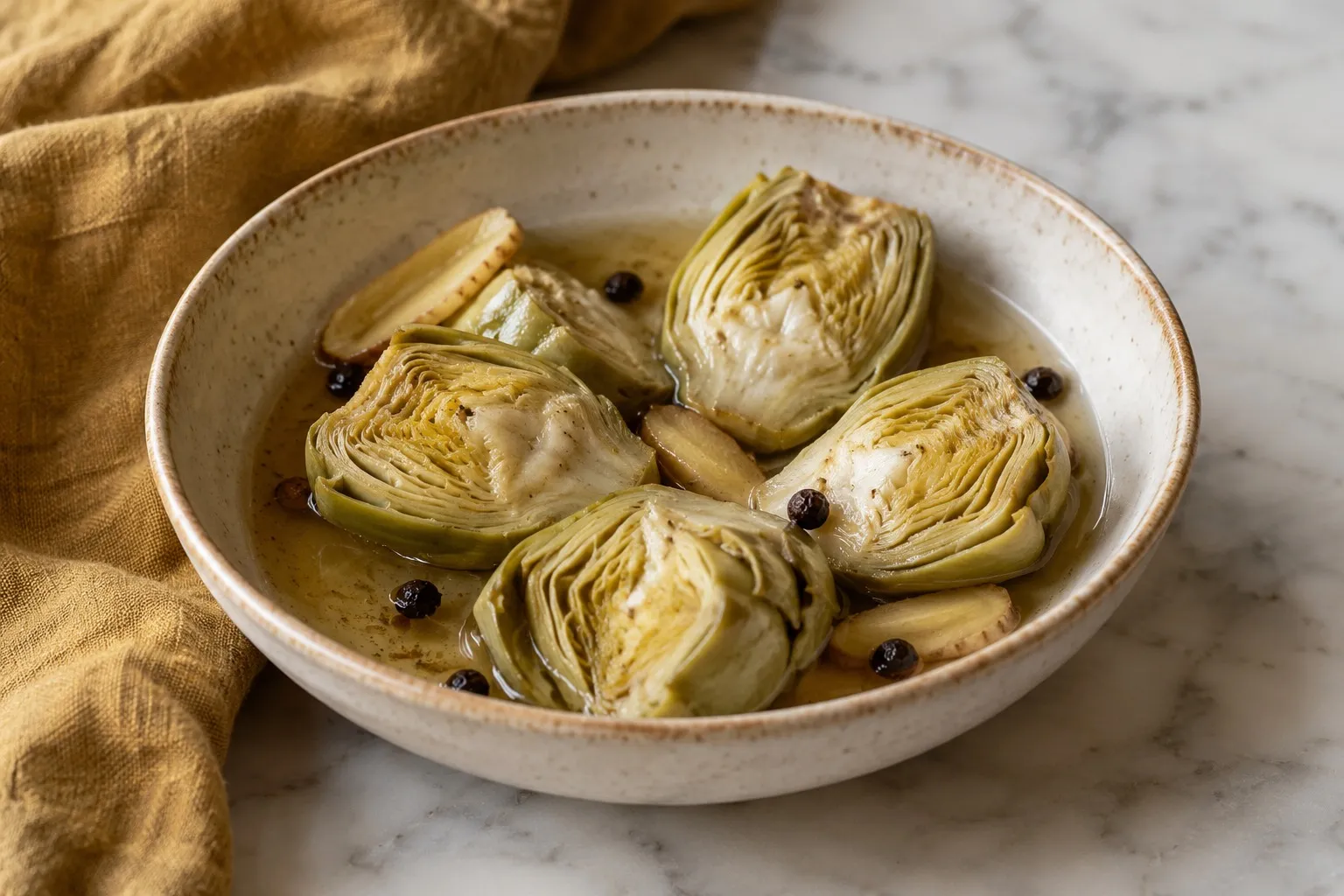
The baby artichoke pickle asks for a different kind of attention. The amount is weighed after the tough outer leaves, stem fibers, and sharp tips have been removed. Buying 500 grams of untrimmed artichokes will therefore give less than 500 grams for the recipe.
Use baby globe artichokes with tender centers. Halving larger ones helps you see what remains inside; any fuzzy choke needs removal. Jerusalem artichokes are a different vegetable, despite the shared name, and belong to different preparations.
Neil’s two-minute blanch is the first check in our preparation. A hard center at the base needs longer, however neat the trimmed leaves look. The drained pieces steam-dry before meeting the dressing, keeping that blanching water separate from the pickle liquid.
Ginger, mace, and nutmeg remain from the original; peppercorns and measured vinegar are added choices. The forty-eight-hour refrigerator cure makes this the longest wait of the three recipes, even though its saucepan session is brief.
Put a few pieces beside bread and cheese, or use them as a chilled vegetable side.
The rind: keep the white part
Watermelon rind begins as an ingredient you may already have after cutting fruit. For this recipe, the useful portion is the firm white layer. Peel off the dark green skin and trim away the soft pink flesh before weighing it.
Neil precooks the rind in water, then pours over a syrup made with vinegar, sugar, cloves, and cinnamon. Her selected method repeats the hot pouring on three successive days. The source’s cinnamon amount is half an ounce for ten pounds of rind, the same listed weight as the cloves.
Our pickled watermelon rind uses a refrigerated salt soak, a water precook, and a short simmer in the syrup, followed by a 24-hour refrigerator cure. Ginger is added, and the spice and syrup proportions differ.
The tenderness cue matters here too. The rind should soften while keeping recognizable pieces. Thickness varies between melons, so check it before moving from plain water to the syrup. The precooking water is discarded; it is not extra water to pour casually into the pickling liquid.
A refrigerator project for the table
Choose one recipe rather than feeling obliged to make all three. Bananas offer the most surprising fruit change; artichokes reward careful trimming; rind lets you work with a different part of a familiar fruit. They share spices and vinegar, but their preparation is distinct.
Use commercial vinegar labeled five percent acidity, clean containers, and the refrigerator instructions supplied with each recipe. Our short-use plan includes curing time. The starting vinegar strength does not prove the finished food’s acidity, shelf life, or suitability for pantry storage.
For shelf-stable canning, follow a matched tested recipe and its complete process. The National Center for Home Food Preservation’s pickling guidance explains why the proportions and uniform acidity matter. A historical instruction to bottle or seal is not a substitute for those controls.
If a watermelon is already on the counter, the rind recipe offers the easiest place to begin shopping. Bananas need little trimming, while artichokes leave much more behind. The prepared weights make those differences visible before vinegar enters the pan.
Source note
Marion Harris Neil, Canning, Preserving and Pickling (Philadelphia: David McKay, 1914). The banana and artichoke recipes are on printed page 173; the selected watermelon-rind method is on page 191. Our quantities, refrigerator handling, and shortened rind treatment are adaptations explained in the linked recipes.