
Pickled Baby Artichokes (1914 Refrigerator Adaptation)
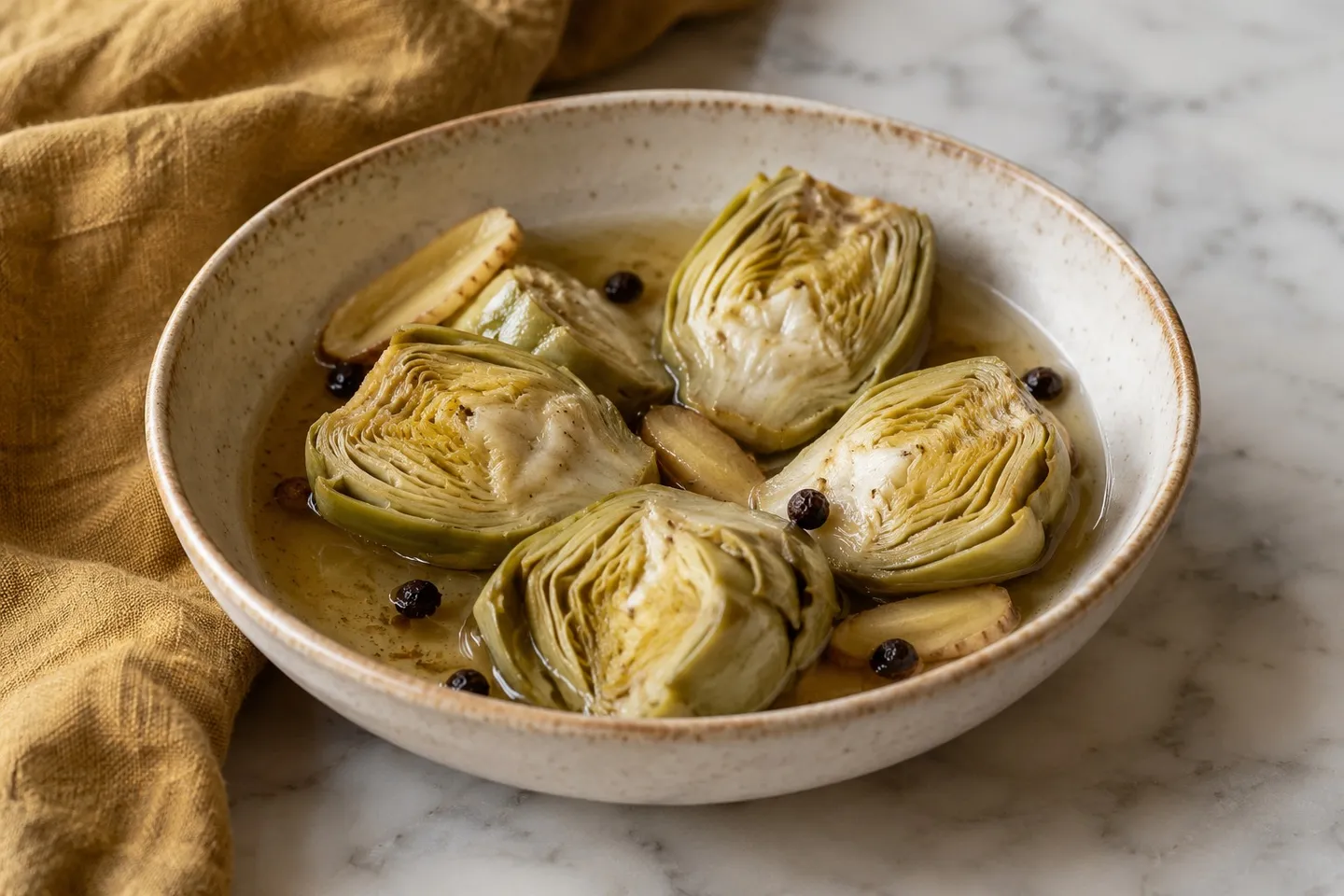
Trimmed baby globe artichokes in vinegar with ginger, mace, nutmeg, and pepper, prepared for refrigerator serving.
- Original yieldYield
- 4 side servings from 500 g trimmed baby artichokes4 side servings from 500 g trimmed baby artichokes
- PrepPrep time
- CookCook time
- TotalTotal time
Includes 30 minutes draining and initial cooling and a 48-hour refrigerator cure. Cooking may take longer for larger pieces.
Published Updated
Original recipe: 4 side servings from 500 g trimmed baby artichokes
The story behind the recipe
These chilled baby artichokes pair sharp vinegar with the pungent warmth of ginger and the aromatic notes of mace and nutmeg. Tough leaves, stem fibers, sharp tips, and any fuzzy choke come away before the tender pieces meet vinegar, ginger, mace, and nutmeg. The prepared weight is what reaches the jar, not the weight of the vegetables brought home.
A young globe artichoke
Marion Harris Neil asks for young artichokes in her 1914 preserving book. Baby globe artichokes are the choice here. Jerusalem artichokes share the name but are a different vegetable; a full-sized mature globe would need different trimming and cooking too.
Neil's Canning, Preserving and Pickling was published by David McKay in Philadelphia; the consulted edition carries a 1914 copyright. Its title page identifies her as cookery editor of The Ladies' Home Journal. Young artichokes share page 173 with a much more surprising ingredient: bananas. Our article on the three pickles follows those recipes and watermelon rind.
Read more about this recipe
The base tells you more than the leaves
Neil gives her artichokes a two-minute blanch in boiling brine. Size and maturity vary, so the modern method checks the base with a skewer and continues if a hard center remains. A piece that looks neatly trimmed still has to be tender enough to eat.
The distinction matters when several vegetables share a pan. Small pieces can be ready before larger ones. Tenderness is the useful endpoint, with enough structure left for the halves to survive draining and serving. Once drained, they steam-dry rather than carry a pool of blanching water into the dressing.
Neil supplies no quantities for this recipe. We've measured the prepared artichokes, vinegar mixture, and seasonings, added peppercorns, and used a refrigerator cure. The ginger, mace, and nutmeg remain from her original seasoning. Her final instruction to seal is replaced by a short-use refrigerated plan, not a pantry preserve.
Make ahead, serve cold
A small amount is enough on the plate, with the liquid drained off as you serve.
The forty-eight-hour cure belongs in the cooking plan even though most of the work happens in a short saucepan session. Make the batch before the lunch you want it for, keep it cold, and count that cure within the stated storage period. The handling notes below give the actual limits.
The artichokes offer the most straightforward vegetable side of the three. A few chilled pieces beside bread and cheese give a sharp contrast to the richer food, without needing to turn the pickle into the main event.
Make it your wayOriginal: 4 servings · Makes 4 side servings from 500 g trimmed baby artichokes
Original recipe: 4 side servings from 500 g trimmed baby artichokes
Ingredients
For 4 side servings from 500 g trimmed baby artichokes. Quantities are shown as written.
Source measurement convention: Metric. Explicit unit definitions take precedence; unconfirmed measures must be checked before conversion.
Original quantities for 4 side servings from 500 g trimmed baby artichokes.
- Baby globe artichokes, weighed after removing tough leaves, stem fibers, and sharp tips500 g
- Water, for blanching1.5 l
- Fine sea salt, for blanching45 g
- Distilled white vinegar, labeled 5% acidity500 ml
- Water, for the pickling liquid120 ml
- Fresh ginger, peeled and thinly sliced10 g
- Ground mace1 metric tsp
- Freshly grated nutmeg1/4 metric tsp
- Whole black peppercorns1 metric tsp
Measurement notes
- ground mace, freshly grated nutmeg, whole black peppercorns: tsp: 1 = 5 ml.
Measurement notes
Original ingredients
- 500 g baby globe artichokes, weighed after removing tough leaves, stem fibers, and sharp tips
- 1.5 liters water, for blanching
- 45 g fine sea salt, for blanching
- 500 ml distilled white vinegar, labeled 5% acidity
- 120 ml water, for the pickling liquid
- 10 g fresh ginger, peeled and thinly sliced
- 1 tsp ground macetsp: 1 = 5 ml.
- 1/4 tsp freshly grated nutmegtsp: 1 = 5 ml.
- 1 tsp whole black peppercornstsp: 1 = 5 ml.
Equipment
 Large saucepan (4-quart)
 Small 1.5-liter saucepan
- Airtight glass container
Instructions
Trim the baby artichokes
Wash the baby artichokes. Remove tough leaves and stem fibers, trim sharp tips, and halve the larger baby artichokes so you can check the centers. Remove any fuzzy choke; weigh 500 g of the prepared edible pieces.
Boil until tender and drain
Bring the 1.5 liters water and salt to a boil in the large saucepan. Add the artichokes, cook for 2 minutes, then check with a skewer. Continue gently until it passes through the base without a hard center, often another 3 to 8 minutes. Drain and let steam dry.
Simmer the pickling liquid
In the small saucepan, combine the vinegar, 120 ml water, ginger, mace, nutmeg, and peppercorns. Bring to a boil, then simmer for 5 minutes.
Cover the artichokes with pickling liquid
Place the artichokes in clean, heatproof refrigerator containers of about 1.5 liters total capacity. Pour over the hot pickling liquid. Choose a narrow container or divide the vegetables so the liquid covers them; do not dilute with extra water.
Refrigerate and cure before serving
Let heavy steam subside briefly, then refrigerate promptly, loosely covered while cooling and tightly covered once cold. Turn the pieces with a clean utensil if needed for even contact. Cure for 48 hours in the refrigerator and serve chilled.
Estimated calories 30 kcal
Nutrition portion: 1/4 of recipe · Original yield: 4 side servings from 500 g trimmed baby artichokes
Source & assumptions
Ingredient-based estimate using a published artichoke boiling yield, a representative Reese drained acidified-artichoke profile, CoFID 2021 and USDA SR Legacy seasonings. About 30 kcal per original side serving: one-quarter of the drained batch with a 15 ml pickling-brine allowance. Models 370 g cooked artichokes from 500 g prepared input and includes the full small seasoning allowance. Baby artichokes, cooking yield, acidity and draining vary; this is a comparable-food estimate, not measured retention. The container brine is not all counted as eaten.
Recipe notes
When adjusting quantities
Ingredient amounts can be adjusted; vessel capacity, cooking, cooling and curing times need their own checks.
Original recipe notes
These notes describe the original recipe. Quantities mentioned here do not change when you adjust servings.
Ingredient scope: This baseline uses baby artichokes. Full-sized mature globes require different trimming and cooking; they are not an automatic swap. The approximate number depends on the amount discarded during trimming.
Refrigerator handling: Keep at 4°C (40°F) or below. For this fresh, unvalidated preservation adaptation, plan to finish the batch within four days of preparation, including its curing time. This is a conservative short-use plan, not a measured shelf life or a canning process. Refrigerate promptly within two hours, or one hour when the room is above 32°C (90°F).
Preservation scope: Keep refrigerated throughout curing and storage. No boiling-water canning process has been validated for this globe-artichoke formula. Do not seal it for pantry storage.
Read the scaling guide. Times, temperatures and equipment need their own consideration. Open the recipe tool to review and correct individual amounts.
Sources and attribution
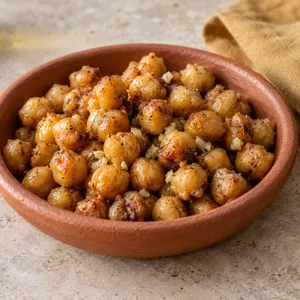
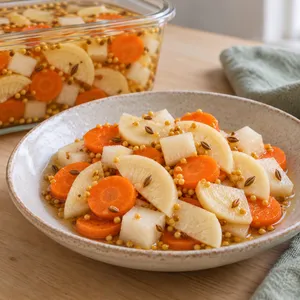
Neil, Canning, Preserving and Pickling (1914), p. 173. Quantities, vinegar dilution, peppercorns, extended tenderness checks, and refrigerator handling are modern adaptations.
Recipe details
- Recipe tradition
- Vintage
- Course or meal
- Side dish
- Cuisine
- American
- Source decade
- 1910s
- Main ingredient
- Vegetables
- Browse category
- Snacks & Dips