
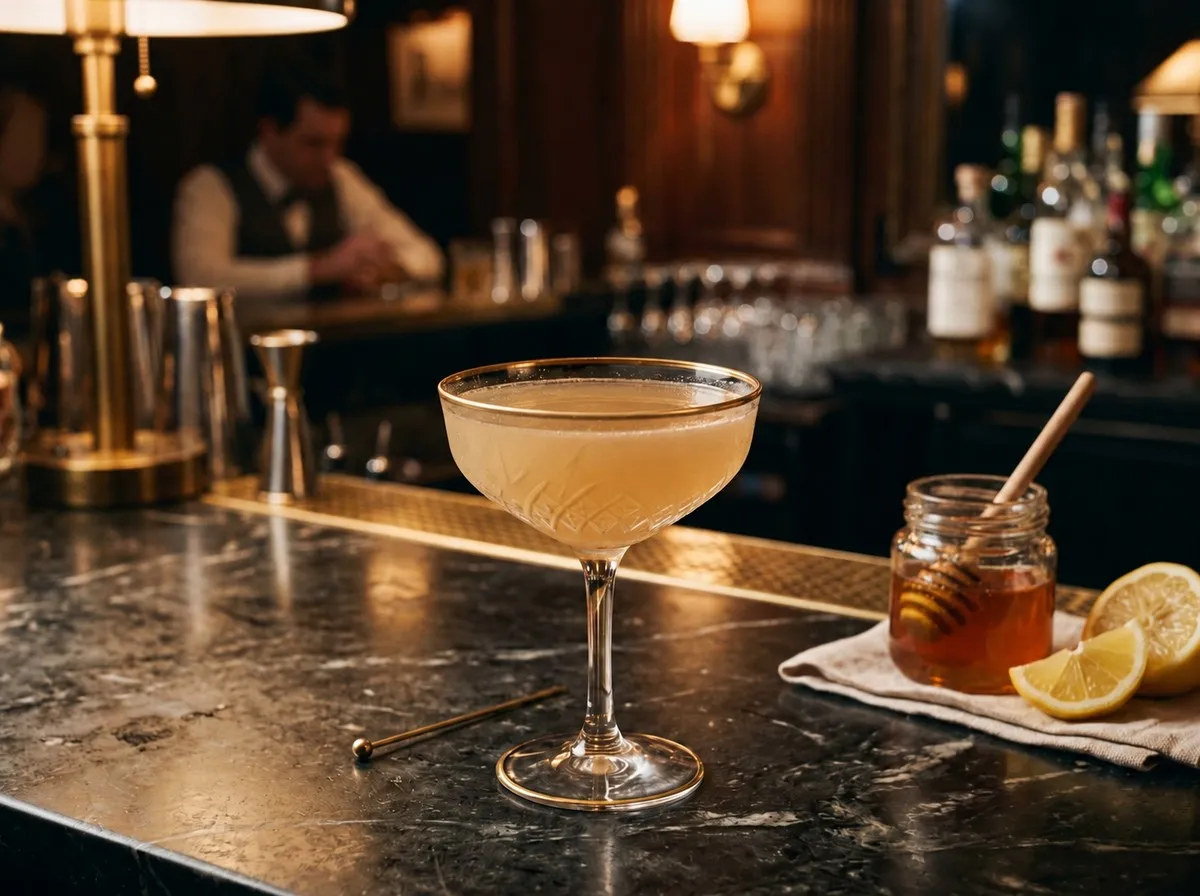
Bee's Knees Cocktail (1934)
Gin, honey and fresh lemon juice make a short, tart cocktail. Stir the honey into the lemon juice before shaking so it mixes into the drink.
- Original yieldYield
- 1 cocktail1 cocktail
- PrepPrep time
- TotalTotal time
Published Updated
Original recipe: 1 cocktail
The story behind the recipe
Honey adds aroma as well as sweetness to this gin-and-lemon sour. A mild floral jar leaves more room for the gin; a dark, strongly flavored one becomes much easier to notice.
Start with the honey you like
You don't need to hunt down a rare honey for this cocktail. Start with one you'd enjoy on a spoon, then think about how forceful its flavor is. With only gin, lemon and honey in the mixture, there's little to hide an ingredient you don't like.
The gin has room to show too. A juniper-led bottle and a floral one will meet honey differently. Keep the lemon and sweetener measures steady when comparing bottles so you can tell which change you preferred.
This version is served without a garnish. The honey already contributes an aroma that a plain sugar syrup wouldn't bring, and a chilled coupe leaves that short drink open to the nose.
Read more about this recipe
Honey or honey syrup?
Straight honey is thick enough to cling to a cold shaker. Stirring it into lemon before adding ice gives it a chance to mix through the drink. Otherwise part of the measured sweetness can remain behind as a streak on the metal.
The syrup option is easier to pour for several servings. It uses equal volumes of honey and water, with a larger liquid measure listed to account partly for the dilution.
Those options aren't equally sweet. The syrup portion contains less honey than the straight-honey portion, so it produces a lighter sweetness. Choose one before measuring rather than switching back and forth by the spoon.
This is also why “simple syrup” isn't the whole description of the ingredient. Honey contributes a flavor you bought intentionally. Plain sugar syrup would make a different sour.
The orange in the older recipe
The Bee's Knees entry in Cocktail Bill Boothby's World Drinks and How to Mix Them (1934) includes orange as well as gin, lemon and honey. This modern three-ingredient recipe uses that entry as a historical comparison, leaving the orange out.
The book gives you a concrete printed place to find the name and mixture. It needn't carry a story about hiding bad gin or a precisely proved first invention date to be worth reading.
The comparison also helps explain why recipes under one familiar name can taste different. Extra orange changes the fruit and sweetness, while our lemon-only sour leaves the honey more exposed.
A short, cold serving
Fresh lemon supplies the sharpness against that honey. Ice then chills and dilutes the mixture during the shake, before the serving is strained into the coupe.
For several drinks, get the honey choice settled and the glasses cold first. A comfortable shaker batch is more manageable than packing every serving into one vessel.
If you enjoy the drink, another jar of honey is a worthwhile next comparison. The shopping difference is small, but it changes an ingredient you can actually taste.
Make it your wayOriginal: 1 serving · Makes 1 cocktail
Original recipe: 1 cocktail
Ingredients
For 1 cocktail. Quantities are shown as written.
Source measurement convention: US customary. Explicit unit definitions take precedence; unconfirmed measures must be checked before conversion.
Original quantities for 1 cocktail.
- Dry gin2 fl oz
- Honey1/2 fl ozor 1:1 honey simple syrup by volume, for easier mixing but slightly less concentrated sweetness3/4 fl oz
- Fresh lemon juice1/2 fl oz
Measurement notes
- dry gin, fresh lemon juice: US fl oz: 1 = 29.5735 ml (rounded).
- honey or 1:1 honey simple syrup by volume, for easier mixing but slightly less concentrated sweetness: honey: US fl oz: 1 = 29.5735 ml (rounded). 1:1 honey simple syrup by volume, for easier mixing but slightly less concentrated sweetness: US fl oz: 1 = 29.5735 ml (rounded).
Measurement notes
Original ingredients
- 2 fl oz dry ginUS fl oz: 1 = 29.5735 ml (rounded).
- 1/2 fl oz honey (or 3/4 fl oz 1:1 honey simple syrup by volume, for easier mixing but slightly less concentrated sweetness)honey: US fl oz: 1 = 29.5735 ml (rounded). 1:1 honey simple syrup by volume, for easier mixing but slightly less concentrated sweetness: US fl oz: 1 = 29.5735 ml (rounded).
- 1/2 fl oz fresh lemon juiceUS fl oz: 1 = 29.5735 ml (rounded).
Equipment
 Cocktail shaker
 Jigger or measuring glass
 Coupe glass
Instructions
Mix honey and lemon
Stir the honey and fresh lemon juice together in a cocktail shaker before adding the gin and ice.
Use cooled syrup if substituting
For the syrup option, use the 1:1 honey syrup amount in the ingredient list in place of straight honey. Use cooled syrup.
Add gin and shake
Add the dry gin and cracked ice. Shake for about 15 seconds.
Strain into a chilled coupe
Strain into a chilled coupe glass and serve without a garnish.
Estimated calories 200 kcal
Nutrition portion: whole recipe · Original yield: 1 cocktail
Source & assumptions
Ingredient-based estimate using CoFID 2021, USDA household-measure references, representative labels for 58 and CO London Dry Gin (43% ABV). About 200 kcal per nutrition portion (whole recipe). Uses straight honey and a representative London dry gin at 43% ABV. The diluted honey-syrup alternative is excluded. Actual ingredients and preparation affect the estimate.
Recipe notes
When adjusting quantities
For several drinks, measure the ingredients for the batch but shake in portions that leave room for ice. The shaking time stays the same.
Original recipe notes
These notes describe the original recipe. Quantities mentioned here do not change when you adjust servings.
Historical comparison: Bee's Knees in the 1934 Boothby collection, whose entry also lists orange. The measured gin-honey-lemon recipe is a modern adaptation with the orange omitted.
A mild honey leaves gin and lemon prominent. Stir straight honey into the lemon before adding ice.
The syrup uses equal volumes of honey and water. Its listed portion contains less honey than the straight-honey option, so expect lighter sweetness.
Read the scaling guide. Times, temperatures and equipment need their own consideration. Open the recipe tool to review and correct individual amounts.
Sources and attribution
A modern gin, honey and lemon adaptation, with the Bee's Knees in Boothby's 1934 collection as a historical reference. The printed entry also includes orange.
Recipe details
- Recipe tradition
- Vintage
- Course or meal
- Drink
- Cuisine
- Other / International
- Source decade
- 1930s
- Cooking method
- No-cook
- Browse category
- Drinks & Cocktails