
Brandy Crusta (1862)
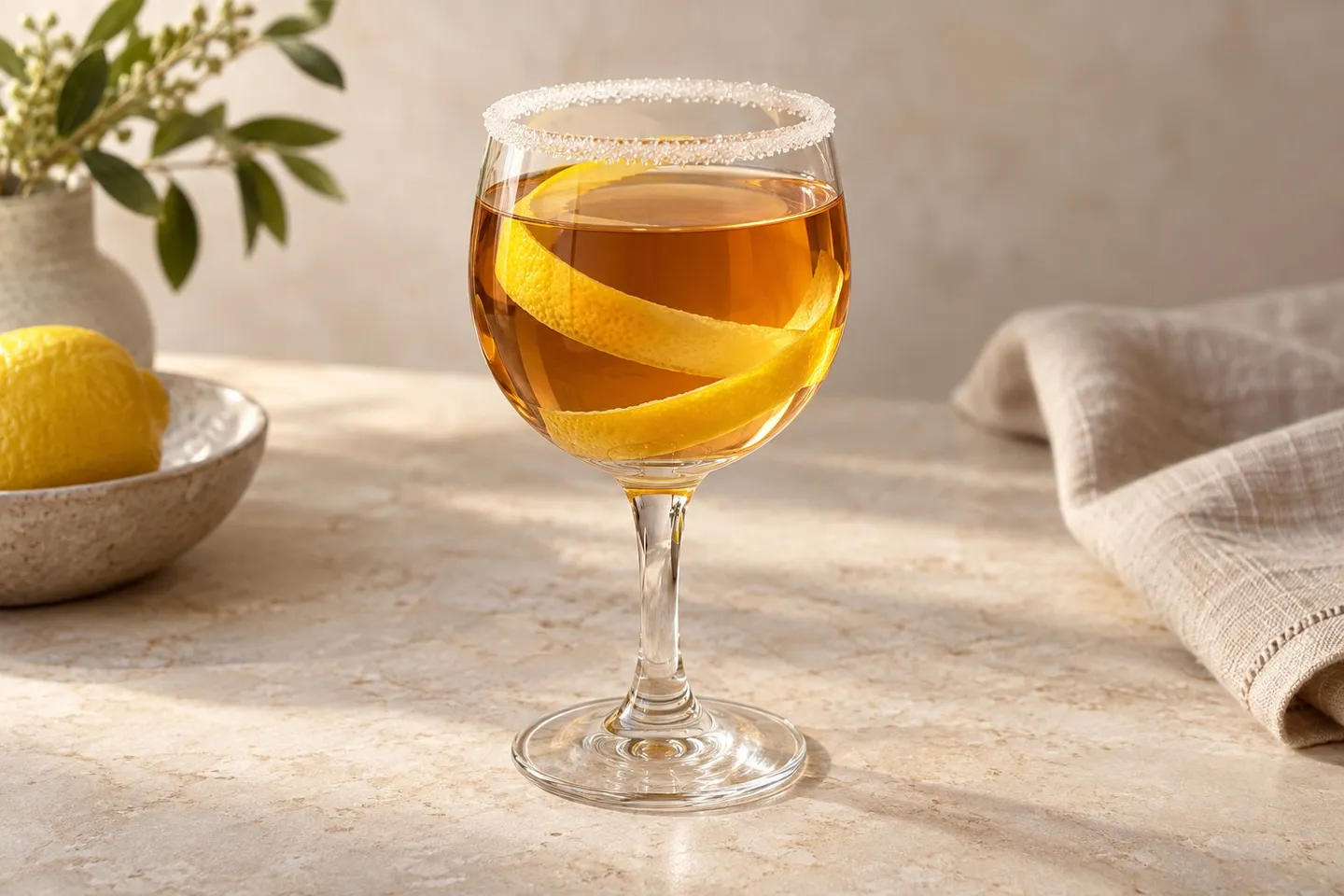
A historic Cognac cocktail served in a sugar-rimmed glass lined with a coiled lemon peel.
- Original yieldYield
- 1 cocktail1 cocktail
- PrepPrep time
- TotalTotal time
Published Updated
Original recipe: 1 cocktail
The story behind the recipe
A Brandy Crusta begins with a dressed glass: sugar around the rim and one broad spiral of lemon peel inside the bowl. The amber cocktail fills the space within that coil. It's a small piece of showmanship you can prepare before the mixing starts.
Lemon inside, sugar outside
The presentation changes how you meet the drink. Sugar touches your lips first, lemon gives a citrus scent close to the liquid, and Cognac brings the brandy flavor underneath. Dry Curaçao adds orange and a little sweetness, with lemon juice sharpening the mixture.
That rim is different from sugar dissolved in a cocktail. You can taste a little of the crust with a sip while the mixed liquid stays the same. The broad peel also has a presence that a narrow twist dropped onto the surface wouldn't have. It lines the vessel, making an ordinary stemmed wine glass look prepared for this particular drink.
Choose it when you want to spend some attention on the glass as well as the bottles. For several servings, the rims and coils can be waiting before the ice enters the mixing glass.
Read more about this recipe
A recipe that sends you to two others
Jerry Thomas's 1862 Crusta entry refers back to his Fancy Brandy Cocktail, which refers in turn to the Brandy Cocktail. Together the entries supply brandy, gum syrup, bitters and Curaçao, with lemon juice added for the Crusta.
It's a revealing way to read an old bar book. A new presentation could build on a drink the bartender already knew, without printing every ingredient again. Here the glass preparation gets unusually careful directions: sliced lemon moistens the rim before pulverized sugar goes on, and the peel is cut continuously as though paring an apple.
Thomas also records the suggestion that Santina, described as a Spanish caterer, invented the Crusta. That's the book's attribution. The dressed glass is described much more fully than the circumstances behind the name.
A peel that will stand up
A wide strip is easier to hold against the glass than a thin corkscrew garnish. Think about the size of the bowl when choosing the lemon: the coil needs to sit comfortably inside, leaving space for the strained drink.
The modern recipe uses peel from a whole lemon, where Thomas described half a lemon. Choose a lemon and glass whose sizes let the broad coil sit neatly against the bowl.
Keep the rind clean and use a sharp paring knife or wide peeler. The notes describe the continuous spiral. Once it's in place, pouring into the center helps the peel keep its position.
Brandy with an orange accent
Cognac is the chosen brandy, with dry Curaçao for orange flavor. The measured liqueur amount is larger than Thomas's dash or two, so orange is easier to notice in the modern cocktail. Rich simple syrup supplies sweetness alongside the sugar rim.
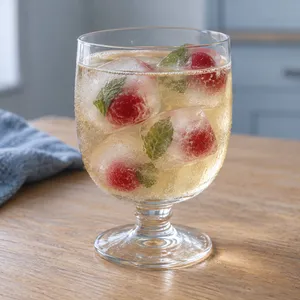
The ice stays in the mixing glass. That leaves the finished bowl clear enough to show the lemon lining, a striking contrast with a Sherry Cobbler packed with shaved ice and berries. Those two approaches sit together in the article on historic cocktail ice.
Make it your wayOriginal: 1 serving · Makes 1 cocktail
Original recipe: 1 cocktail
Ingredients
For 1 cocktail. Quantities are shown as written.
Source measurement convention: Metric. Explicit unit definitions take precedence; unconfirmed measures must be checked before conversion.
Original quantities for 1 cocktail.
- Entire lemon peel coil (for garnish)1
- Caster sugar (for rimming)10 g
- Lemon wedge (for rimming)1
- Cognac60 ml
- Dry Curaçao15 ml
- Fresh lemon juice7.5 ml
- Rich simple syrup5 ml
- Aromatic bitters2 dashes
Measurement notes
Measurement notes
Original ingredients
- 1 entire lemon peel coil (for garnish)
- 10 g caster sugar (for rimming)
- 1 lemon wedge (for rimming)
- 60 ml Cognac
- 15 ml dry Curaçao
- 7.5 ml fresh lemon juice
- 5 ml rich simple syrup
- 2 dashes aromatic bitters
Equipment
 Mixing glass
 Bar spoon
 Cocktail strainer
 Stemmed wine glass
Instructions
Sugar the glass rim
Prepare the glass first. Rub the rim of a stemmed wine glass with the lemon wedge, then dip the rim into the caster sugar to form an even crust.
Position the lemon coil
Carefully place the entire lemon peel coil inside the glass so it rests against the walls.
Combine the drink ingredients
In a separate mixing glass, combine the Cognac, dry Curaçao, fresh lemon juice, rich simple syrup, and aromatic bitters.
Stir with cracked ice
Add the cracked ice to the mixing glass and stir briskly for 15 seconds to chill and dilute the liquid.
Strain into the prepared glass
Strain the cold mixture carefully into the prepared wine glass, pouring it into the center of the lemon coil.
Estimated calories 220 kcal
Nutrition portion: whole recipe · Original yield: 1 cocktail
Source & assumptions
Rough ingredient-based estimate per cocktail, including a representative 4.2 g sugar rim and lemon wetting charge based on a published sugar-rim recipe; actual rim consumption and bottles vary. This is a modeled estimate, not a measured result.
Recipe notes
When adjusting quantities
Scale liquid ingredients proportionally. Each glass requires its own lemon peel coil.
Original recipe notes
These notes describe the original recipe. Quantities mentioned here do not change when you adjust servings.
Jerry Thomas, How to Mix Drinks, or The Bon-Vivant's Companion (1862), p. 52, with the related brandy cocktails on p. 50. We specify modern measures, Cognac, a larger Curaçao portion, rich simple syrup and aromatic bitters. The whole-lemon coil and detailed stirring method are modern choices.
Cut the peel continuously with a sharp paring knife or wide vegetable peeler, as though paring an apple. Keep it broad enough to sit against the glass.
Make rich simple syrup with two parts sugar to one part water by weight and cool it before use. With 1:1 syrup, 7.5 ml is an alternative for similar sweetness; it won't reproduce the texture of rich syrup or historical gum syrup.
Read the scaling guide. Times, temperatures and equipment need their own consideration. Open the recipe tool to review and correct individual amounts.
Sources and attribution
Jerry Thomas, How to Mix Drinks, or The Bon-Vivant's Companion (New York: Dick & Fitzgerald, 1862), p. 52
Recipe details
- Recipe tradition
- Vintage
- Course or meal
- Drink
- Cuisine
- American
- Browse category
- Drinks & Cocktails