
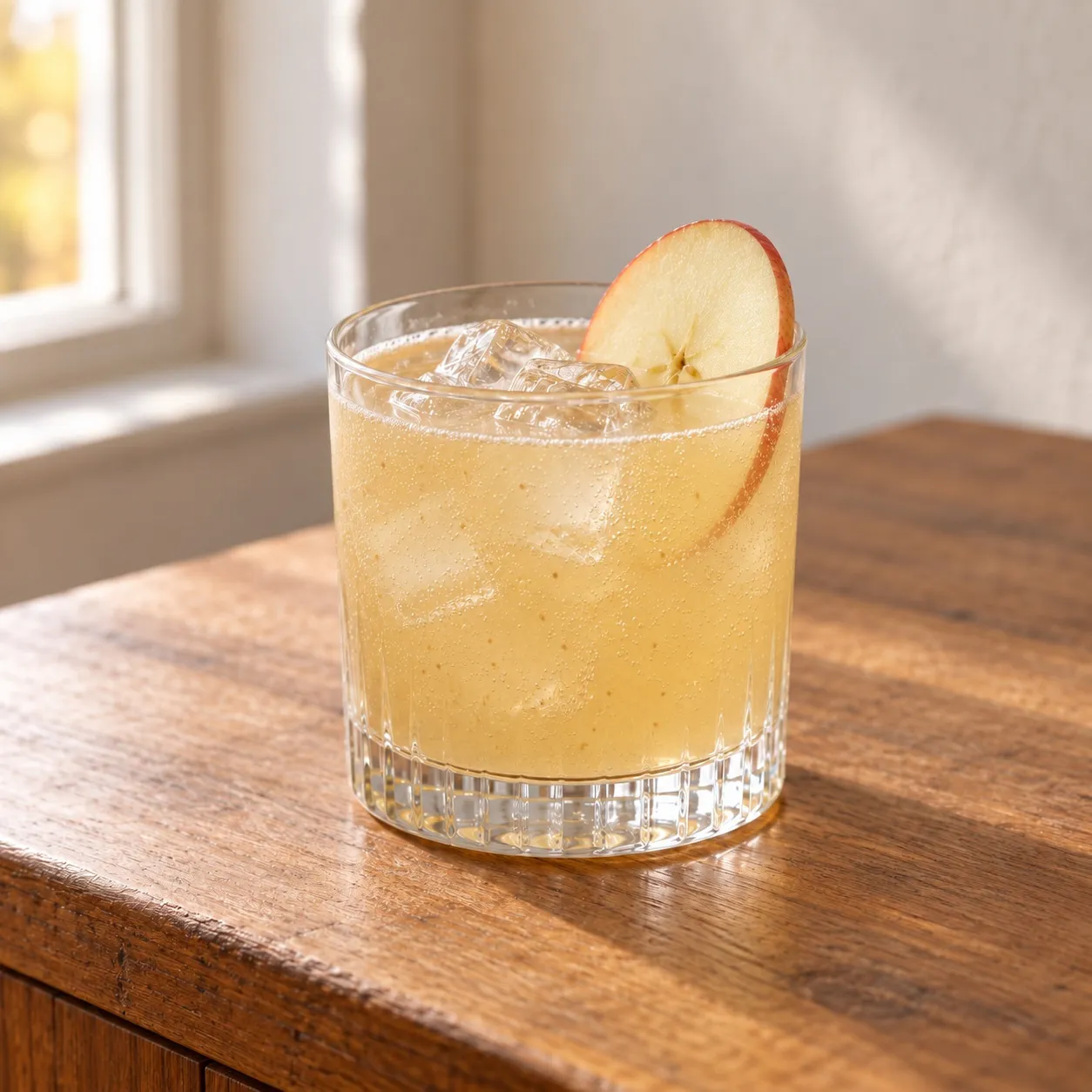
Applebloom Punch Mocktail (1920)
A sparkling autumn cup made with non-alcoholic cloudy apple juice, white grape juice, and mineral water.
- Original yieldYield
- 1 drink1 drink
- PrepPrep time
- TotalTotal time
Published Updated
Original recipe: 1 drink
The story behind the recipe
Applebloom is a punch you can remember without a measuring chart: one part apple juice, one part white grape juice and one part sparkling mineral water. The water takes a full third of the glass. Its taste matters as much as its bubbles.
A bowl chilled before the fizz
Bertha Stockbridge's What to Drink gives Applebloom Punch in 1920 as equal quantities of sweet cider, white grape juice and Apollinaris. Her bowl is chilled over a block of ice, then the sparkling water is added for serving.
That is a sensible order for a shared drink. The fruit can be cold and ready while the bottle of water stays closed. Carbonation has a much shorter working life once poured into an open bowl, so leave that addition until people are ready for it.
The modern single serving follows the same equal liquid proportions in a tumbler. There's no syrup to prepare, fruit to strain or shaker to clear away. A thin apple wheel supplies a small finish at the rim.
Read more about this recipe
Sweet cider at the market
Here “sweet cider” means unfermented apple juice. The ingredient list spells that out because cider can mean an alcoholic drink elsewhere. Buy cloudy, non-alcoholic apple juice for the stated recipe.
Cloudy juice gives the punch body as well as apple flavor. White grape juice adds sweetness of its own, leaving the mixture gentler than a lemon sour. There isn't any measured citrus juice to provide that lemonade sharpness.
The name suggests an orchard, but you don't need blossoms, floral syrup or edible flowers. Apple and grape are the fruit ingredients. A bottle that tastes good cold is a better starting point than a complicated garnish.
Don't leave the water to chance
Apollinaris is named in the old recipe. The current list allows a high-mineral sparkling water in that style. Waters differ in mineral taste and softness, so use one you enjoy with the two juices.
Because it's a third of the mixture, the water isn't just a splash to fill an oversized glass. It dilutes the fruit sweetness, contributes a mineral edge and provides sparkle. Opening a well-chilled bottle close to serving gives that modest ingredient its best chance to show.
For an easy comparison, think about a juice glass beside a glass of mineral water. Applebloom joins both. It can remain fruit-led without tasting like two undiluted juices poured together.
One glass, or a bowl
Equal measures make batch planning straightforward. Decide how many of the single servings you want, then multiply all three liquids equally. The actual bowl still needs room for its ice and the sparkling addition.
Stockbridge offers much more elaborate choices elsewhere, including egg foams and milk drinks. Vintage Mocktails explores that range. Applebloom is the quiet end of the cupboard: three cold bottles and a spoon.
Keep the apple wheel thin enough to sit neatly on the rim. The pale, cloudy juice doesn't need a bright syrup for color, and a large fruit arrangement would add work the drink never asked for. A simple punch can be a welcome choice precisely because making it leaves you free to do something else.
For another selection from the era, explore five alcohol-free drinks for a 1920s party on our sister site, Forgotten Drink.
Make it your wayOriginal: 1 serving · Makes 1 drink
Original recipe: 1 drink
Ingredients
For 1 drink. Quantities are shown as written.
Source measurement convention: Metric. Explicit unit definitions take precedence; unconfirmed measures must be checked before conversion.
Original quantities for 1 drink.
- Cloudy apple juice (unfermented, non-alcoholic)60 ml
- White grape juice60 ml
- High-mineral sparkling water (such as Apollinaris or Gerolsteiner)60 ml
- Thin apple wheel (for garnish)1
Measurement notes
Measurement notes
Original ingredients
- 60 ml cloudy apple juice (unfermented, non-alcoholic)
- 60 ml white grape juice
- 60 ml high-mineral sparkling water (such as Apollinaris or Gerolsteiner)
- 1 thin apple wheel (for garnish)
Equipment
 Serving tumbler (250-300 ml capacity)
 Bar spoon
Instructions
Add serving ice
Place the ice cubes into a serving tumbler.
Pour in the juices
Add the cloudy apple juice and white grape juice.
Add sparkling water
Top with the high-mineral sparkling water and stir once gently with a bar spoon to combine without losing the fizz.
Garnish with apple
Garnish with a thin apple wheel resting against the rim.
Estimated calories 60 kcal
Nutrition portion: whole recipe · Original yield: 1 drink
Source & assumptions
Ingredient-based estimate using CoFID 2021, USDA SR Legacy (2018), representative labels for Welch’s 100% White Grape Juice. About 60 kcal per nutrition portion (whole recipe). Includes the apple and white grape juices. Excludes the apple-wheel garnish. Actual ingredients and preparation affect the estimate.
Recipe notes
When adjusting quantities
Scale ingredients proportionally. Can be scaled up into a large-format punch bowl.
Original recipe notes
These notes describe the original recipe. Quantities mentioned here do not change when you adjust servings.
Adapted from Bertha E. L. Stockbridge, What to Drink: The Blue Book of Beverages (1920), p. 18: original book. Equal liquid proportions are preserved; the tumbler, cubes and apple garnish replace the shared-bowl presentation.
Use unfermented, non-alcoholic cloudy apple juice. For a bowl, chill the juices first and add sparkling water close to serving. Don't shake the carbonated mixture.
Read the scaling guide. Times, temperatures and equipment need their own consideration. Open the recipe tool to review and correct individual amounts.
Sources and attribution
Bertha E. L. Stockbridge, What to Drink: The Blue Book of Beverages (New York: D. Appleton & Co., 1920), p. 18
Recipe details
- Recipe tradition
- Vintage
- Cuisine
- Other / International
- Source decade
- 1920s
- Browse category
- Drinks & Cocktails