
- Vintage
- Mocktails
- 1920s
- Temperance
Vintage Mocktails: Five 1920s Temperance Drinks
A shaker, a siphon and the household larder: five vintage mocktails from Bertha Stockbridge’s 1920 drinks book, adapted for the modern kitchen.
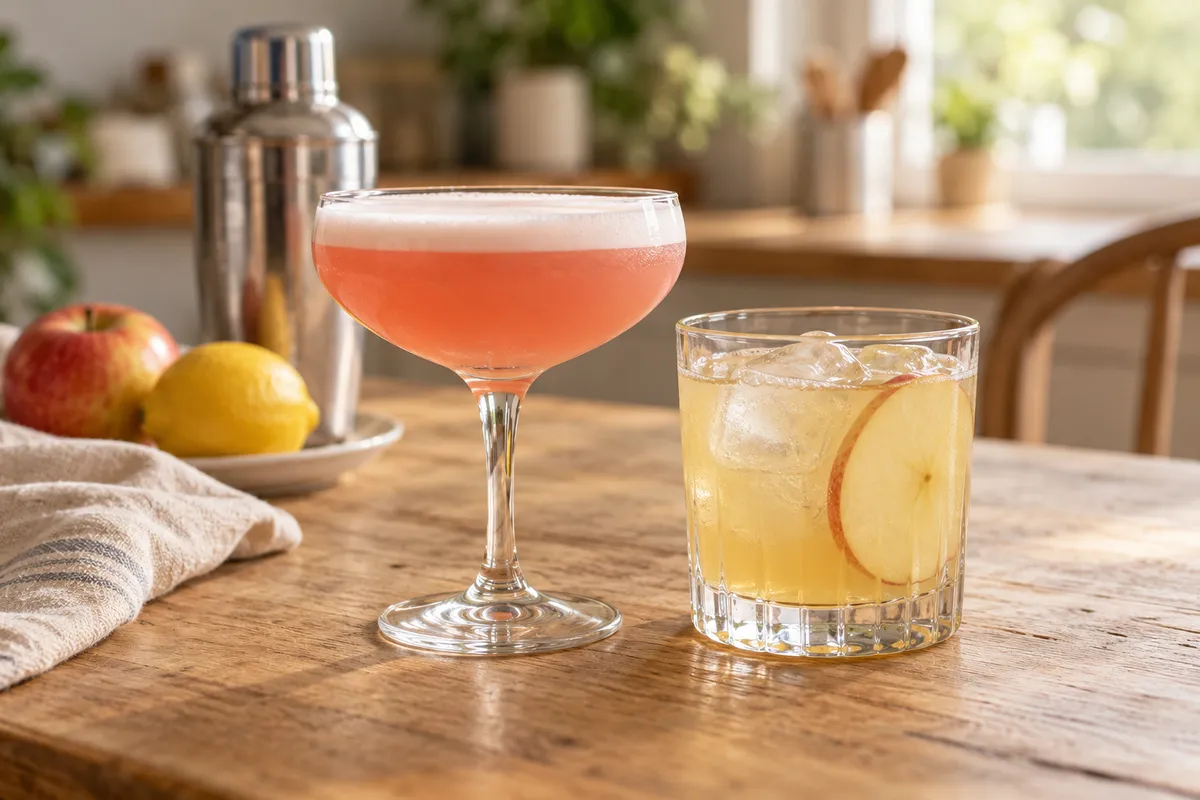
Two minutes can feel surprisingly long with a shaker in your hands. In Golden Mist, Bertha Stockbridge tells the cook to shake “for two minutes, actually, not guessing at the time.” Her 1920 What to Drink gives alcohol-free refreshments the attention usually associated with a cocktail.
When national Prohibition took effect in January 1920, it restricted the manufacture, sale and transportation of intoxicating liquor for beverage purposes. Alcohol did not disappear: illicit trade continued, and exceptions included medicinal uses. The National Archives’ overview describes that more complicated picture.
A home host could also make a festive drink without spirits or wine. Fruit, cream, a frothy top and a chilled glass offered plenty to work with. Stockbridge’s collection shows how much attention a non-alcoholic drink could receive, from its first shake to its final garnish.
In 1920, Bertha Stockbridge published What to Drink: The Blue Book of Beverages with D. Appleton and Company in New York. She had already published The Liberty Cook Book in 1918, during the First World War. Its subtitle promises good living with economy and a substantial section on preserving food. The household larder was familiar territory for this drinks writer. This time, she turned to a problem for people entertaining at home: making drinks without gin, wine or whiskey. Her recipes used fruit juice, syrups, cream, eggs and sparkling water instead.
From the Soda Counter to the Home Shaker
Alcohol-free drinks already had a lively repertoire before Prohibition. A. Emil Hiss’s 1897 soda manual, written for druggists and confectioners, devotes whole chapters to egg drinks and milk-and-cream drinks. Its chocolate egg shake allows a spoonful of cream; Creamed Orange combines orange pulp, vanilla syrup, cream and carbonated water. A shaker and strainer had work to do at the soda counter as well as in a cocktail book.
That earlier repertoire gives us a useful way to read Stockbridge’s collection. Her eggs, cream, syrups and bubbles belong to a broader tradition of elaborate refreshments. In her home recipes, those ingredients make an alcohol-free glass something to prepare with care, from its measured sweetness to its foam and garnish.
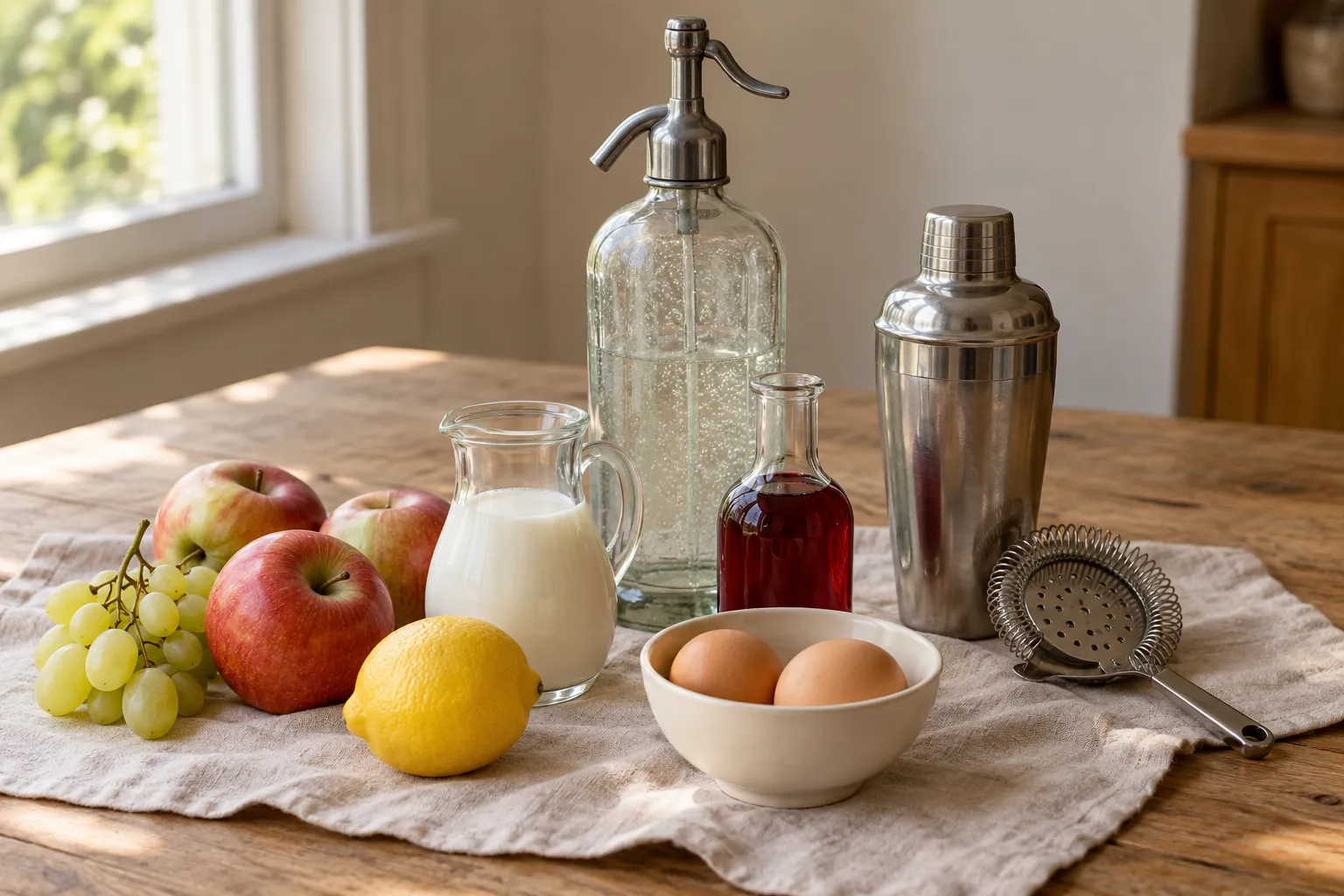
At the start of her fruitade chapter, Stockbridge recommends a cocktail shaker, ice shaver and long-handled spoon. Accurate cups and measuring spoons belong beside them. Her alcohol-free drinks ask for a prepared kitchen, with cold ingredients and a glass ready before the mixing begins.
Her foreword asks for thin, clear, polished glassware and chilled glasses for cold drinks. That care makes sense for these refreshments: a transparent tumbler shows the apple punch, a coupe gives egg foam space, and a tall glass holds the milk drink. The modern vessel choices below follow the needs of each serving.
The 1920 Larder: Apples, Dairy, and Siphons
Stockbridge built her drinks around fruit juice, cream, eggs, sparkling water and syrups. Sweet apple juice and white grape juice gave her highballs and cups a fruit base. For richer drinks, milk, cream and eggs supplied body and froth. Vanilla Milk Punch belongs to that richer group; Applebloom Punch follows the fruit-and-seltzer route.
Siphon seltzer and sparkling mineral waters such as Apollinaris add fizz alongside the juices and syrups. Raspberry, strawberry and pomegranate syrups gave the drinks color, while lemon and lime juice added tartness.
The Cup and the Shaker: Measuring in 1920
Stockbridge wrote primarily for the home cook, using standard American kitchen measures: cupfuls, tablespoonfuls, and pints. Her Clover Leaf specifies four cocktails; Applebloom Punch instead measures its three liquids by the pint. Read each recipe for its own batch size rather than assuming one serving convention throughout the book.
The companion recipes give modern metric amounts, usually for one glass. Vanilla Milk Punch remains a substantial serving. Clover Leaf gains lemon and a fuller egg-white foam; Violet Fizz omits the extra sugar and adds its bubbles after shaking. Read their individual methods when choosing the glass to make.
Five Temperance Drinks from the 1920 Collection
Choose the texture as well as the fruit. Clover Leaf is the foamed coupe, Applebloom the simple sparkling punch, and Ginger Ale Julep the mint-filled cup. Milk Punch and Violet Fizz put dairy on the menu in quite different ways.
1. Clover Leaf Cocktail (1920)
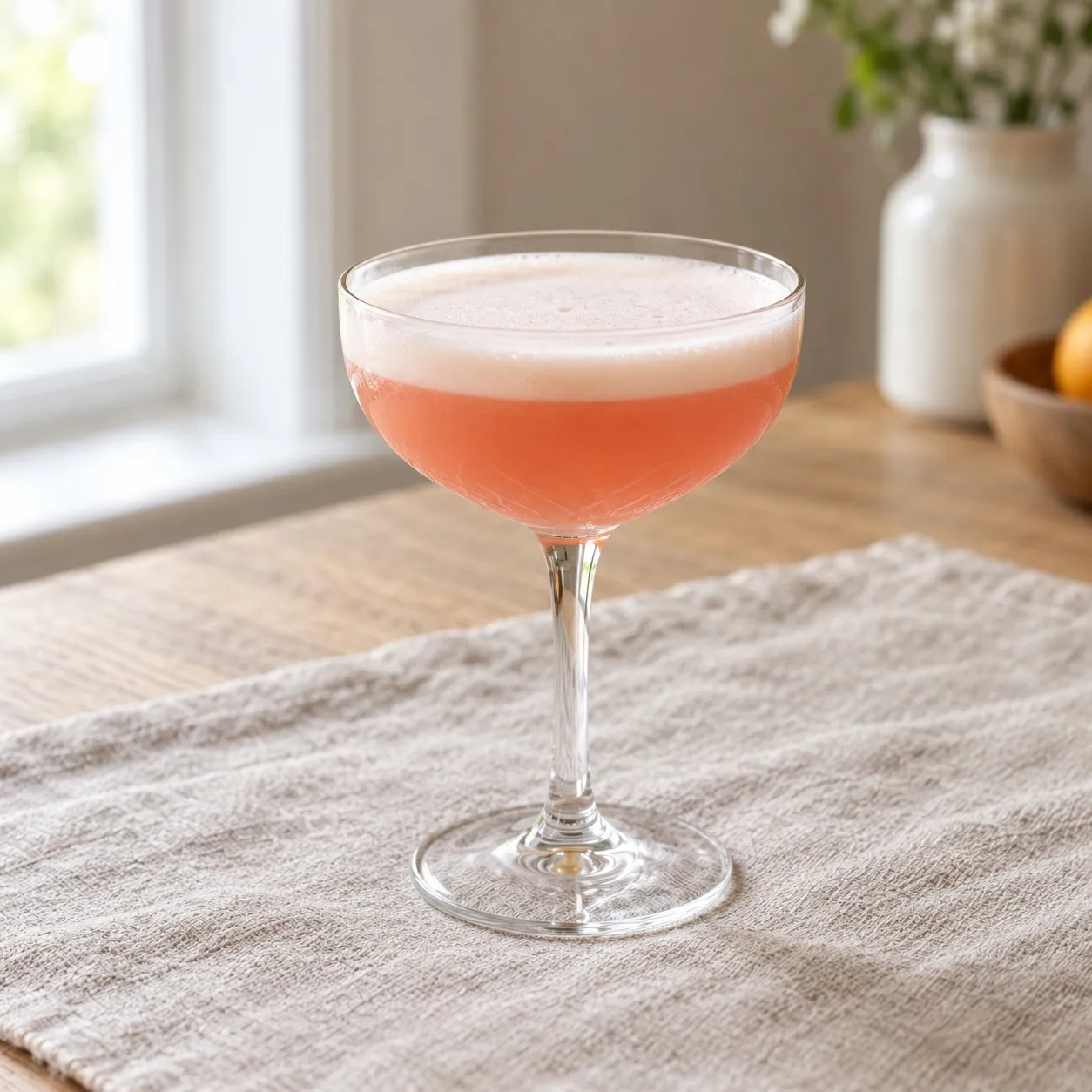
Source: What to Drink, page 44
Orange juice, grenadine and egg-white foam give this alcohol-free drink its pink color. Our adaptation adds lemon juice and uses a dry shake followed by shaking with ice.
2. Violet Fizz (1920)
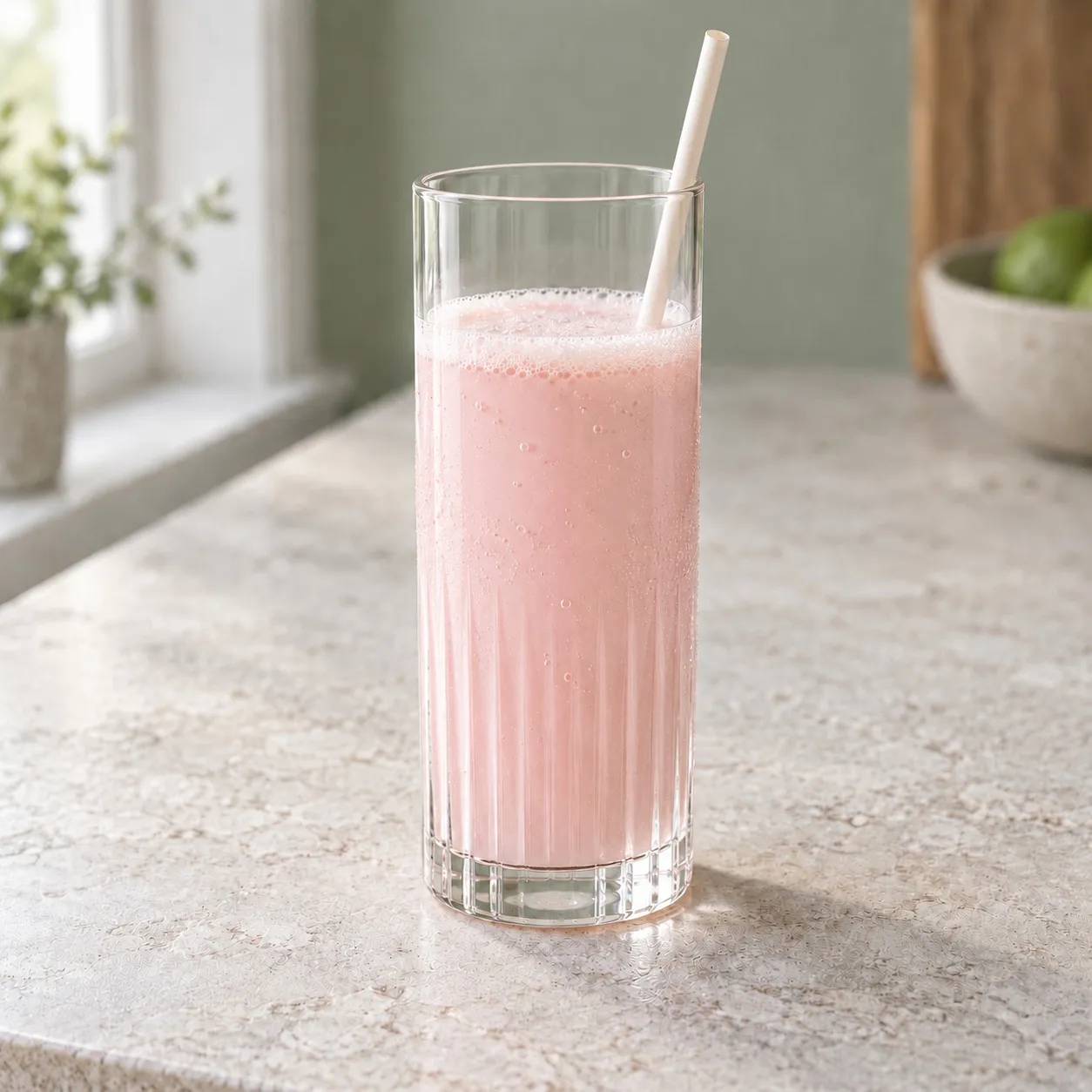
Source: What to Drink, page 51
In our version, raspberry syrup, lime juice and cream give Violet Fizz its fruit flavor and light froth. Shake those ingredients first, then add sparkling apple juice and cold seltzer.
3. Applebloom Punch (1920)
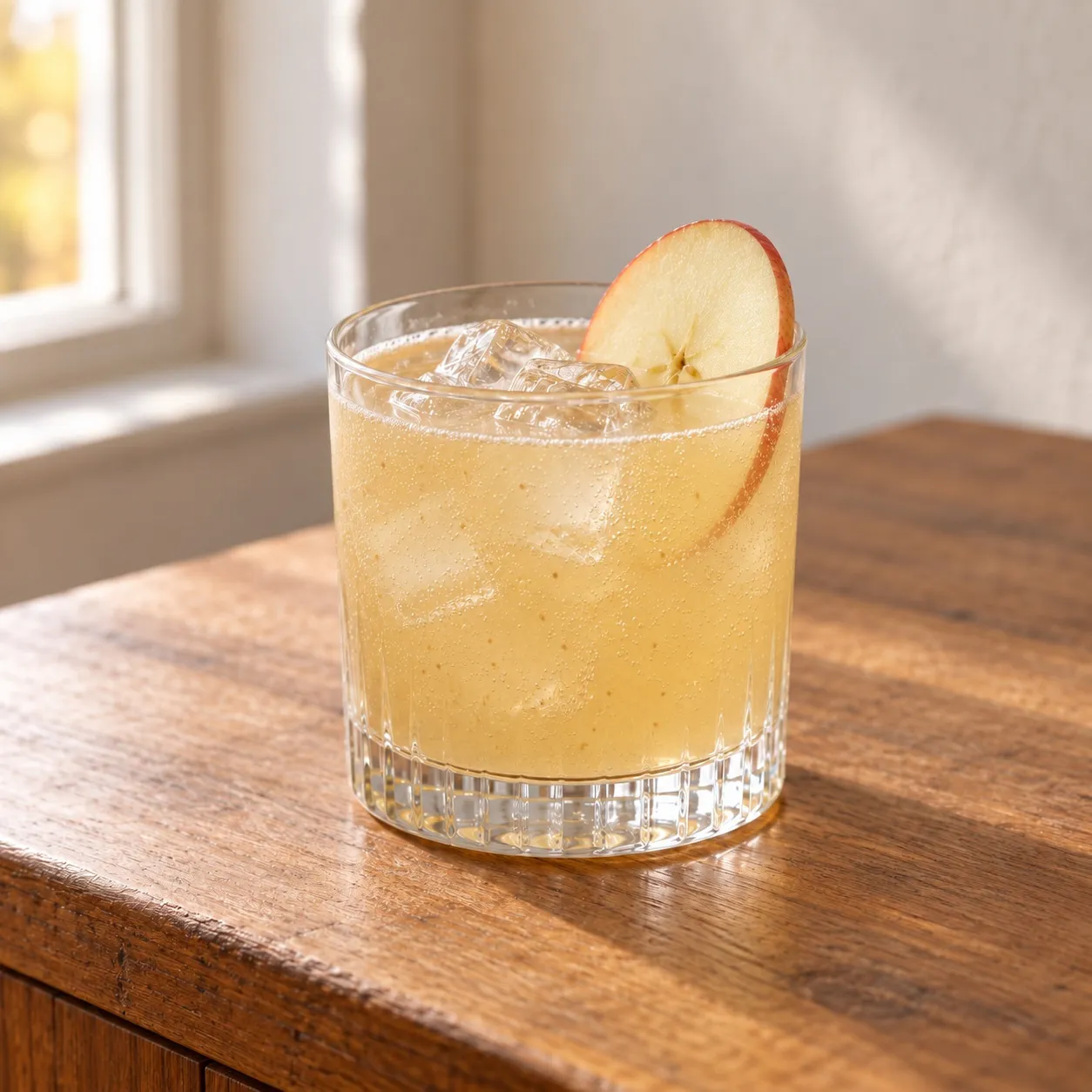
Source: What to Drink, page 18
Stockbridge combines sweet cider (unfermented apple juice) and white grape juice with Apollinaris. The water takes an equal share, supplying a mineral taste as well as fizz. The modern single glass keeps that three-part relationship.
4. Vanilla Milk Punch (1920)
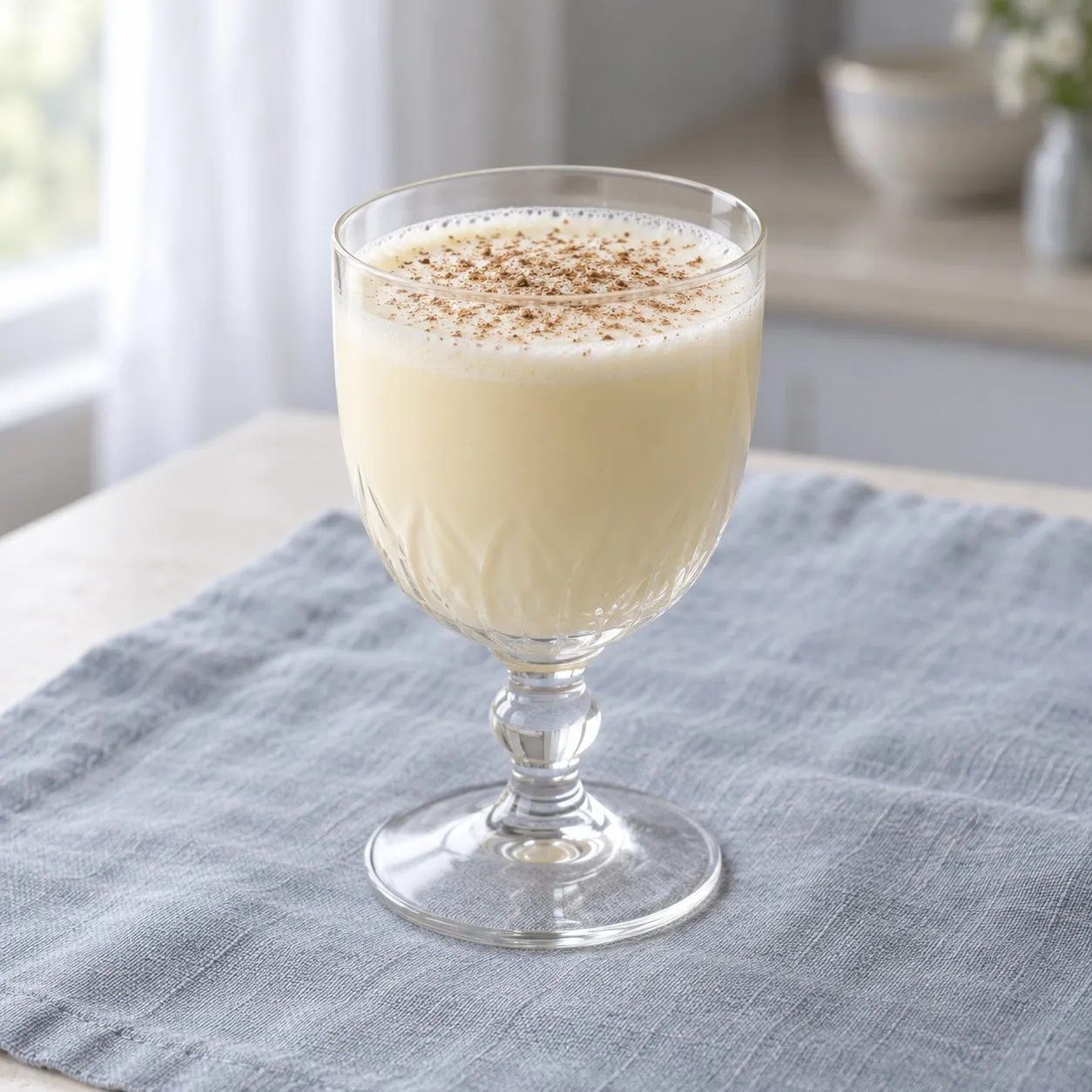
Source: What to Drink, page 24
Stockbridge’s alcohol-free milk punch belongs to the same family as the older rum and brandy versions. Cold milk, an egg, sugar and alcohol-free vanilla flavoring are shaken until frothy, then finished with nutmeg, a little like chilled eggnog.
5. Ginger Ale Julep (1920)
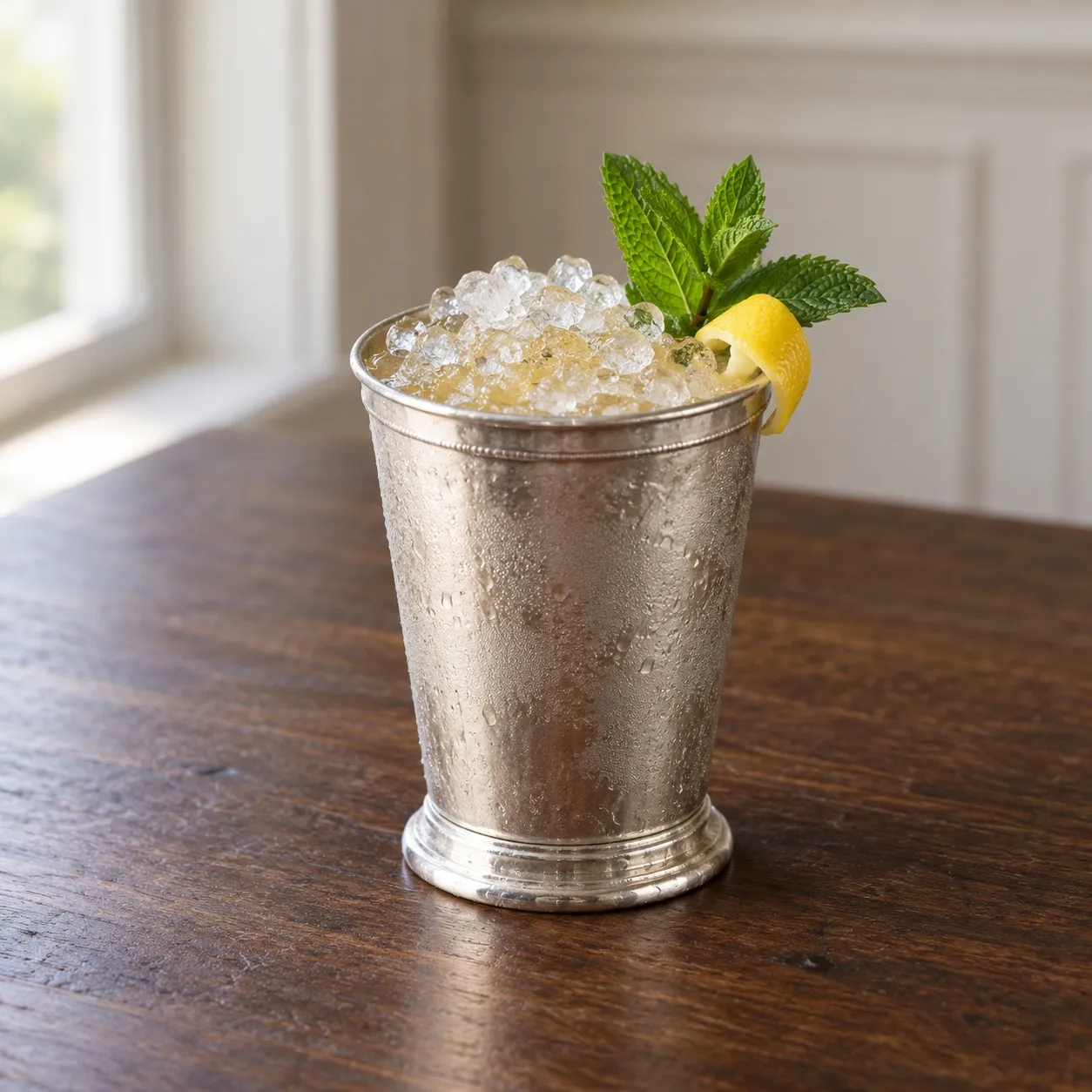
Source: What to Drink, page 59
Stockbridge filed this under ‘Juleps Which Cheer But Do Not Inebriate.’ Fresh mint, sugar and lemon juice are packed with crushed ice, then topped with cold ginger ale. Mint sprigs and lemon peel finish a drink made right in the cup.
Another shelf to explore
For a drink made from another familiar kitchen ingredient, Toye and Adair’s London collection puts marmalade, tea and coffee beside spirits. The two-book comparison explains a more practical difference: Stockbridge’s kitchen cups and mixed batch sizes meet the London writers’ serving-glass measures and six-person cocktails.
For another selection from the era, explore five alcohol-free drinks for a 1920s party on our sister site, Forgotten Drink.
Source Note
Recipes adapted from Bertha E. L. Stockbridge, What to Drink: The Blue Book of Beverages (New York: D. Appleton and Company, 1920). The foreword on pages vii–viii, measures on page xi and fruitade opening on page 1 supply the equipment and glassware context. Golden Mist, quoted at the opening, appears on page 44. It is an example of her insistence on timed shaking; the five companion recipes below offer a wider range of serving textures.
The five companion drinks appear on these pages:
- Applebloom Punch: page 18
- Vanilla Milk Punch: page 24
- Clover Leaf Cocktail: page 44
- Violet Fizz: page 51
- Ginger Ale Julep: page 59
Read Stockbridge’s What to Drink.
Earlier soda-counter context comes from A. Emil Hiss, The Standard Manual of Soda and Other Beverages (Chicago: G. P. Engelhard & Company, 1897), pages 111–112 and 122.