
Ginger Ale Julep (1920)
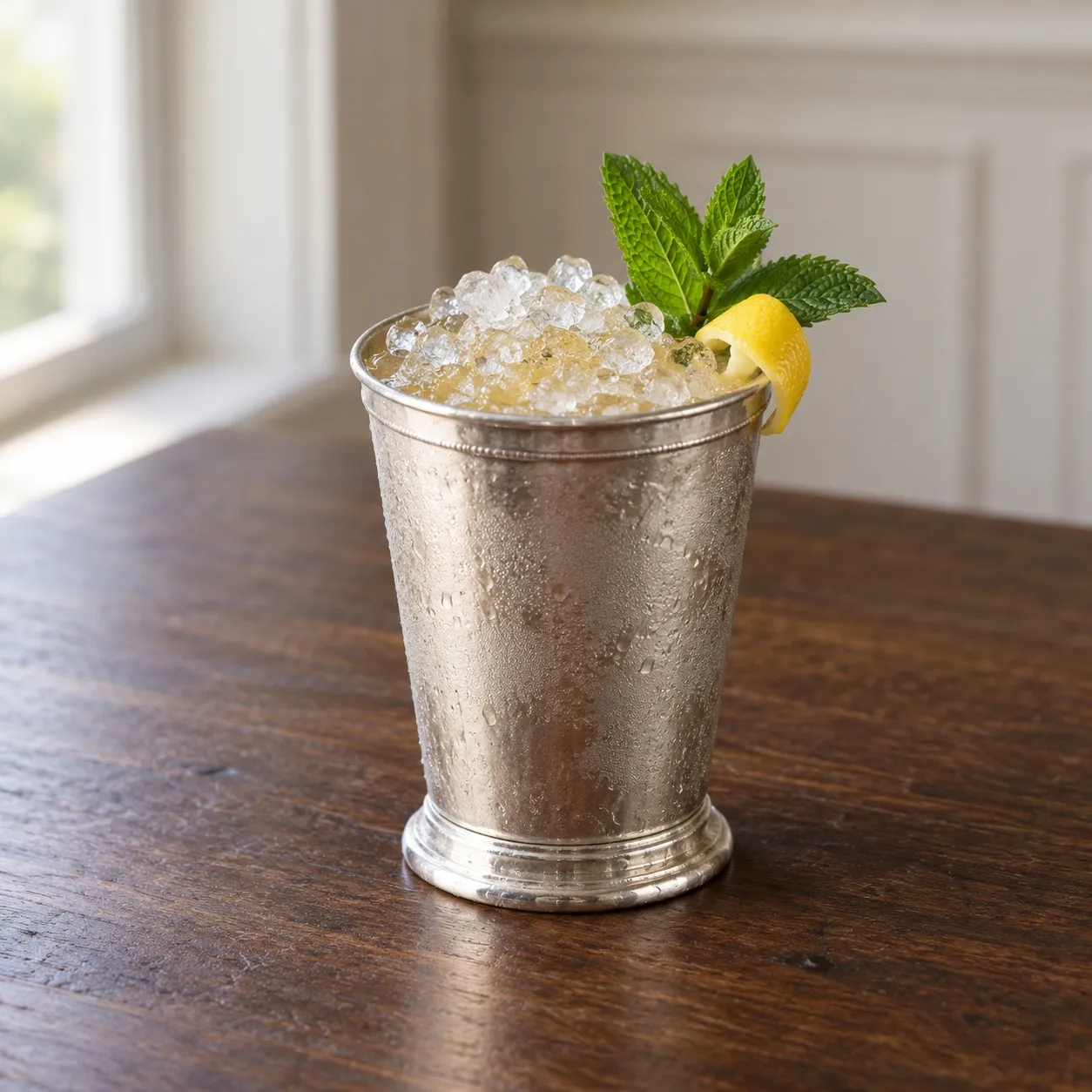
An alcohol-free julep with spearmint, lemon and ginger ale, served over crushed ice with a mint sprig and lemon twist.
- Original yieldYield
- 1 drink1 drink
- PrepPrep time
- TotalTotal time
Published Updated
Original recipe: 1 drink
The story behind the recipe
A fresh sprig rises above crushed ice, putting its scent close to your nose, while ginger ale gives the cold drink its fizz. Lemon and a little sugar sit underneath. It's an alcohol-free glass that keeps the mint, ice and pleasant ceremony of a julep.
A cheering section
Bertha Stockbridge called a section in her 1920 What to Drink “Juleps Which Cheer But Do Not Inebriate.” Ginger Ale Julep belongs there, with directions for individual glasses and a preparation for several people.
The section title makes the purpose plain. A julep could offer the cup, greenery and cooling ice without a spirit bottle. Stockbridge didn't reduce that choice to an undecorated glass of water; she attended to preparation and serving just as she did in her other drinks.
Her method works mint and lemon peel with sugar and water, then removes the crushed leaves and peel. The modern recipe leaves the pressed leaves under the ice and uses lemon peel as a finishing garnish. It keeps the mint and fizz while letting you build the drink directly in the glass.
Read more about this recipe
Mint in two places
The measured leaves flavor the mixture. The fresh garnish sprig gives you the smell of mint as you drink. Both belong in the recipe, but they're doing their work in different places.
Gentle pressing releases aroma without turning the leaves into a tangle of fragments. The back of a spoon works if you haven't a muddler to hand. A simple julep doesn't need to become an equipment hunt.
Spearmint is specified, with lemon juice adding tartness beside it. Lemon peel supplies another citrus scent at the top. When buying the mint, choose sound leaves and a sprig you'd be pleased to see on the finished glass.
Choose the ginger ale you like
Ginger ales vary in sweetness and ginger flavor. A ginger-forward example keeps that flavor noticeable beside the mint and lemon. Mild, sweet mixers can make the drink feel softer.
Ginger beer is a variation in the notes, with an alcohol-content check if you're keeping the drink alcohol-free. The two names don't guarantee the same flavor or the same product. Choose deliberately.
Ginger ale enters last. Its bubbles are ready to enjoy once the glass is finished, so leave the bottle closed while you prepare the mint, lemon and ice. There's no need to shake a fizzy mixture in a closed vessel.
The packed ice changes the sip
Crushed or shaved ice fills the cup more closely than a few large cubes. It supports the greenery, chills the drink and gradually adds water. The beginning is sharper and more concentrated than a later sip after some melting.
A metal julep cup may frost outside, but the recipe also works in a highball with enough room. Choose the vessel for the measured liquid and packed ice, not for a picture of how every julep ought to look.
In Vintage Mocktails, this is the mint-filled, built drink beside foams and milk punch. Keep the mixer cold and the sprig fresh. The finishing pour is a small job you can save until someone actually wants the glass.
For another selection from the era, explore five alcohol-free drinks for a 1920s party on our sister site, Forgotten Drink.
Make it your wayOriginal: 1 serving · Makes 1 drink
Original recipe: 1 drink
Ingredients
For 1 drink. Quantities are shown as written.
Source measurement convention: Metric. Explicit unit definitions take precedence; unconfirmed measures must be checked before conversion.
Original quantities for 1 drink.
- Fresh spearmint leaves6
- Fresh lemon juice15 ml
- Superfine (caster) sugar5 gAuthor measures: 1 metric tsp (1 metric tsp = 5 ml).
- Cold ginger ale150 ml
- Fresh mint(for garnish)1 sprig
- Lemon peel twist (for garnish)1
Measurement notes
Measurement notes
Original ingredients
- 6 fresh spearmint leaves
- 15 ml fresh lemon juice
- 5 g (1 teaspoon) superfine (caster) sugar
- 150 ml cold ginger ale
- 1 fresh mint sprig (for garnish)
- 1 lemon peel twist (for garnish)
Equipment
 Julep cup or highball glass (at least 300 ml capacity)
 Muddler or bar spoon
Instructions
Combine mint, lemon and sugar
Place the fresh spearmint leaves, fresh lemon juice, and superfine (caster) sugar into the bottom of a julep cup or highball glass.
Press the mint gently
Gently press the mint leaves with a muddler or the back of a bar spoon to release their aromatic oils without tearing them to shreds.
Pack the glass with ice
Pack the glass with the crushed or shaved ice.
Add ginger ale and stir
Pour the cold ginger ale over the ice and stir gently to frost the outside of the cup.
Garnish with mint and lemon
Garnish with a fresh mint sprig and a lemon peel twist.
Estimated calories 80 kcal
Nutrition portion: whole recipe · Original yield: 1 drink
Source & assumptions
Ingredient-based estimate using CoFID 2021, identified manufacturer information. Approximately 80 kcal per nutrition portion. Uses regular sweetened ginger ale; mint and lemon-peel garnishes are excluded. Ingredients, brands and preparation affect values.
Recipe notes
When adjusting quantities
Scale ingredients proportionally.
Original recipe notes
These notes describe the original recipe. Quantities mentioned here do not change when you adjust servings.
Stockbridge, What to Drink: The Blue Book of Beverages (1920), p. 59: original book. The source allows individual glasses and a batch preparation. We use a smaller 150 ml ginger-ale portion, press mint with lemon juice and sugar, leave the leaves in the glass and reserve the peel for garnish; the source's added water, Maraschino cherries and straw are omitted.
Choose a ginger-forward ginger ale. If using ginger beer, check that it's alcohol-free. For several people, prepare the other ingredients ahead and add the mixer to each glass at serving.
Read the scaling guide. Times, temperatures and equipment need their own consideration. Open the recipe tool to review and correct individual amounts.
Sources and attribution
Bertha E. L. Stockbridge, What to Drink: The Blue Book of Beverages (New York: D. Appleton & Co., 1920), p. 59
Recipe details
- Recipe tradition
- Vintage
- Cuisine
- Other / International
- Source decade
- 1920s
- Browse category
- Drinks & Cocktails