
Vanilla Milk Punch Mocktail (1920)
Cold milk shaken with a whole egg, sugar and alcohol-free vanilla flavoring, then topped with grated nutmeg.
- Original yieldYield
- 1 drink1 drink
- PrepPrep time
- TotalTotal time
Published Updated
Original recipe: 1 drink
The story behind the recipe
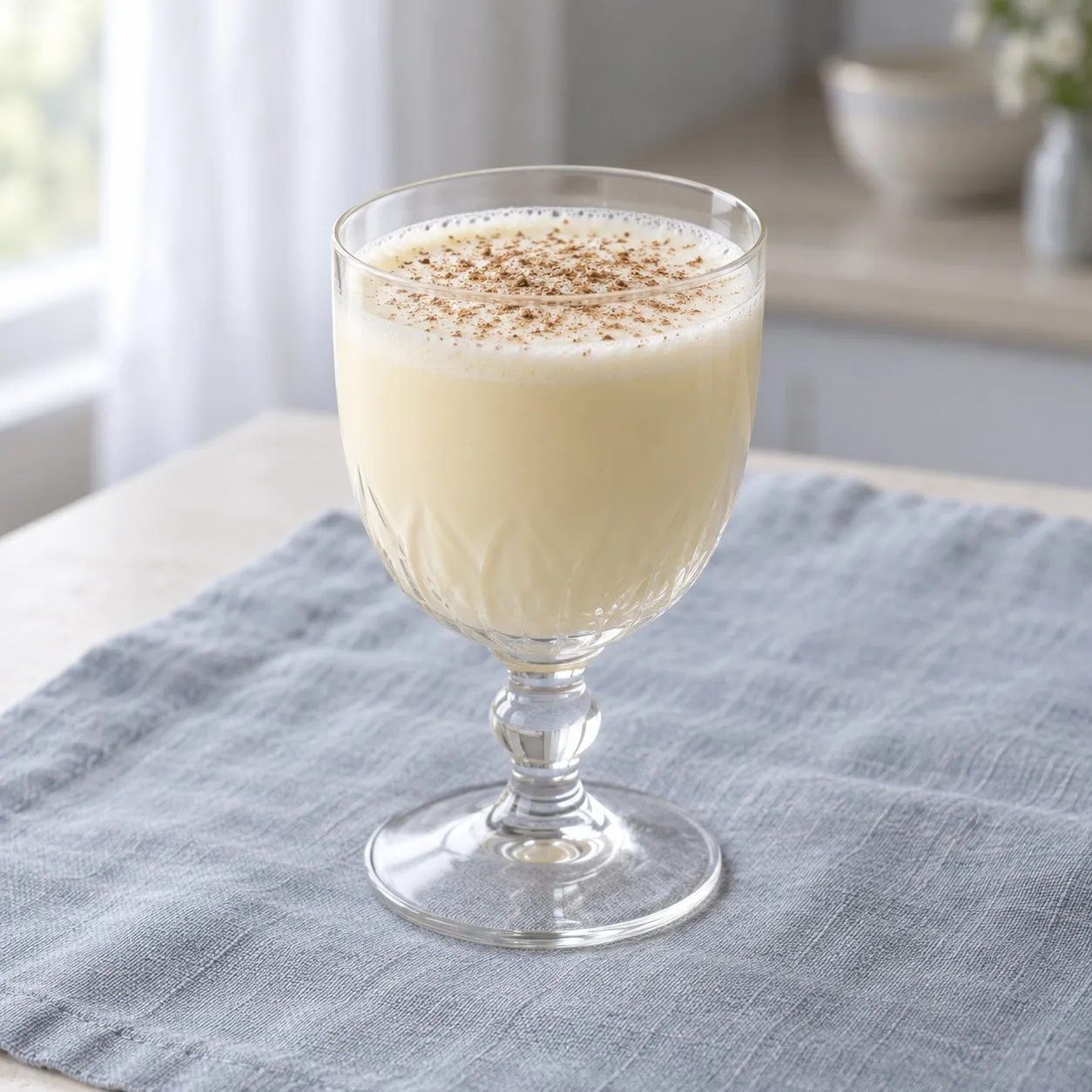
Nutmeg meets your nose above a pale glass of milk punch. Beneath it are cold whole milk, egg, a little sugar and vanilla, shaken into a drink with a light froth. It's a richer choice than fruit juice or a fizz, with the scent of a familiar pudding served in a tall glass.
The milk punch in Stockbridge's book
Bertha Stockbridge included Vanilla Milk Punch in What to Drink: The Blue Book of Beverages in 1920. Her alcohol-free drinks collection has room for dairy and eggs as well as the fruit punches that might seem more obvious on a party menu.
Milk punch is a broad name. Other recipes contain spirits, and some use clarification to produce a clear liquid. This one is a straightforward shaken milk drink, white in the glass, with no rum or brandy among its ingredients.
That makes it particularly easy to describe when offering a choice: cold milk, vanilla and nutmeg, with egg shaken through it. Someone asking for the lighter fruit glass can choose something else from the temperance-drinks collection.
Read more about this recipe
A whole egg changes the feel
The egg gives the milk a fuller texture. Shaking introduces air, and a little froth can sit on top of the liquid. It has something of chilled eggnog about it, though the method involves no cooking or custard-setting stage.
The whole egg is mixed into the drink, not served as a separate white cap. That distinguishes it from Clover Leaf's egg-white foam. Whole milk also brings body, so the final pour is substantial enough to need its own tall glass.
When planning several servings, keep the egg and milk cold and prepare comfortable shaker batches. More glasses need more room for ingredients and ice, not an indefinitely longer shake.
Vanilla without the alcohol
Use explicitly alcohol-free vanilla flavoring. Ordinary vanilla extract can contain alcohol, and the label is more reliable than assuming that every vanilla bottle suits a mocktail.
Vanilla brings a familiar custard-like aroma to the cold milk. A small measured amount is plenty to consider alongside the sugar and nutmeg. Pouring casually from the bottle can overwhelm a recipe whose other ingredients are gentle.
There is no extra cream in the formula. The milk and egg supply the richness, while the modest sugar sweetens them. It remains a drink to pour and sip, with no spoonful of dessert sauce needed.
Nutmeg where you can smell it
The freshly grated spice goes on the surface. That puts its aroma above the drink, where you notice it before taking a sip. Mixing a large amount through the milk would give a different experience.
The source's milk measure becomes a convenient 300 ml in the recipe. With egg, some mixing dilution and aeration added to that, a small cocktail coupe would be the wrong glass. The listed tall glass or footed punch cup gives the pour space.
The spice flecks sit plainly against the pale surface. Vanilla, nutmeg and cold richness make this the fuller choice on a drinks menu, with a large enough glass for someone to enjoy it comfortably.
For another selection from the era, explore five alcohol-free drinks for a 1920s party on our sister site, Forgotten Drink.
Make it your wayOriginal: 1 serving · Makes 1 drink
Original recipe: 1 drink
Ingredients
For 1 drink. Quantities are shown as written.
Source measurement convention: Metric. Explicit unit definitions take precedence; unconfirmed measures must be checked before conversion.
Original quantities for 1 drink.
- Cold whole milk300 ml
- Egg1
- Alcohol-free vanilla flavoring2.5 mlAuthor measures: 1/2 metric tsp (1 metric tsp = 5 ml).
- Superfine (caster) sugar5 gAuthor measures: 1 metric tsp (1 metric tsp = 5 ml).
- Freshly grated nutmegGarnish
Measurement notes
Measurement notes
Original ingredients
- 300 ml cold whole milk
- 1 egg
- 2.5 ml (1/2 teaspoon) alcohol-free vanilla flavoring
- 5 g (1 teaspoon) superfine (caster) sugar
- Garnish: freshly grated nutmeg
Equipment
 Cocktail shaker
 Fine strainer
 400 ml Collins or footed punch glass
Instructions
Combine the ingredients with ice
Combine the cold whole milk, whole egg, alcohol-free vanilla flavoring, and superfine (caster) sugar in a cocktail shaker with the cracked ice.
Shake to aerate and chill
Shake vigorously for 20 seconds to aerate the egg and chill the milk thoroughly.
Strain into a chilled glass
Strain into a tall chilled glass or footed punch cup.
Dust with grated nutmeg
Dust the surface generously with freshly grated nutmeg before serving.
Estimated calories 280 kcal
Nutrition portion: whole recipe · Original yield: 1 drink
Source & assumptions
Ingredient-based estimate using CoFID 2021, USDA SR Legacy (2018), the Norwegian Food Composition Table. About 280 kcal per nutrition portion (whole recipe). Includes whole milk and one representative 50 g edible egg. Uses alcohol-free vanilla flavoring and an estimated small nutmeg garnish. Actual ingredients and preparation affect the estimate.
Recipe notes
When adjusting quantities
Scale ingredients proportionally.
Original recipe notes
These notes describe the original recipe. Quantities mentioned here do not change when you adjust servings.
Food safety: This drink contains raw egg. Use a pasteurized egg or pasteurized whole-egg product suitable for uncooked recipes to reduce foodborne-illness risk. Keep chilled and serve immediately.
Stockbridge, What to Drink: The Blue Book of Beverages (1920), p. 24: original book. The source's 1¼ cups milk is rounded to 300 ml, with the half-teaspoon vanilla measure retained and alcohol-free flavoring specified.
Standard vanilla extract contains alcohol; check the bottle for an alcohol-free product. Shake or blend larger quantities in smaller batches with room for the egg mixture to aerate.
Read the scaling guide. Times, temperatures and equipment need their own consideration. Open the recipe tool to review and correct individual amounts.
Sources and attribution
Bertha E. L. Stockbridge, What to Drink: The Blue Book of Beverages (New York: D. Appleton & Co., 1920), p. 24
Recipe details
- Recipe tradition
- Vintage
- Cuisine
- Other / International
- Source decade
- 1920s
- Browse category
- Drinks & Cocktails