

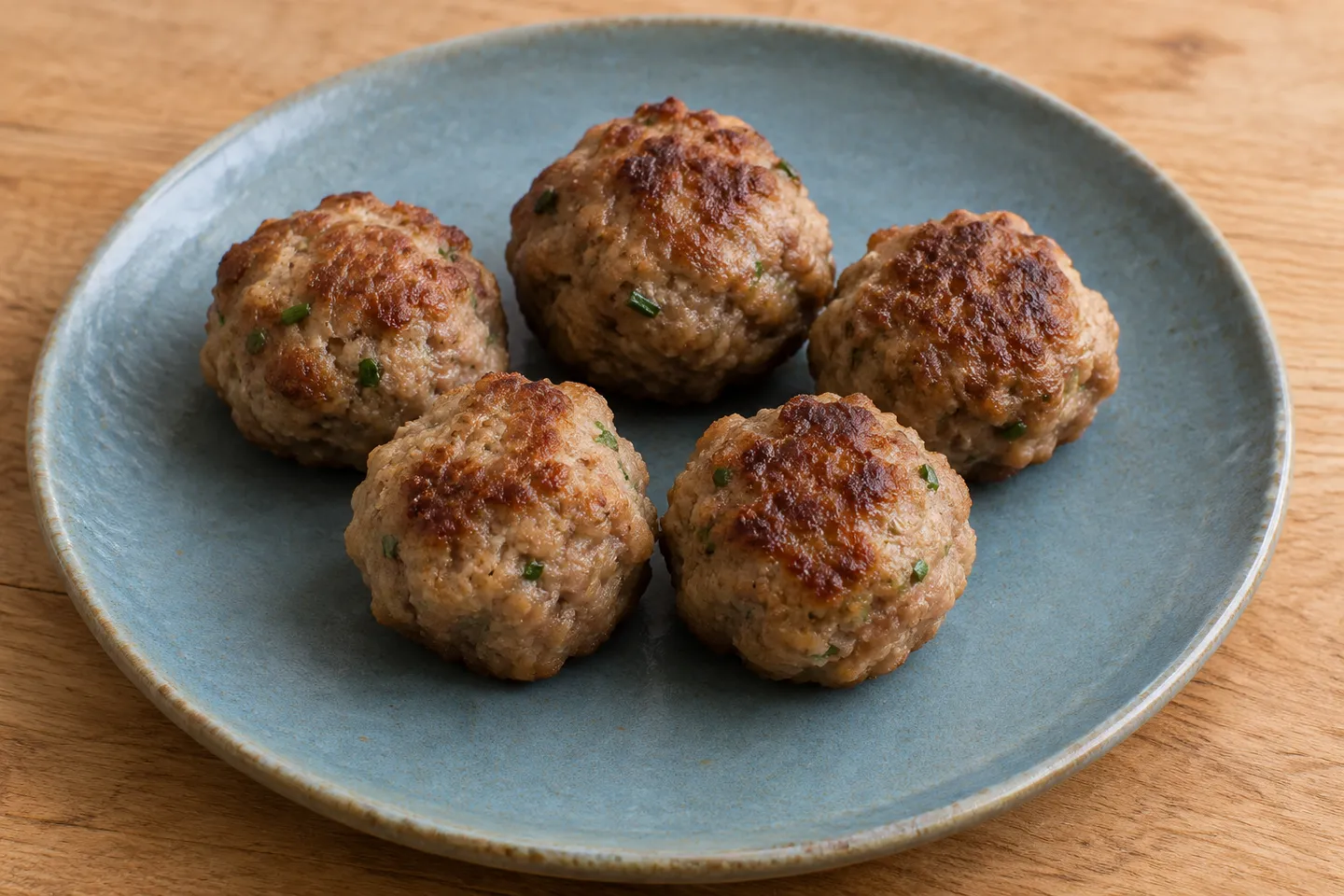
Irish Rissoles (1911), Adapted for Cooked Beef
Small pan-browned balls of finely chopped cooked beef, soft white bread crumbs, milk and chives, adapted from a 1911 leftover recipe.
- Original yieldYield
- 5 small rissoles; about 2 light lunch portions5 small rissolesabout 2 light lunch portions
- PrepPrep time
- CookCook time
- TotalTotal time
Untested planning estimate including a 5-minute crumb soak, starting with cooked, safely chilled beef. Earlier meat cooking and cooling are not included. An extra crumb adjustment can add a few minutes; continue cooking if needed to reach the center temperature.
Published
Original recipe: 5 small rissoles; about 2 light lunch portions
The story behind the recipe
These rissoles begin with beef that has already been roasted. Chopped finely and mixed with soft bread crumbs, milk and chives, it becomes a small pan-browned portion instead of another slice of roast. There is no egg in this version; the bread and liquid are part of its structure.
A small batch from a cooked ingredient
Clarke and Rulon's 1911 cookbook gives Irish Rissoles as one use for cooked meat. It suggests roast beef or steak, chives or a little onion, soft crumbs and milk. The title belongs to that printed recipe. It is not evidence that the authors invented the dish or established its national origin.
The original gives a five-piece example, which makes a useful tasting batch for a small amount of beef. Here, five small rissoles make about two light lunch portions, an estimated serving choice rather than the book's stated number of diners. Add accompaniments separately according to the meal you want.
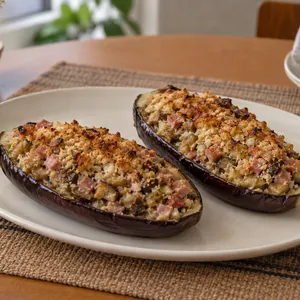
For another way to serve cooked roast meat, our sister site The Forgotten Menu has Hashed Mutton with Mushroom Catchup (1769): sliced roast mutton or lamb warmed in onion gravy.
Read more about this recipe
Soft crumbs inside the mixture
The source asks for crumbs from the inside of a loaf. Those are different from the dry crumbs used to coat a croquette. In this dish the bread goes through the filling, where milk moistens it before shaping. A crisp crumb shell is not part of this recipe.
This adaptation interprets the source's nearly full cup as seven-eighths of a cup, measured as one cup minus two tablespoons, while retaining its third-cup milk allowance. That is a practical modern interpretation, not a recovered exact fraction. A short soak lets the soft crumbs take up the milk. A little extra soft bread is reserved for a mixture that needs help holding its shape; do not substitute dry crumbs or panko and expect the same behavior.
The beef also needs attention before it enters the bowl. Remove tough connective tissue and chop it very finely. Large roast-beef cubes would make a different mixture, with less opportunity for the pieces to hold together. The source uses a meat grinder; careful knife chopping is the chosen home method here.
Browning around the portion
Clarke and Rulon form balls and turn them in a little hot fat. That is a different finish from a whole pan of hash with one browned underside. Give these small portions room and turn gently so they can color on several sides.
The source leaves the fat and seasonings open. This version chooses butter, chives and black pepper. Salt remains optional because the earlier roast may already be seasoned. It also replaces the book's preference for rare beef with safely cooked and chilled meat; this is not a recipe for finishing raw meat.
Make it your wayOriginal: 2 servings · Makes 5 small rissoles; about 2 light lunch portions
Original recipe: 5 small rissoles; about 2 light lunch portions
Ingredients
For 5 small rissoles; about 2 light lunch portions. Quantities are shown as written.
Source measurement convention: US customary. Explicit unit definitions take precedence; unconfirmed measures must be checked before conversion.
Original quantities for 5 small rissoles; about 2 light lunch portions.
- Chilled cooked roast beef, trimmed and very finely chopped1 cup
- Soft fresh white bread crumbs, from the inside of the loaf7/8 cup
- Additional soft fresh white bread crumbs, reserved as a maximum allowance; use only if needed for shaping2 tbsp
- Whole milk1/3 cup
- Finely chopped chives1 tbsp
- Unsalted butter, for the pan1 tbsp
- Salt, to taste (optional)
- Ground black pepper, to taste
Measurement notes
- chilled cooked roast beef, trimmed and very finely chopped, soft fresh white bread crumbs, from the inside of the loaf, whole milk: US cup: 1 = 236.5882 ml (rounded).
- additional soft fresh white bread crumbs, reserved as a maximum allowance; use only if needed for shaping, finely chopped chives, unsalted butter, for the pan: US tbsp: 1 = 14.7868 ml (rounded).
Measurement notes
Original ingredients
- 1 cup chilled cooked roast beef, trimmed and very finely choppedUS cup: 1 = 236.5882 ml (rounded).
- 7/8 cup soft fresh white bread crumbs, from the inside of the loafUS cup: 1 = 236.5882 ml (rounded).
- 2 tbsp additional soft fresh white bread crumbs, reserved as a maximum allowance; use only if needed for shapingUS tbsp: 1 = 14.7868 ml (rounded).
- 1/3 cup whole milkUS cup: 1 = 236.5882 ml (rounded).
- 1 tbsp finely chopped chivesUS tbsp: 1 = 14.7868 ml (rounded).
- 1 tbsp unsalted butter, for the panUS tbsp: 1 = 14.7868 ml (rounded).
- Salt, to taste (optional)
- Ground black pepper, to taste
Equipment
 Heavy cast-iron skillet (10 or 12-inch)
 Food thermometer
Instructions
Check and chop the cooked beef
Check that the cooked beef has been cooled and refrigerated safely and remains within its existing storage limit. Trim it and chop very finely before measuring the listed prepared amount. Keep refrigerated until mixing.
Soak the crumbs and combine
Mix the main soft bread crumbs with the milk and leave for 5 minutes. Add the beef, chives and black pepper; add salt only if needed. Work gently until evenly combined.
Check cohesion and shape
Press a small test portion into a compact ball. It should keep its shape when lifted with a spoon. If it slumps, work in the additional soft crumbs a little at a time, up to the listed allowance, and let stand for 2 minutes before checking again. At the original batch size, divide into five equal small portions and press each firmly into a ball. Handle gently and keep the prepared portions refrigerated if they must wait before frying.
Brown gently in the skillet
Melt the butter in the skillet over medium heat. Add the rissoles in one uncrowded layer, then lower the heat if the butter starts to darken. Cook for about 10 to 15 minutes, turning carefully to color several sides.
Check the centers and serve
Check the centers with the food thermometer. Continue until each rissole reaches at least 165°F (74°C), reducing the heat if the outside browns too quickly. Serve promptly.
Recipe notes
When adjusting quantities
Keep each rissole the same size as in the original batch. Larger batches need additional pan space or successive batches; cooking time and temperature checks do not multiply with ingredient amounts.
Original recipe notes
These notes describe the original recipe. Quantities mentioned here do not change when you adjust servings.
This is an untested adaptation. The original gives nearly a cup of crumbs, a third of a cup of milk and a cup of minced beef for five small rissoles. Seven-eighths of a cup is the chosen starting measure; with the full extra crumb allowance it becomes one cup. Cohesion still needs a kitchen trial before a tested-performance claim. No raw-meat substitution is covered by these timings.
The pan-browning time is an estimate, not a substitute for checking the reheated filling. Use fresh, sound bread and suitably stored meat; shaping or frying does not make spoiled or badly stored food safe.
Storage
Use cooked meat with a known safe cooling and refrigeration history, within its existing storage limit. Refrigerate any remaining rissoles within 2 hours, or 1 hour above 90°F (32°C), at 40°F (4°C) or below. The new dish does not extend the meat's original storage limit. Reheat to 165°F (74°C).
Read the scaling guide. Times, temperatures and equipment need their own consideration. Open the recipe tool to review and correct individual amounts.

Sources and attribution
Helen Carroll Clarke and Phoebe Deyo Rulon, The Cook Book of Left-overs (Harper & Brothers, copyright 1911), Irish Rissoles, p. 14. The title is the source's name, not an independently verified origin claim.
The Cook Book of Left-overs (1911), Irish Rissoles, p. 14
Adapted from Irish Rissoles, p. 14. The precise crumb measure, reserved shaping crumbs, five-minute soak, chive and pan-butter quantities, serving estimate, chopping method and timing are modern choices. This adaptation has not been kitchen-tested. Present-day handling follows FoodSafety.gov's cooling guidance and leftover reheating temperature.
Adapted from Irish Rissoles, p. 14. The precise crumb measure, reserved shaping crumbs, five-minute soak, chive and pan-butter quantities, serving estimate, chopping method and timing are modern choices. This adaptation has not been kitchen-tested. Present-day handling follows FoodSafety.gov's cooling guidance and leftover reheating temperature.
Recipe details
- Recipe tradition
- Vintage
- Course or meal
- Lunch
- Source decade
- 1910s
- Cooking method
- Stovetop
- Browse category
- Main Dishes