

- Cooking
- Methods
- Bread
- Measurement
Another Life for Bread: Pudding, Sauce and Spiced Wine
See how buttered slices, fine soft crumbs and fried cubes make three different dishes from bread.
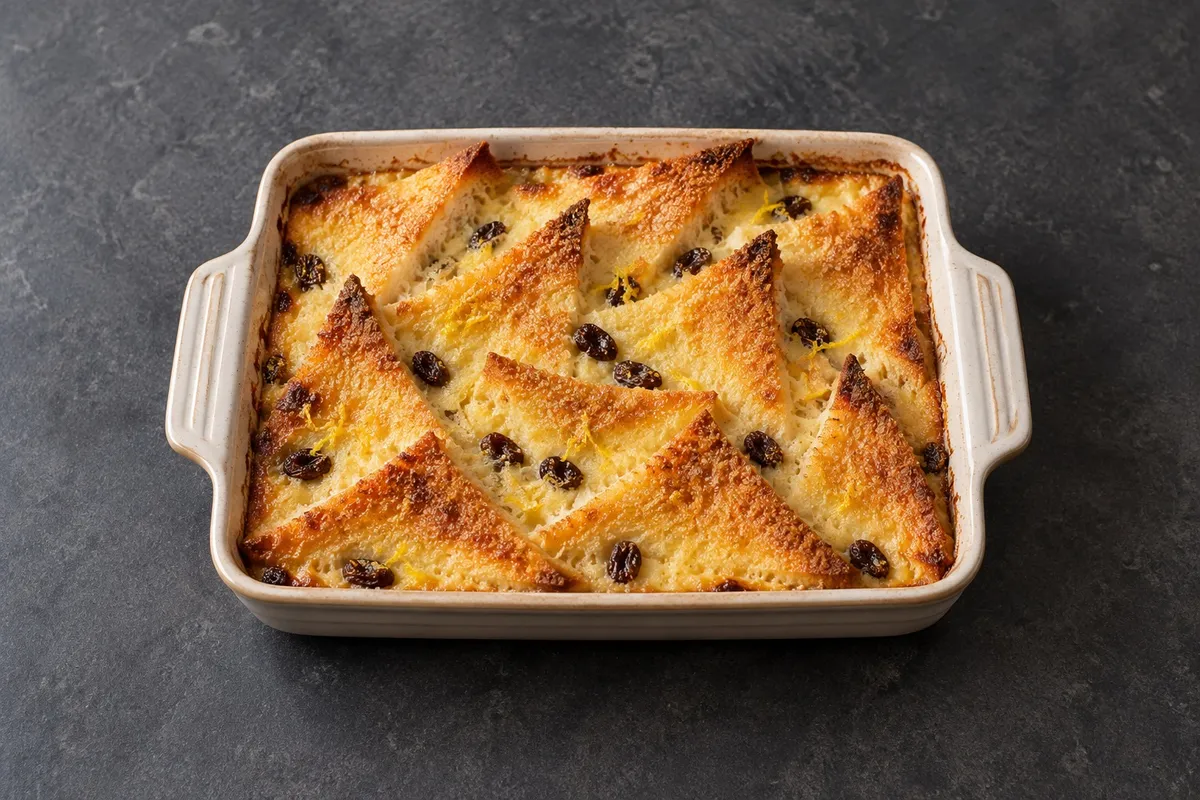
Leave the bread in slices and an egg custard can bake between its layers. Reduce it to fine crumbs and it can thicken warm milk into a sauce. Cut it into cubes, fry them and pour over spiced wine, and a small dessert takes another shape.
Choose the bread’s finished texture. A visible slice, a soft texture dispersed through a sauce and a spoonful of distinct cubes ask for different preparation. “Use some bread” leaves out the decision that shapes the dish.
Our three recipes make that choice explicit. Two are contemporary adaptations of identified modern formulas. The third, Payn Fondew, keeps a medieval wine-and-bread idea while clearly describing its modern changes.
Weigh the bread you will actually use
For Bread-and-Butter Pudding, the prepared ingredient is 250 g of day-old white bread, weighed after removing its crusts. For Onion-and-Clove Bread Sauce, it is 100 g of fine soft crumbs from crustless white bread.
The sequence matters. Weighing a loaf portion and then cutting off a substantial crust leaves less bread for the liquid than the recipe specifies. Put the prepared ingredient on the scale, with the trimming already done.
A slice count alone can hide a considerable difference between loaves. Our pudding’s reference gives eight slices without a prepared weight. The new version chooses an explicit mass; it doesn’t claim that all eight-slice portions equal 250 g.
Likewise, don’t use a cup-to-gram shortcut to turn soft crumbs into dry crumbs. Preparation changes the ingredient. Keep the form with the measure before considering any serving adjustment.
Slices: arrange the pudding before the custard
Buttering the slices lets you arrange them as pieces, with raised corners and overlapping layers. Raisins and lemon zest are distributed between them, then the custard is poured over.
The bread should have time to absorb the custard before baking. Our version follows the modern source’s half-hour soak, with longer holding kept in the refrigerator. A dry corner at the moment of pouring isn’t a reason to rewrite the whole liquid quantity immediately.
Katy Gilhooly’s modern pudding supplies the reference dish dimensions and custard structure. Our measured bread mass and choice of heavy whipping cream are recorded adaptations. Heavy cream isn’t an exact translation of the source’s double cream.
The dish has two textures to cook: exposed bread above, egg custard below. A browned top doesn’t by itself establish that the center is done. The recipe includes a set-center cue and an interior temperature check based on FDA egg-dish guidance.
Fine crumbs: let the sauce lose the shape of bread
Bread sauce begins with a different intention. The bread is reduced to fine soft crumbs before it reaches the saucepan. There is no slice to preserve and no egg custard to set around it.
The milk is flavored first with onion, cloves, peppercorns, garlic and herbs. Those whole ingredients are strained out. The crumbs are then stirred into the warm liquid and cooked briefly to make a soft, spoonable sauce.
Rosemary Shrager’s modern formula is the reference for this sequence. Our version specifies the prepared onion and a measured allowance of extra milk, keeping the final texture adjustment visible.
Add that reserved milk only if needed, a little at a time. The bread and the amount of liquid recovered after straining can affect the finish. It is more useful to record an actual addition than to make “a splash” mean something different every time.
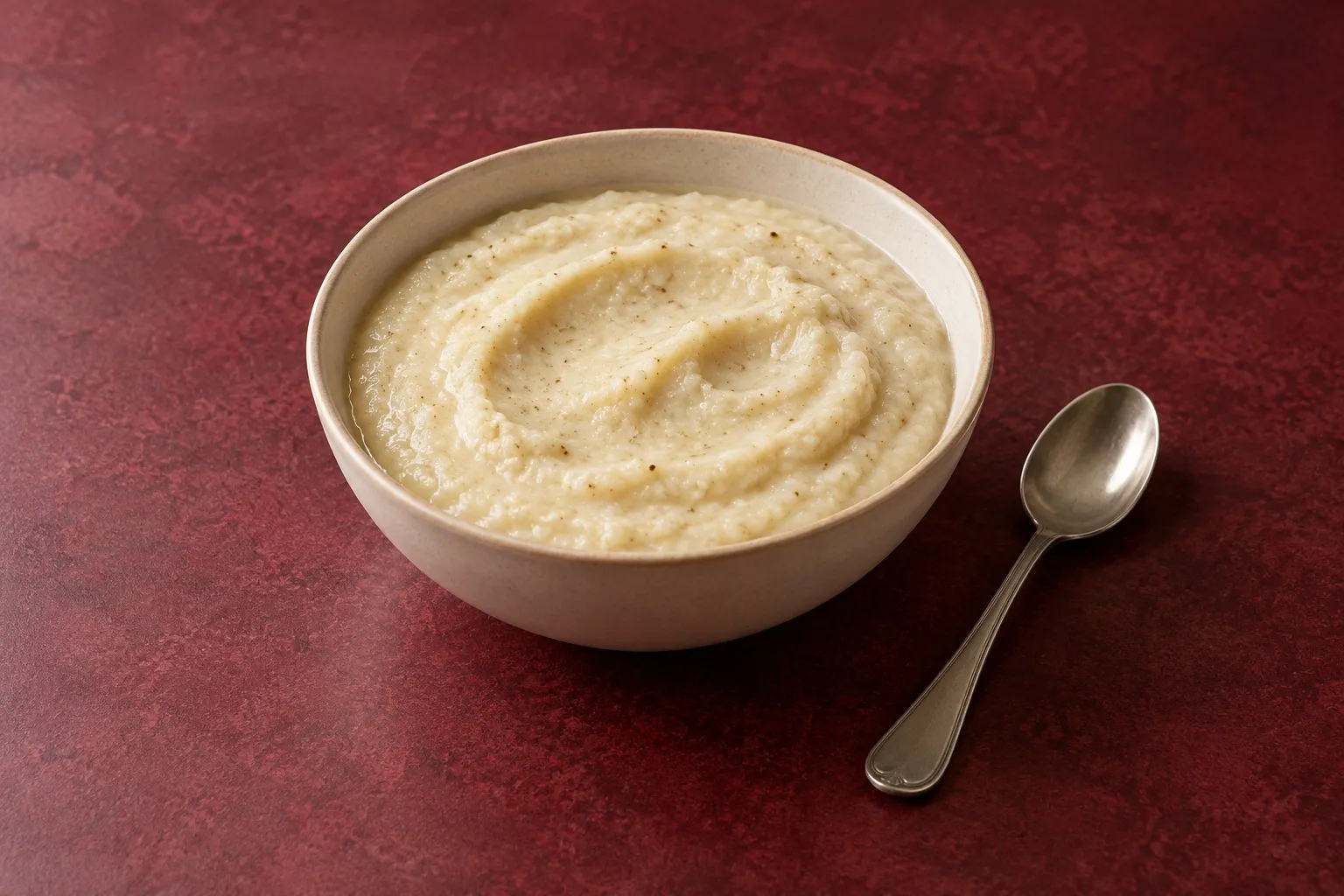
Bread sauce is a savory accompaniment to a main course. The infused milk is strained before the fine crumbs go in. Credit: TuneMyRecipe.
Cubes: fry first, then let the wine soak in
Payn Fondew starts with 200 g of day-old rustic white bread cut into two-centimeter cubes. Butter browns those pieces before a red-wine, honey, raisin and spice sauce is poured over them.
The five-minute rest after pouring is part of the dish. The cubes absorb some sauce but remain recognizable in the bowl. That is another result from the same broad family of bread-and-liquid preparations.
The historical source takes a different route. In Samuel Pegge’s 1780 printed edition of The Forme of Cury, the fried bread is laid in red wine and ground with raisins. Honey is clarified with egg white and water; the finished mixture should be thick enough to stand. The collection was compiled around 1390, but the page shown below belongs to the later printed edition.
Our adaptation keeps the bread and raisins whole and uses commercial honey without that clarification. Its loose sauce and chosen spice blend are explained in the recipe’s source note. Those visible cubes are a modern texture choice, not a picture of the ground historical preparation.
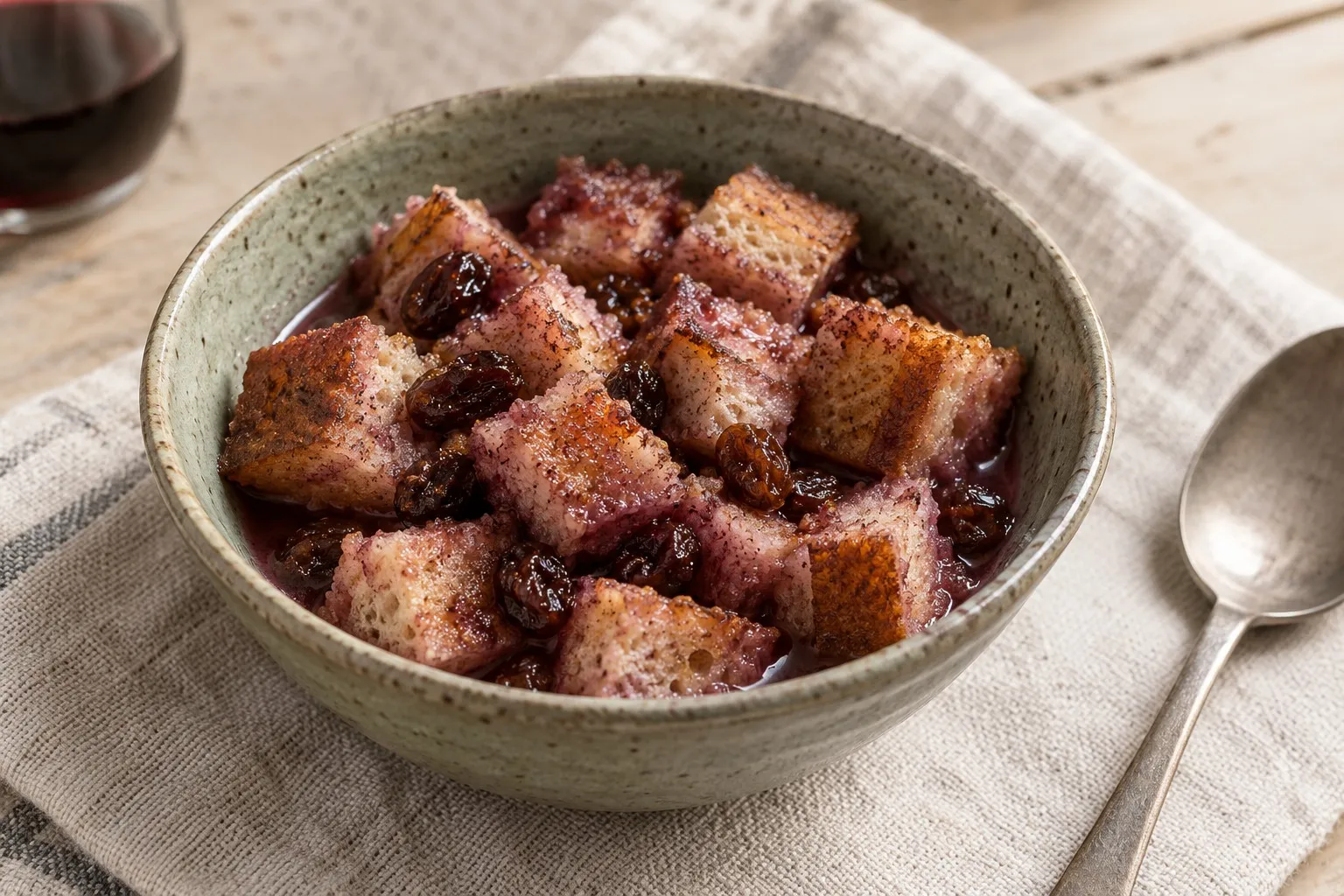
The modern Payn Fondew keeps distinct bread cubes. The source directs the cook to grind the soaked bread and raisins. Credit: TuneMyRecipe.
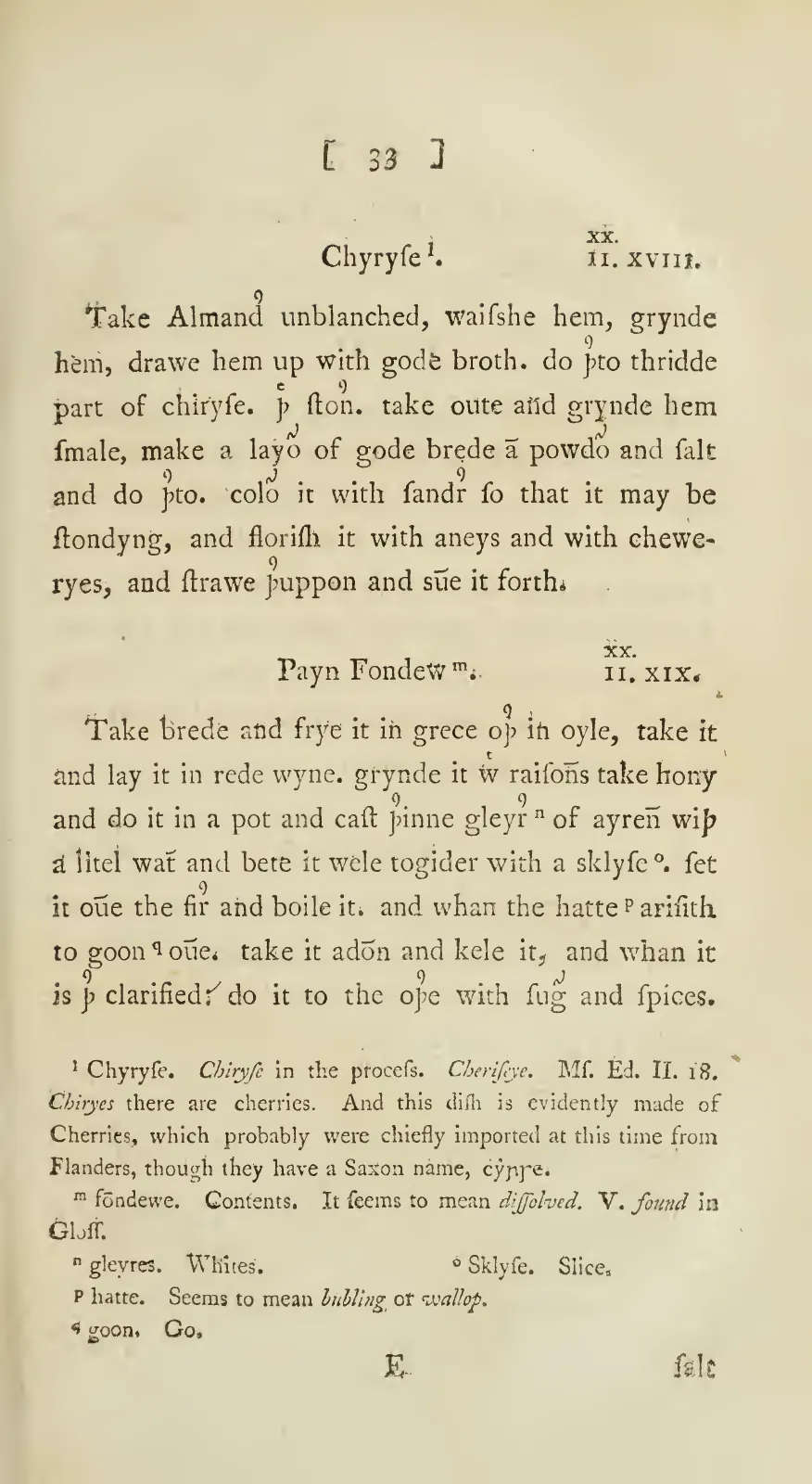
Payn Fondew begins in the lower half of page 33 and continues on page 34 in the full digitized book. This is a real page from Pegge's 1780 edition, not a photograph of the medieval manuscript. Public Domain Mark. Source: Wellcome Collection; digitized copy via Internet Archive.
Two other directions for crumbs
Bread Muffins: a soaked base with a folded white
Goudiss and Goudiss’s 1918 Bread Muffins turn soaked crumbs into individual breakfast breads, with a little flour, baking powder and a separated egg. The folded white gives the mixture another preparation stage. Choose these when you want the crumbs incorporated into a small bake rather than dispersed through sauce.
Crumb Spice Pudding: dry crumbs and molasses
Their Crumb Spice Pudding starts with dry crumbs absorbing hot milk, then adds molasses, egg, spices and dried fruit. The source steams the fruit briefly before the pudding is baked. That makes a useful contrast to arranged bread slices: the bread loses its original shape before the dish reaches the oven.
Cook: Crumb Spice Pudding (1918)
Both entries appear in Foods That Will Win the War and How to Cook Them (1918). Their crumb preparations belong to those recipes; neither supplies a replacement ratio for the three dishes above.
Match the form to the finish
| Preparation | Bread before liquid | What you keep in the finished dish | Main finishing stage |
|---|---|---|---|
| Bread-and-butter pudding | Buttered slices | Layers and raised edges | Bake the soaked egg custard |
| Bread sauce | Fine soft crumbs | Dispersed bread texture | Stir into infused milk |
| Payn Fondew adaptation | Fried cubes | Distinct bread pieces | Rest briefly in wine sauce |
The table is a way to choose a dish, not a set of substitutions. Fine crumbs can’t be assigned the slice arrangement from the pudding, and frying cubes doesn’t give them the same absorption history as unbuttered soft crumbs.
The liquids differ too. Milk and cream with eggs form the pudding’s custard. Flavored milk becomes bread sauce. Wine and honey remain the Payn Fondew adaptation’s pourable sauce. There is no single bread-to-liquid ratio that explains all three.
Choose according to the texture and serving occasion you want. A baked pudding needs oven time and a suitable dish. Bread sauce needs an attended saucepan and a place beside the main course. The wine dessert needs its short absorption rest before the bowls are filled.
Plan a batch without changing its shape
If you want more pudding, another matching dish is a clearer plan than doubling the depth of one. More ingredients in a deeper vessel would create a different bake. The ingredient multiplier doesn’t automatically select a new time.
For sauce, preserve the crumb form and use a saucepan with room to stir. The finishing consistency still needs attention. Multiplying the ingredients doesn’t mean multiplying the short simmer by the same number.
For Payn Fondew, keep enough pan space to brown the cubes. A crowded pile and a single layer aren’t the same frying arrangement. Keep the wine recipe’s alcohol note with it as well: a brief simmer doesn’t make the dessert alcohol-free.
Begin with sound bread and choose its final form before measuring the liquid. The next dish follows from that choice, one slice, crumb or cube at a time.
Sources
Katy Gilhooly’s Bread and butter pudding, Good Food, and Rosemary Shrager’s Bread sauce, Sainsbury’s Magazine, are the modern reference recipes. The individual adaptations document their ingredient and measurement choices.
Payn Fondew, recipe 59, printed pp. 33–34 in Samuel Pegge’s edition of The Forme of Cury, London: J. Nichols, 1780. The historical page and its continuation are reproduced from the held digitized copy. Wellcome’s collection record identifies the edition and marks the work Public Domain.