

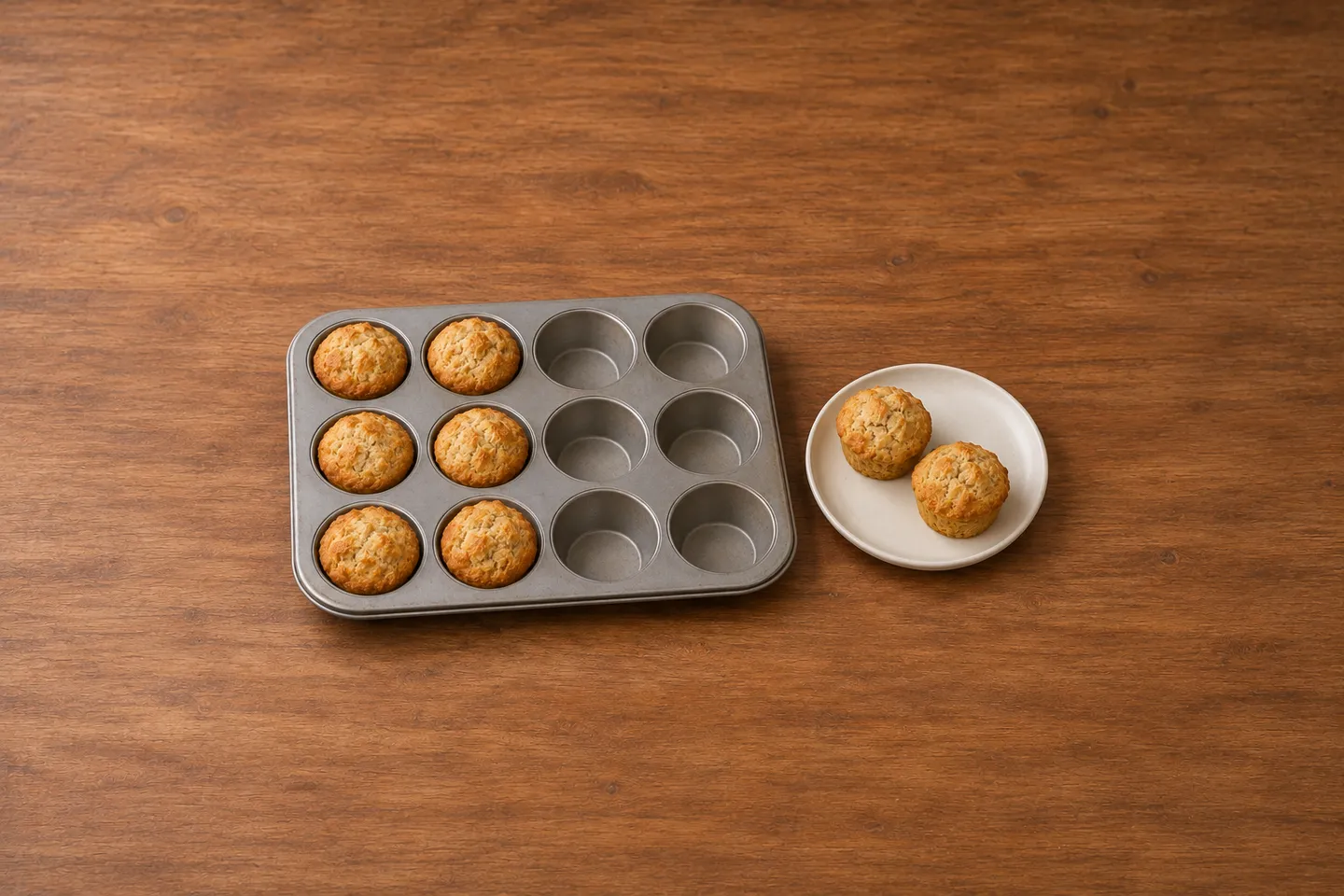
Bread Muffins (1918)
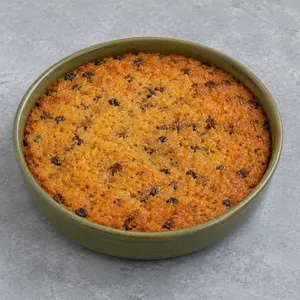
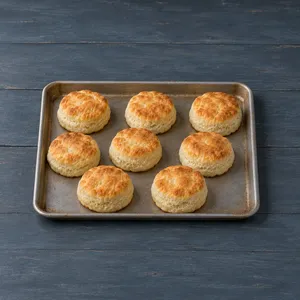
Plain breakfast muffins made with milk-soaked bread crumbs, a little flour and a folded egg white, adapted from a 1918 cookbook.
- Original yieldYield
- About 8 muffins; 4 breakfast servings (estimated)About 8 muffins4 breakfast servings (estimated)
- PrepPrep time
- CookCook time
- TotalTotal time
Estimated: 20 minutes preparing and mixing, including a 10-minute soak, 18–25 minutes baking and 5 minutes in the pan. Preheat during preparation.
Published
Original recipe: About 8 muffins; 4 breakfast servings (estimated)
The story behind the recipe
These are plain breakfast muffins with bread already baked into their main ingredient. Milk softens the crumbs, a small amount of flour holds the mixture together, and the separated egg gives two different things to work with: yolk in the batter and beaten white folded through it. There's no added sugar. Serve them with butter or alongside something savory rather than expecting a sweet bakery muffin.
One egg on the page
The Goudisses list Bread Muffins in their 1918 wartime cookbook, immediately below Boston Brown Bread. The ingredient list specifies one egg. Their brief method refers to yolks and whites in the plural, a small inconsistency that matters when turning the entry into a complete recipe. This version keeps the single listed egg and separates it.
Read more about this recipe
Bread becomes the batter
Two cups of crumbs and only a third of a cup of flour make this a different proposition from adding a handful of crumbs to an ordinary muffin. The bread is a substantial part of the mixture. Its texture therefore deserves attention before the egg or baking powder goes in.
For this version, use fine, plain dried bread crumbs. Seasoned crumbs would add salt and flavorings absent from the recipe. Large panko flakes would also change the size and shape of the pieces being soaked.
The ten-minute soak is in the original. It gives the crumbs a chance to take up milk before the mixture is beaten smooth. That makes the preparation unlike a bread-and-butter pudding, where slices remain recognizable, or a layered dish in which pieces of bread are part of the finished shape. Here, the aim is a batter that can be portioned into wells.
A folded white and measured powder
The recipe uses both baking powder and a beaten white. Those are separate instructions, and keeping both preserves more of the source's method than simply stirring in a whole egg. The yolk can be mixed into the softened crumbs; the white is whisked separately and folded in near the end.
Small wells, a defined batch
The old entry gives muffin tins and a moderate oven but no well capacity or muffin count. The modern pan below has wells of about 120 ml. Eight muffins are an estimate, with room left above the batter for expansion; a smaller pan would require a different count and checking window.
Their short size makes them convenient beside eggs, soup or a breakfast plate. It doesn't make the old fifteen-minute bake a promise for every pan. Look for set centers and check the temperature rather than judging by a browned edge alone. For a larger batch, keep the same well size and use another pan instead of making each muffin deeper.
Make it your wayOriginal: 4 servings · Makes About 8 muffins; 4 breakfast servings (estimated)
Original recipe: About 8 muffins; 4 breakfast servings (estimated)
Ingredients
For About 8 muffins; 4 breakfast servings (estimated). Quantities are shown as written.
Source measurement convention: Metric. Explicit unit definitions take precedence; unconfirmed measures must be checked before conversion.
Original quantities for About 8 muffins; 4 breakfast servings (estimated).
- Fine plain dried bread crumbs200 g
- Whole milk360 ml
- All-purpose flour40 g
- Large egg, separated1
- Double-acting baking powder2 metric tsp
- Fine salt1/2 metric tsp
- Unsalted butter, melted and cooled until lukewarm15 g
- Unsalted butter, softened, for greasing5 g
Measurement notes
- double-acting baking powder, fine salt: tsp: 1 = 5 ml.
Measurement notes
Original ingredients
- 200 g fine plain dried bread crumbs
- 360 ml whole milk
- 40 g all-purpose flour
- 1 large egg, separated
- 2 tsp double-acting baking powdertsp: 1 = 5 ml.
- 1/2 tsp fine salttsp: 1 = 5 ml.
- 15 g unsalted butter, melted and cooled until lukewarm
- 5 g unsalted butter, softened, for greasing
Equipment
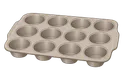 12-cup metal muffin pan (about 120 ml per well)
 Whisk
 Wire cooling rack
 Food thermometer
Instructions
Soak the crumbs
Heat the oven to 350°F (180°C), conventional heat. Grease enough wells of the muffin pan for the selected batch, allowing about eight at the original quantity. Use the softened butter. Combine the dried bread crumbs and milk and leave for 10 minutes, then beat until the crumbs are evenly softened and the mixture is as smooth as their texture allows.
Mix yolk and dry ingredients
Stir the egg yolk and melted butter into the soaked crumbs. Sift the flour, baking powder and salt together, then fold them into the crumb mixture until evenly combined.
Fold in the white
In a clean bowl, whisk the egg white to soft peaks. Fold it into the batter in two additions, stopping when no large streaks remain. Don't taste the raw batter.
Portion and bake
Divide the batter among the greased wells, filling each no more than three-quarters full. If there's extra batter, use an additional greased well rather than overfilling. Bake promptly for about 18–25 minutes, until the tops are set, the centers show no wet batter and a food thermometer inserted into the center of a muffin reads at least 160°F (71°C). Continue baking if needed.
Cool and serve
Leave in the pan for 5 minutes, then loosen carefully and transfer to the wire rack. Serve warm. Refrigerate any leftovers promptly as directed in the storage note.
Recipe notes
When adjusting quantities
Keep the same 120 ml wells and fill no more than three-quarters full. Use extra pans or mix separate batches so finished batter doesn't wait through another bake. For a half batch, separate the egg, beat yolk and white individually, then weigh out half of each before whipping the white. Times and oven settings don't scale.
Original recipe notes
These notes describe the original recipe. Quantities mentioned here do not change when you adjust servings.
Fine dried crumbs are an explicit choice for this modern batch; don't exchange them gram for gram with moist fresh crumbs. The 200 g crumb and 40 g flour amounts are working weights, not measured historical cup equivalents. Butter, a large egg, the pan, oven setting and checking window are modern specifications. Commercial double-acting powder is used at the source's two-teaspoon count. Yield and times are estimates.
Contains wheat, milk and egg. The temperature and storage guidance follows FDA egg handling advice.
Storage
Refrigerate leftovers within 2 hours, or within 1 hour above 90°F (32°C), at 40°F (4°C) or below. Use refrigerated leftovers within 3 days; reheat until the center reaches 165°F (74°C).
Read the scaling guide. Times, temperatures and equipment need their own consideration. Open the recipe tool to review and correct individual amounts.
Sources and attribution
C. Houston Goudiss and Alberta M. Goudiss, Foods That Will Win the War and How to Cook Them (New York: World Syndicate Company, copyright 1918), Bread Muffins, p. 26
Bread Muffins, p. 26, in C. Houston Goudiss and Alberta M. Goudiss, Foods That Will Win the War and How to Cook Them, copyright 1918.
Recipe details
- Recipe tradition
- Vintage
- Cuisine
- American
- Source decade
- 1910s
- Cooking method
- Oven
- Browse category
- Breakfast & Brunch