
- Vintage recipes
- Baking & desserts
- Historical ingredients
Eggs, Milk or Neither? Reading Old Pudding Recipes
Compare two Victorian fruit puddings to understand their eggs, milk, mashed vegetables and missing instructions before choosing a modern recipe.
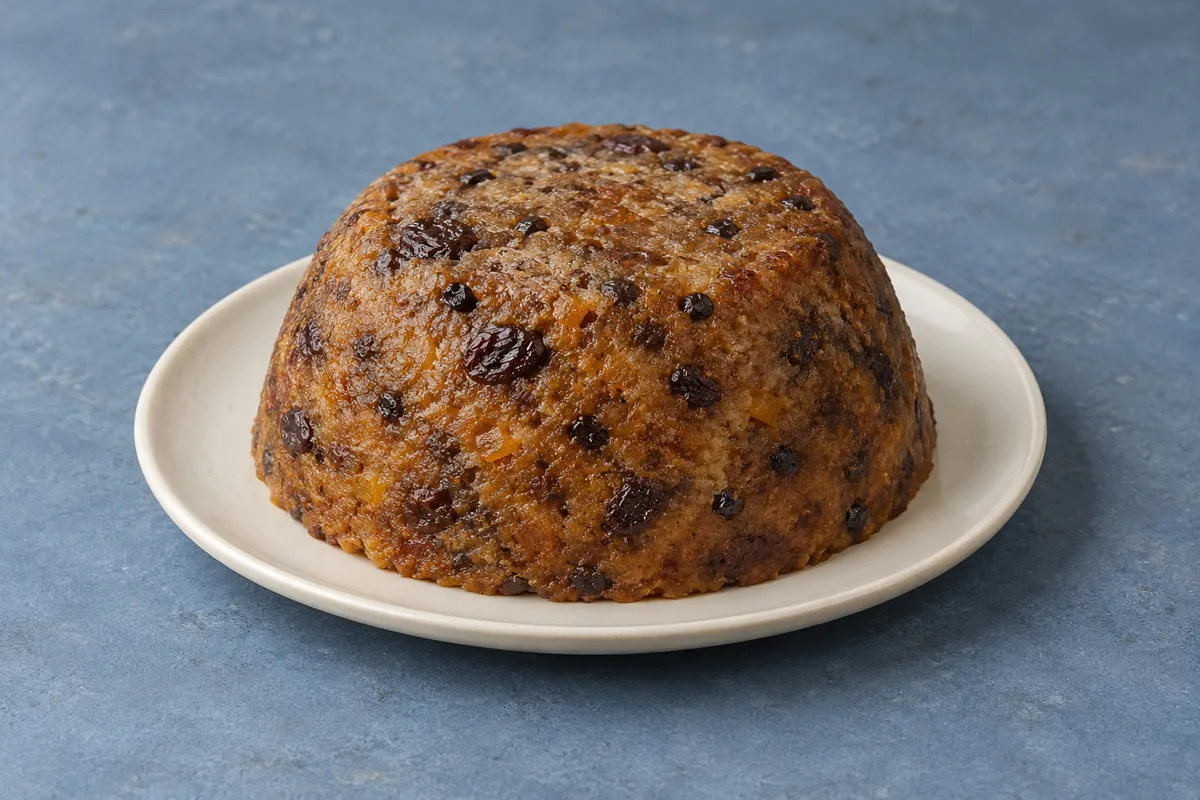
One Victorian fruit pudding warns the cook against adding any liquid. Another asks for eggs and just enough milk to bring everything together. Both contain flour, dried fruit and suet. Both need hours of cooking. Reaching for milk when the first mixture looks unfamiliar would ignore the very instruction that sets it apart.
This is where reading an old recipe becomes more useful than finding a modern substitute for one missing ingredient. The whole formula matters: what supplies moisture, what form the ingredients take, and what the short method leaves the cook to decide.
Two neighboring recipes in Isabella Beeton’s 1861 Book of Household Management make that problem unusually clear. One contains mashed carrots and potatoes, with neither eggs nor milk. The other uses bread crumbs, eggs and milk. They offer two routes to a fruit pudding, rather than a before-and-after demonstration of removing eggs.
Start with the whole mixture
Beeton calls recipe 1325 An Excellent Plum-Pudding, made without Eggs. Number 1327 is A Plain Christmas Pudding for Children. Their titles emphasize different things, so the ingredient lists are a better place to begin the comparison.
| Question | Eggless pudding, no. 1325 | Children’s pudding, no. 1327 |
|---|---|---|
| Flour or crumbs? | Flour | Flour and bread crumbs |
| Prepared vegetables? | Mashed carrot and mashed potato | Neither listed |
| Eggs and milk? | Neither listed; no added liquid | Three or four eggs; milk as needed to mix |
| Fruit and flavoring? | Raisins, currants, lemon peel, citron and treacle | Raisins, currants, candied peel and allspice |
| Main fat? | Chopped suet | Finely chopped suet |
| Cooking direction? | Cloth or basin; four hours | Floured cloth; at least five hours |
Those are source distinctions, not quantities for a hybrid recipe. Milk belongs to one preparation and is expressly discouraged in the other. Bread crumbs aren’t a shared ingredient, either. The apparent similarity of the finished dish names conceals several decisions already made on the page.
In both entries, the fruit is dried fruit and candied peel, not fresh plums. Read the individual names, too: raisins and currants have separate quantities, while the eggless pudding distinguishes candied lemon peel from citron. A modern mixed-fruit bag needn’t preserve that balance.
Moisture doesn’t always arrive in a jug
The eggless formula contains half a pound of flour and a quarter pound each of mashed carrot and mashed potato. Together, the vegetables weigh as much as the flour. They have a substantial place in the mixture before the treacle, fruit and fat are considered.
Beeton directs the cook to combine flour, currants, suet and sugar, then stir in the vegetables, treacle and lemon peel. Her warning against liquid follows those additions. Mashed vegetables already bring moisture; treacle is another ingredient with a different form from dry sugar. No separately poured liquid doesn’t mean every ingredient is dry.
The word mashed carries practical information. These are weights of prepared vegetables, not a count of raw roots. The short entry doesn’t describe cooking, draining or cooling them. Nor does it call for milk-and-butter mashed potatoes. Using a prepared mash containing those extras would add ingredients before the pudding even reaches the mixing bowl.
In number 1327, the cook beats and strains the eggs into the other ingredients, then adds enough milk to mix everything properly. There is no measured milk allowance. Here, judging the mixture is part of the written direction, whereas the eggless entry places a clear limit on the cook’s impulse to loosen it.
Reading the pair gives no universal carrot-for-egg exchange rate. It does give a useful first question for any old pudding: what has this particular formula already supplied before an extra ingredient is considered?
Read the ingredient list beside the method
Short historical methods can lose track of their own ingredients. In number 1325, six ounces of raisins and an ounce of candied citron appear in the list, but neither gets an explicit addition in the method. Currants and lemon peel do.
Reading only the paragraph headed Mode would leave out a considerable portion of the fruit. Reading only the list would miss the warning about liquid. Each part catches something the other leaves unsaid.
Number 1327 gives different preparation details: finely chopped suet, raisins with their seeds removed, and currants washed, picked over and dried. Those instructions belong to the forms of ingredients Beeton expected. A modern cook using seedless raisins has already resolved one of those tasks; wet fruit would still bring a different amount of surface moisture from dried fruit ready for the bowl.
The practical habit is simple: account for every ingredient, including its preparation, before beginning. Where a modern adaptation supplies an omitted addition or defines an uncertain amount, that clarification should be visible. An omission in a terse paragraph isn’t a reason to quietly erase a named fruit from the dish.
The vessel is part of the cooking decision
The eggless recipe permits either a loosely tied cloth or a basin left below the rim. Beeton wants room for the pudding to swell. A basin is therefore an option in the original entry, rather than an invented substitute for unavailable pudding cloth.
The children’s pudding instead specifies a well-floured cloth and boiling water. Its minimum cooking time is five hours; the eggless entry gives four. Their different mixtures and instructions are worth retaining when choosing a modern method.
Neither entry supplies the capacity of a modern pudding basin. The eggless quantity is said to serve six or seven people; the other serves nine or ten children. Those descriptions don’t establish equal portions, identical vessels or a size conversion between the two recipes.
Halving a list of ingredients is straightforward arithmetic. Choosing a suitable basin, leaving headroom and assessing doneness are separate cooking decisions. A half-sized batch doesn’t establish half the cooking time. Use a complete modern method that names its vessel and cooking checks, rather than using the source’s serving count as a pan-size guide.
Choose the pudding you want to explore
Our small carrot-and-potato plum pudding follows the eggless direction: flour, prepared vegetables, distinct dried and candied fruits, suet and treacle. Its modern method defines a one-liter basin, vegetable preparation and handling. It keeps the source’s four-hour cooking baseline rather than shortening it in proportion to the smaller quantity.
For a pudding with bread crumbs, eggs and milk, our Titanic-inspired plum pudding uses Beeton’s number 1327 as its period starting point. Its measured milk allowance and basin method belong to the adaptation. Titanic’s third-class menu documents plum pudding with sweet sauce; it doesn’t establish that Beeton’s exact formula was used aboard.
These companions let you choose between two ingredient structures. Neither is an instruction for turning the other into an eggless recipe. Neither is vegan: suet remains in both, and the second also includes eggs and milk.
The sauces and occasions differ as well. Beeton recommends brandy sauce with the eggless pudding and calls it seasonable in winter. The children’s pudding has Christmas in its title; our Titanic-inspired version serves a separately adapted sweet milk sauce. A shared pudding name doesn’t settle the accompaniment or the occasion.
What to settle before the pot goes on
Keep the source’s weights where it provides them; our cups-and-grams guide explains why generic cup estimates shouldn’t displace an ingredient’s stated weight. Then look beyond the numbers. Mashed vegetables, bread crumbs, prepared fruit and chopped suet describe different things going into the bowl.
For the eggless pudding, the decisive detail is what the vegetables bring. For the other, it’s the combination of eggs and milk with flour and crumbs. Follow either route through its own ingredient list, method and vessel choice. The moment to decide which pudding you’re making comes before reaching for the milk jug.
Sources
Isabella Beeton, The Book of Household Management, 1861, recipes 1325 and 1327, printed pp. 665–666. The linked Titanic-inspired recipe identifies its menu evidence, source relationship and modern adaptations.