
- Contemporary recipes
- Weeknight dinners
- Pantry cooking
Five Weeknight Dinners Worth Making Again
Five weeknight dinners: lemon chicken orzo, harissa chickpeas, miso salmon, white bean soup and mushroom barley, with practical shopping and cooking tips.
A useful weeknight dinner fits the evening you actually have. Forty minutes with cooked chickpeas in the cupboard is different from forty minutes with dry beans, and a pot that needs occasional stirring asks something different of you than a tray in the oven.
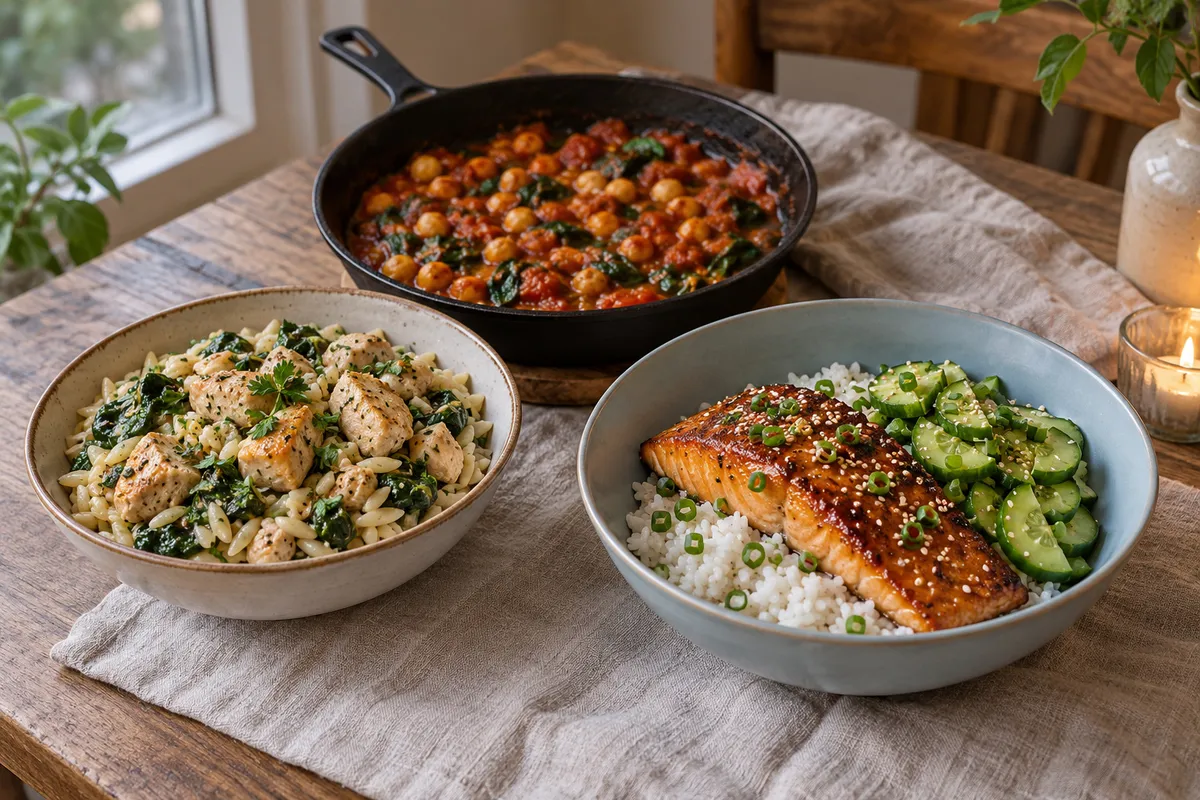
These five dinners give you distinct choices: harissa chickpeas for a pantry meal, miso salmon for overlapping rice and oven work, white bean soup for a gentle one-pot dinner, lemon chicken orzo for a richer bowl, and mushroom barley for a less hurried night. Each makes four servings. Choose one to start with, then use the shared ingredients to plan another if it suits your week.
For more pantry-led ideas, explore our 20 comfort food recipes with a fresh pantry twist.
Time Is Only Part of the Choice
| Dinner | Allow about | Where your attention goes |
|---|---|---|
| Harissa chickpeas | 40 minutes | Softening onion, then reducing tomato sauce |
| Miso salmon bowls | 45 minutes | Starting rice, glazing fish and dressing cucumber |
| White bean soup | 45 minutes | Chopping vegetables, then a partly covered simmer |
| Lemon chicken orzo | 50 minutes | Browning chicken and stirring pasta as it cooks |
| Mushroom barley | 75 minutes | Browning mushrooms in batches, then checking the grain |
Those estimates begin with the ingredients listed in the recipes. Chickpeas and white beans are already cooked; pearled barley is dry. A package that needs a longer simmer or a thicker fish portion can change the finish time. Leave a little margin so you can serve the food when it’s ready.
The difference in active work matters too. The barley takes longest, but much of its later cooking is a gentle simmer. Chicken orzo is quicker overall and asks for more frequent attention near the end, when the small pasta can settle against the bottom of the pot.

When the Cupboard Is Doing Most of the Shopping
The Harissa Chickpea and Tomato Skillet starts with cooked chickpeas, canned tomatoes and chili paste. Onion, garlic and cumin deepen the sauce; spinach and parsley bring green leaves to the finished bowl. Lemon gives the warm beans a sharper edge.
Harissa is a Tunisian pepper paste, with garlic and spices as well as heat. UNESCO’s account describes the preparation of dried peppers with seasonings such as coriander. Commercial jars vary, so the recipe offers a smaller starting amount when you want a milder dinner. A familiar jar makes that choice easier; a new one is worth tasting before you’re committed to a hot panful.
Cooked chickpeas leave the skillet free to concentrate on the sauce. Give the tomatoes time to thicken around them, and the meal feels substantial without needing another cooked component. Bread alongside can gather the last spoonfuls, while rice makes a different serving option if you already have some prepared.
The White Bean and Rosemary Soup uses a similar pantry advantage for a gentler result. Cannellini beans meet carrot, celery and onion, with finely chopped rosemary carried through the broth. A small portion of beans is mashed back into the pot to give body while most stay whole.
That texture makes the soup feel complete without cream. It also means you can make it with a potato masher instead of moving a pot of hot liquid to a blender. The important vegetable check is the carrot: the beans were tender before they entered the saucepan, so they don’t tell you when everything else is ready.
Buy enough prepared beans for their drained weights. The weight printed on a can includes packing liquid, which isn’t part of the amount these recipes need. If you’re cooking dried beans yourself, do that earlier and treat it as a separate kitchen job.
When Two Cooking Jobs Can Overlap
The Miso-Glazed Salmon Rice Bowls use the rice’s cooking and covered rest to make room for the fish and cucumber. Start the rice first, then prepare the glaze while it simmers. Once the fish is in the oven, the quick cucumber dressing is the remaining preparation.
White miso gives the salmon a savory coating, with honey for sweetness and plain rice vinegar for acidity. Short-grain rice provides a mild base beneath it. The cucumber stays cool and crisp, offering a sharp contrast without another pan of vegetables.
Shopping accurately saves adjustments later. The recipe calls for plain unsweetened rice vinegar; seasoned sushi vinegar already contains sugar and salt. The miso is paste, not an instant soup mix. Japanese short-grain white rice also has its own cooking plan, which shouldn’t be carried over unchanged to brown or long-grain rice.
Let the rice finish its covered rest while you check the fish. A glazed surface can look done before a thick center is ready, so use the temperature endpoint in the recipe. Drain the cucumber before assembling the bowls to keep its liquid out of the rice. Then each portion has warm fish, soft rice and a crisp side, with scallions and sesame on top.
When You Want Everything on One Spoon
Lemon Chicken and Orzo puts small pieces of chicken thigh, rice-shaped pasta and spinach into one bowl. Browning the chicken builds flavor in the pot before the stock goes in. Orzo then takes up that liquid as it softens, giving the meal a close, moist texture without a cream sauce.
This is the choice for an evening when you can stay near the stove. The pasta needs a stir from the bottom every few minutes, especially as the stock is absorbed. Its tenderness and the chicken’s temperature are separate checks; the method explains what to do if one finishes ahead of the other.
Lemon juice and zest make the finish distinctive. Juice gives acidity, while the yellow peel supplies aroma without much extra liquid. Parsley joins them off the heat. Serve the mixture while it still looks a little loose, because the orzo keeps thickening during the rest and in the bowl.
When Dinner Can Begin Earlier
The Mushroom, Leek and Barley Pot is built around browned mushrooms and the grain’s gentle chew. Leeks bring a mild sweetness, thyme shares the simmer, and parsley and lemon brighten the end. It takes longer than the other options, but the stages are easy to separate in your mind: brown, soften, simmer, finish.
Give the mushrooms room for their first stage. Two batches allow their cut surfaces to meet the hot pot, building a deeper flavor before they return to the barley. The leek preparation is just as important: wash between the sliced layers, where grit can remain hidden even when the outside looks clean.
Pearled barley is the grain to buy. Hulled barley retains more outer layers and can require a different cooking schedule. Keep a little water available for the recipe’s small finishing additions if the grain needs longer; the goal is tender barley with a little bite and enough liquid to remain spoonable.
Turn One Shopping Trip into Two Dinners
Several ingredients overlap naturally. Onion and garlic serve the orzo, chickpeas and bean soup; spinach links the orzo and chickpeas; parsley belongs in the orzo, chickpeas and barley. Lemon finishes four dinners. Buy for the meals you’ve chosen, so a shared herb has a second use without committing you to an entire week’s menu.
Larger batches need a separate equipment check. More mushrooms or chicken mean more browning space, and extra orzo needs a pot large enough to stir comfortably. Scaling a Recipe Without Losing Its Balance explains how ingredient arithmetic and pan choices work together.
The recipes give cooling and reheating guidance for saved portions. Keep the salmon bowl’s cucumber separate where practical, and expect the orzo, beans and barley to thicken as they wait. A little water during reheating can restore their spoonable texture; add it gradually so yesterday’s dinner keeps the body you liked in the first bowl.