
- Food history
- Viking Age
- Preservation
- Cooking techniques
The Viking Winter Pantry: Preserved Fish, Grain and Dairy
Explore how drying, smoke, grain storage and milk processing shaped northern food, with four clearly modern recipes to cook today.
Dried fish wasn’t necessarily ready for the cooking pot. It might first need pounding or soaking, then further cooking to soften it. Keeping food through the winter created work for another day as well as food for another meal.
Keeping and cooking were connected. Think of ingredients changing form: a seasonal catch made portable, grain kept dry until it was ground or cooked, milk processed into something other than a fresh drink. The pantry was connected to the hearth, the landscape and the time needed to prepare a meal.
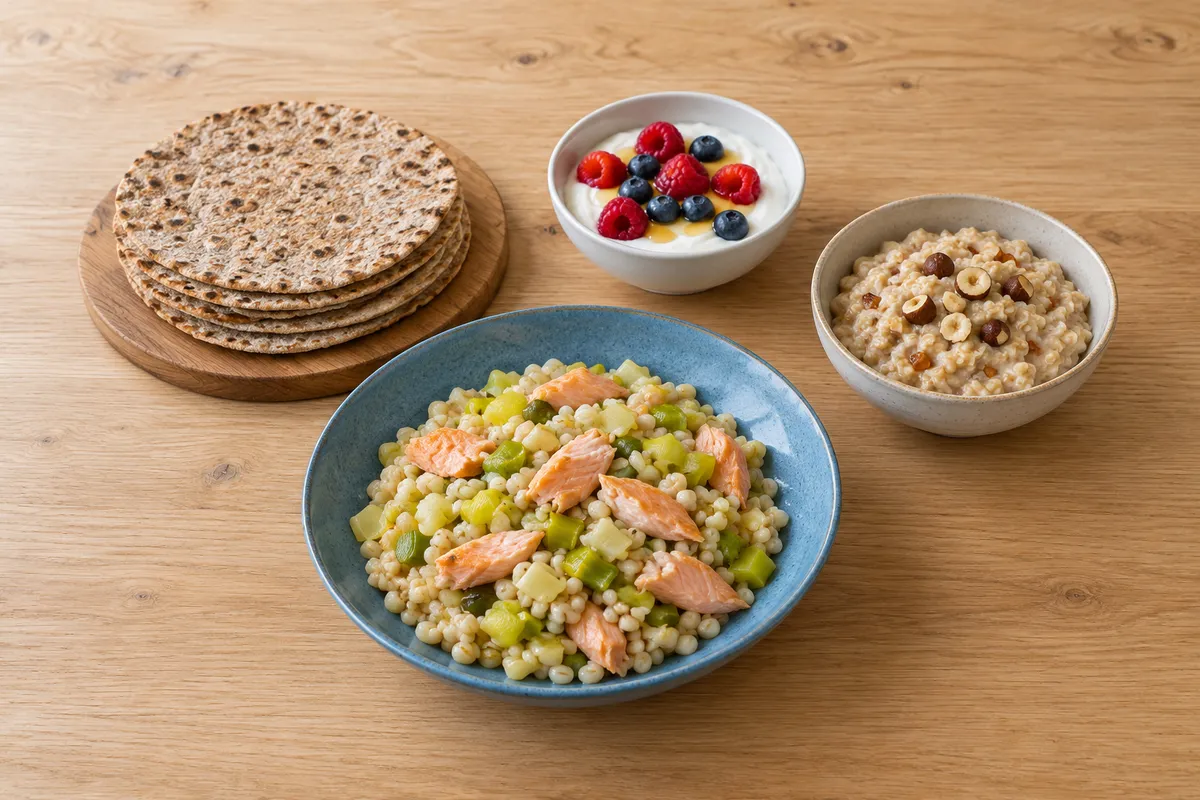
Four contemporary recipes accompany this history: hot-smoked trout with barley and leeks, skillet barley flatbreads, strained yogurt with honey and berries, and dried-apple and hazelnut porridge. They offer practical encounters with preserved ingredients and grain forms. Their modern ingredients and methods bring the pantry ideas into an ordinary kitchen.
Start with a place
Viking-Age food wasn’t uniform across northern Europe. Coastal fishing communities, farming households and wealthy trading centers had different resources. A preserved fish associated with northern Norway doesn’t automatically describe dinner in every Danish household.
Museum Nord’s account of fishing connects the seasonal abundance of fish with drying and transport along the Norwegian coast. In Lofoten, the winter cod catch could produce more than a household needed immediately. A food that traveled well could become a commodity as well as a local reserve.
Other evidence answers other questions. Fish bones and hooks tell us about species and fishing activity. A surviving vessel can suggest what cooking was possible. Neither supplies the seasoning, serving size and exact cooking time of a lost meal.
Written sources need their own care. The Viking Ship Museum’s educational material uses literary accounts alongside archaeology, including references to dried fish in Njál’s saga. Those later literary accounts add another perspective to the archaeological evidence. They tell us different things from a surviving bread fragment or a fish bone.
Drying changes what happens next
Removing water could make a catch or harvest useful after its fresh season. It also changed the ingredient the cook eventually handled. A hard piece of dried fish and a fresh fillet don’t enter the same cooking sequence simply because both began as fish.
The Viking Ship Museum’s teaching resource, particularly its preparation and provisions sections, describes pounding and soaking dried fish before eating or cooking it. It also discusses drying produce and grain. The important kitchen consequence is a later need to soften, grind or otherwise prepare what has been kept.
Our dried-apple and hazelnut porridge follows that idea on a small scale. Purchased soft dried apple is chopped and simmered before modern rolled oats are added. Hazelnuts wait until serving, so they remain a firmer contrast to the softened fruit and grain.
Dried fruit changes the liquid as well as absorbing it. Small apple pieces soften into the water before the oats arrive, carrying fruit flavor through the pot. Modern rolled flakes make this a quick breakfast; whole grains would need their own preparation and cooking time.
Smoke is a process; a packet is a product
Smoking appears among the preservation methods discussed in the museum material. Its relationship to drying, salting and heat matters more than a picturesque haze over a fire. Smoke flavor alone doesn’t establish how a food was treated or how it should be stored.
For the hot-smoked trout with barley and leeks, buy a refrigerated product labeled fully cooked and ready to eat. Hot-smoked trout is the specified ingredient; raw trout, cold-smoked slices and dried stockfish are different foods with different preparation needs.
The meal is assembled in stages. Pearl barley simmers while leeks soften, then the fish is added late enough to retain recognizable flakes. A final covered heating brings the entire mixture to the stated temperature. Using a purchased preserved food doesn’t remove the need to handle and heat it appropriately.
The National Museum of Denmark’s account of meat and fish also describes dried and salted foods. Salt availability and processing varied by place. The method of keeping food depended on local resources as well as the ingredient itself.
Dry grain still needs a cook
Stored grain offers several meals, depending on its next form. It can be cooked into porridge, ground into flour or used in bread. A single harvest could supply a pot of soft grain or a thin bread, depending on the milling and cooking that followed.
The Swedish History Museum’s food display discusses food residues and bread remains, with several grains represented in bread remains. It also identifies the limits of the evidence: bread found in graves belongs to a burial setting, which isn’t automatically a representative household menu.
Some of the most appealing historical details are material ones. A charred bread fragment may survive where a soft everyday loaf does not. The survival of one food can make it easier to study without proving it was the only food people ate.
Our skillet barley flatbreads use both barley flour and whole-wheat flour. Wheat makes up the larger share, giving the thin dough enough cohesion to roll and turn. The resulting dough is easier to roll and lift than barley flour used alone. Choosing the blend is part of adapting the cooking idea, not simply changing its units.
Read the grain names closely when shopping. Pearl barley for the fish dish isn’t flour for the bread. Rolled oats for the porridge aren’t whole oat groats. The four recipes use different processed forms deliberately, so a single bag labeled barley won’t serve every purpose.
The pan beside the pot
Porridge and flatbread can share a grain pantry while asking different things of the heat. A pot needs liquid and sustained simmering. A thin bread needs a heated surface that cooks its center before burning its outside.
The museum’s modern educational bread reconstruction uses a pan or heated surface. A small dough round can cook close to the fire on a heated surface. The domestic skillet gives us control over that same relationship between thickness and heat.
Make the rounds small enough to lift comfortably. Their thinness is functional: the middle has less distance to heat through. Watch for toasted patches underneath, then turn the round before those patches scorch. The center still needs to cook, so lowering the heat can be more helpful than rushing the next batch.
For a modern dinner, the same distinction helps with planning. Start the grain pot first, soften the leeks while it cooks, and make the breads in a separate pan. The bread needs its dry heated surface while the barley needs its simmering liquid.
Milk in another form
Milk processing adds another kind of transformation to the pantry. The Danish museum describes butter and cheese among Viking-Age dairy foods. The point is more specific than the familiar statement that people kept animals: milk could become another food with a different use and keeping character.
Culturing, separating and salting change food in different ways. Straining purchased yogurt demonstrates separation: whey drains away, leaving a thicker cultured food above the cloth. The fermentation has already happened before the pack reaches your refrigerator.
The strained yogurt with honey and berries keeps that transformation visible. Pasteurized-milk yogurt drains in the refrigerator, then receives honey and berries at serving. Its texture changes visibly without asking you to reproduce an uncertain historical culture. Honey softens the tang, and the berries stay fresh on top instead of tinting the yogurt as it drains.
Keep it refrigerated throughout draining and until serving. The recipe retains present-day cold handling and the original package’s use-by limits. Historical interest doesn’t reset a modern dairy product’s clock.
Put the pantry ideas to work
Choose the trout and barley for a hot meal with a modest amount of strongly flavored fish. Choose the small flatbreads when a pan-cooked side suits the table. The porridge uses dried fruit in the cooking liquid; the yogurt bowl needs its long refrigerated drain before the toppings go on.
For a meal with bread and fish, start the barley first and keep the finished bread wrapped while the last round cooks. For breakfast, the yogurt can drain overnight while the porridge waits until morning. The pantry supplies the ingredients; the work they need determines when to start.

Read the diagram text
Historical context and contemporary recipes are distinct. Fish kept for later Drying and smoking changed fish and its preparation. Purchased hot-smoked trout Fully cooked trout joins pearl barley and softened leeks. Grain stored dry Grinding or cooking gave stored grain different uses. Barley and whole-wheat flour The flour blend becomes thin skillet flatbreads. Milk processed Butter and cheese gave milk other forms and uses. Purchased pasteurized yogurt Strain in the refrigerator; add honey and berries to serve. Produce dried Dried produce needs preparation before eating. Purchased dried apple Chop and simmer first, then add modern rolled oats. These four recipes are modern adaptations, not recovered Viking formulas.
Sources
Viking Ship Museum, Food in Viking times, pp. 2–6; Museum Nord, Fishing and sea capture in the Viking Age; National Museum of Denmark, Meat and fish and its food-history pages; Swedish History Museum, Food for the poor and the rich. Links accompany the relevant discussion. Museum demonstrations and the four contemporary companion recipes are distinguished from archaeological finds and historical literary evidence throughout.