
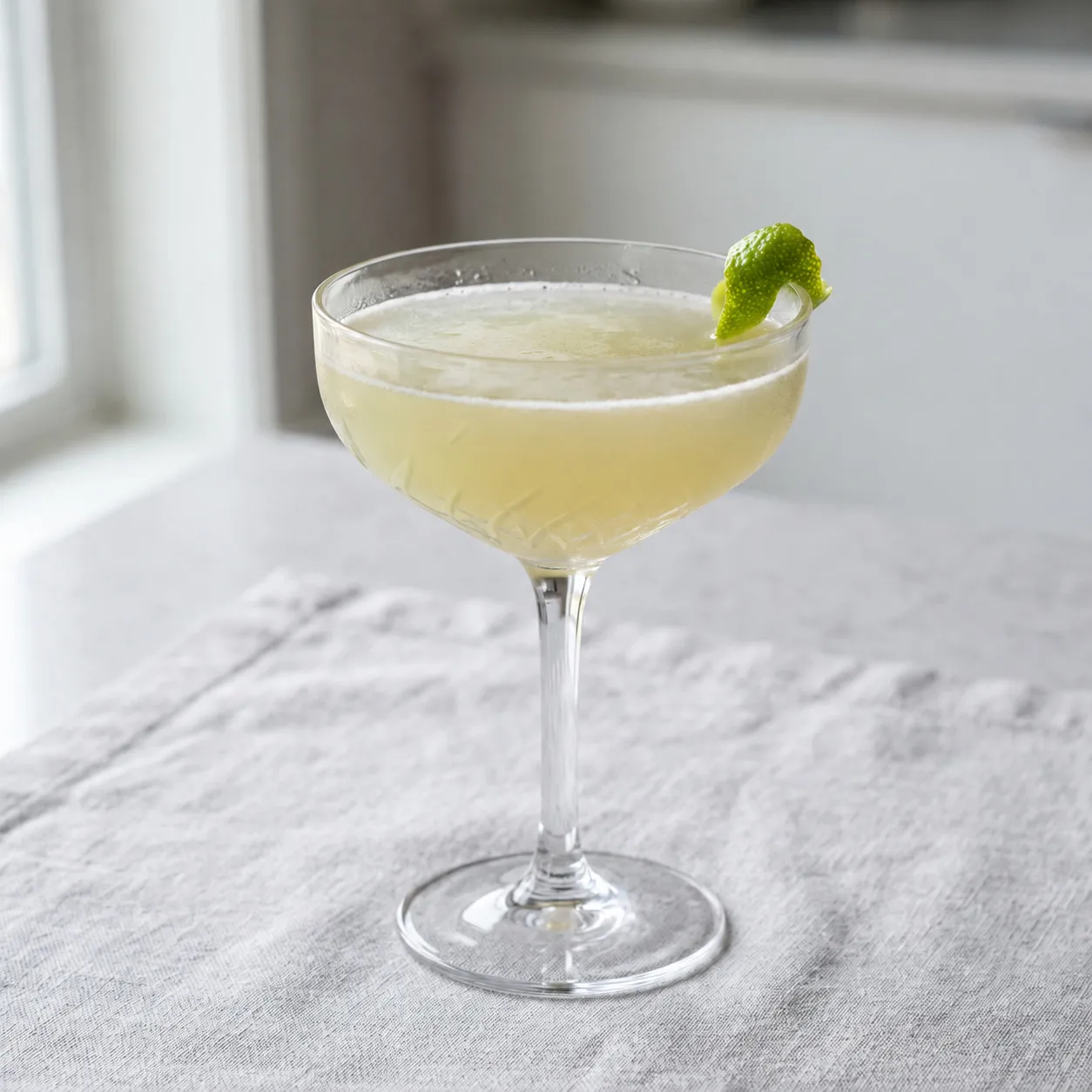
Earthquake Cocktail (1933)
An equal-parts cocktail of gin, Scotch whisky and absinthe, shaken with ice. This version includes an optional lime-peel garnish.
- Original yieldYield
- 1 cocktail1 cocktail
- PrepPrep time
- TotalTotal time
Published Updated
Original recipe: 1 cocktail
The story behind the recipe
Equal parts gin, Scotch whisky and absinthe make Earthquake an unusually direct drink. There is no juice or syrup in the mixture. Juniper, whisky and anise have the glass almost to themselves, with water from the mixing ice softening the spirits.
Absinthe gets a whole share
In many cocktails, absinthe appears as a dash or a rinse. Here it occupies a third of the main mixture. Its anise and herbal flavor is a central part of what you're offering, so choose this for someone who wants to taste it.
Pastis or Herbsaint is listed as an alternative. Those bottles bring their own sweetness and flavor, which changes the drink. Their shared anise direction makes the comparison interesting, but they aren't identical replacements.
The equal-parts formula makes measuring simple. It doesn't make the three bottles interchangeable or the finished mixture mild. A plain description of the ingredients is more helpful on a menu than relying on the dramatic name.
Read more about this recipe
Which Scotch goes beside the gin?
A strongly peated Scotch gives a smoky cocktail; a lighter blend leaves a different space around the gin and absinthe. Both are within the broad ingredient choice below. Decide which flavor you'd like to add.
Dry gin contributes juniper and other botanicals. Because no fruit juice covers them, the bottle remains easy to notice. Use one whose flavor you enjoy in a plainly mixed drink.
The optional lime peel supplies scent at the surface. There is no lime juice in the mixture, so the peel doesn't turn it into a sour. Leaving it out gives an even plainer presentation.
A brief entry from Hollywood
The Earthquake entry in Hollywood Cocktails, third printing, 1933, gives the ingredients in thirds with a shake-and-strain instruction. The collection prints several compact recipes on a page, letting a few measures carry a great deal of flavor.
It also appears in Craddock's 1930 Savoy Cocktail Book. The 1933 date identifies the chosen Hollywood reference, with no need to make it the drink's invention year.
The modern fluid-ounce measures keep the equal relationship. A larger batch still needs comfortable shaker portions, leaving room for the ice and movement.
Water from the shake
Mixing ice is important to a drink made entirely from spirits. It cools the liquid and adds dilution before being strained away. A serving made by pouring the three bottles directly into a glass would miss that part of the recipe.
Have the chilled cocktail glass ready. Once the mixture is cold, there is no fruit garnish arrangement or extra topping to finish, apart from the optional peel.
With no juice or syrup, the drink leaves juniper, whisky and anise in focus. Water from the shake softens the spirits; whether smoke joins those flavors depends on the Scotch you choose.
Make it your wayOriginal: 1 serving · Makes 1 cocktail
Original recipe: 1 cocktail
Ingredients
For 1 cocktail. Quantities are shown as written.
Source measurement convention: US customary. Explicit unit definitions take precedence; unconfirmed measures must be checked before conversion.
Original quantities for 1 cocktail.
- Dry gin1 fl oz
- Scotch whisky1 fl oz
- Absinthe (or pastis/Herbsaint)1 fl oz
- Strip lime peel (optional garnish)1
Measurement notes
- dry gin, Scotch whisky, absinthe (or pastis/Herbsaint): US fl oz: 1 = 29.5735 ml (rounded).
Measurement notes
Original ingredients
- 1 fl oz dry ginUS fl oz: 1 = 29.5735 ml (rounded).
- 1 fl oz Scotch whiskyUS fl oz: 1 = 29.5735 ml (rounded).
- 1 fl oz absinthe (or pastis/Herbsaint)US fl oz: 1 = 29.5735 ml (rounded).
- 1 strip lime peel (optional garnish)
Equipment
 Cocktail shaker
 Jigger or measuring glass
 Cocktail glass or coupe
Instructions
Fill the shaker with ice
Add plenty of cracked ice to your cocktail shaker.
Add gin, whisky and absinthe
Pour in the dry gin, Scotch whisky, and absinthe.
Shake to chill
Shake hard for at least 15 seconds to ensure adequate dilution and chill.
Strain into a chilled glass
Strain into a chilled cocktail glass or coupe.
Add optional lime peel
Garnish with a strip of lime peel if desired.
Estimated calories 240 kcal
Nutrition portion: whole recipe · Original yield: 1 cocktail
Source & assumptions
Ingredient-based estimate using CoFID 2021, identified manufacturer information. Approximately 240 kcal per nutrition portion. Uses representative 40% ABV gin and Scotch and 68% ABV Pernod absinthe. Pastis or Herbsaint alternatives change the estimate; optional lime peel is excluded. Ingredients, brands and preparation affect values.
Recipe notes
When adjusting quantities
Measure equal parts for the number of drinks needed, then shake in batches with enough room for ice. Do not multiply the shaking time.
Original recipe notes
These notes describe the original recipe. Quantities mentioned here do not change when you adjust servings.
Adapted from *Hollywood Cocktails*, third printing, 1933, p. 16; compare the 1930 Savoy entry. Modern serving measures preserve equal parts; the optional lime peel and substitutes are additions.
A strongly peated Scotch tastes smokier than a light blended whisky. Choose accordingly.
Pastis or Herbsaint changes both flavor and sweetness from the absinthe recipe. Keep the mixing ice in the method and strain it out before serving.
Read the scaling guide. Times, temperatures and equipment need their own consideration. Open the recipe tool to review and correct individual amounts.
Sources and attribution
Adapted from the Earthquake Cocktail entry in Hollywood Cocktails, Buzza-Cardozo, 1933, third printing, p. 16. Modern serving amounts, the optional lime garnish and listed substitutes are adaptations.
Hollywood Cocktails (1933, third printing), Earthquake Cocktail entry
Recipe details
- Recipe tradition
- Vintage
- Course or meal
- Drink
- Cuisine
- Other / International
- Source decade
- 1930s
- Cooking method
- No-cook
- Browse category
- Drinks & Cocktails