
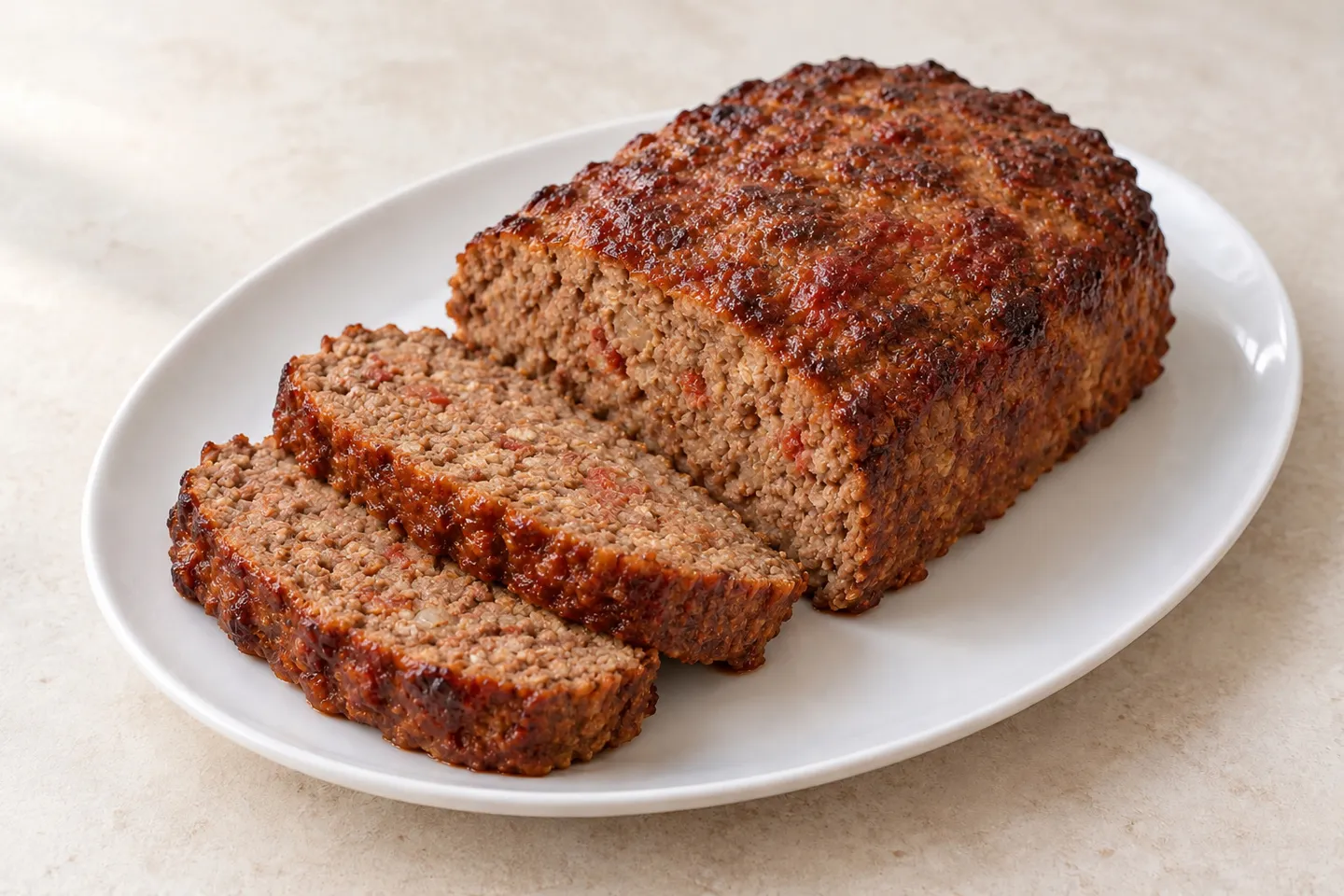
Savory Oatmeal Meatloaf (1934)
A Depression-era meatloaf using rolled oats to stretch a single pound of ground beef into a tender family dinner.
- Original yieldYield
- 6 servings6 servings
- PrepPrep time
- CookCook time
- TotalTotal time
Published Updated
Original recipe: 6 servings
The story behind the recipe
The USDA's meatloaf recipe begins by sending the cook to another recipe. Its 1934 bulletin asks for the mixture used in meat patties, made a little softer for the loaf. To understand dinner, you have to read back a few lines: tomatoes, onion and a binder were there all along.
A pound of beef with company
In this adaptation, rolled oats replace the source's bread crumbs and help a pound of ground beef fill out a loaf with drained tomatoes, crisp salt pork and onion cooked in its drippings. Saved tomato juice goes over the top during baking. The result is a loaf to slice into portions, with the meat sharing space with other ingredients rather than filling the pan alone.
Read more about this recipe
Binders were a choice
In Meat Dishes at Low Cost, the patty mixture can use bread crumbs, mashed potatoes or boiled rice. The loaf passage also offers thick white sauce as another binder and mentions crisp salt pork for richness. Its measured example uses a pound of meat and bread crumbs.
That range makes the bulletin more interesting than a single rigid formula. The home economist is explaining a mixture that can take different forms, and a loaf that needs a softer consistency than the flat cakes. Ingredients and shape are considered together.
Rolled oats are our choice, not an ingredient recovered from that historical example. Their measured amount replaces the bread-crumb approach in a modern formula; it isn't a one-for-one conversion of a pint of crumbs. The tomatoes and baked ground-meat structure keep a more direct connection to the source.
Two uses for a can of tomatoes
Draining the tomatoes leaves both flesh and juice available. The USDA patty directions save that juice for gravy. We use it instead for basting the loaf, while the drained tomatoes go into the mixture with beef and oats.
It is a small change with a visible effect on the meal. There is no separate tomato gravy to prepare. The juice stays with the loaf, brushed on before and during baking, and the tomatoes remain an ingredient inside each slice. The modern drained weight is worth following; the size printed on a can doesn't tell you how much tomato remains after draining.
Salt pork brings another kind of richness. Its crisp pieces join the loaf after the onion has softened in the rendered fat. Thick-cut bacon is the listed alternative, adding its own smoky note. A little thyme sits beside salt and pepper rather than turning the loaf into a heavily seasoned sausage mixture.
A loaf to plan from raw meat
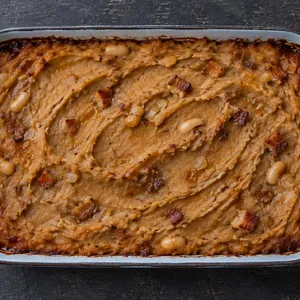
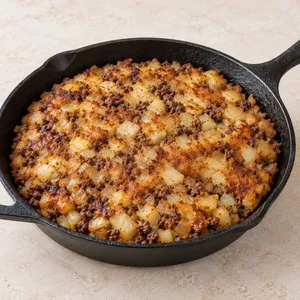
This dinner begins with ground beef, unlike Browned Potato and Meat Hash, which starts with cooked meat and potatoes. The difference is useful when choosing among our Depression-era dinners: are you using ingredients from another meal, or making one from the beginning?
Give the meatloaf its baking and resting time. A browned surface is inviting, but the thermometer check tells you about the center; the rest follows before slicing.
Make it your wayOriginal: 6 servings
Original recipe: 6 servings
Ingredients
For 6 servings. Quantities are shown as written.
Source measurement convention: Metric. Explicit unit definitions take precedence; unconfirmed measures must be checked before conversion.
Original quantities for 6 servings.
- Ground beef (chuck)450 g
- Rolled oats100 g
- Canned crushed tomatoes (drained, liquid reserved)240 g
- Salt pork (or thick-cut bacon, finely diced)60 g
- Yellow onion (approx. 1 small, finely minced)80 g
- Fine salt1 metric tsp
- Ground black pepper1/4 metric tsp
- Dried thyme1/4 metric tsp
- Reserved tomato juice (for basting)30 mlAuthor measures: about 2 metric tbsp (1 metric tbsp = 15 ml).
- Neutral cooking oil (or lard, for greasing)1 metric tsp
Measurement notes
- fine salt, ground black pepper, dried thyme, neutral cooking oil (or lard, for greasing): tsp: 1 = 5 ml.
Measurement notes
Original ingredients
- 450 g ground beef (chuck)
- 100 g rolled oats
- 240 g canned crushed tomatoes (drained, liquid reserved)
- 60 g salt pork (or thick-cut bacon, finely diced)
- 80 g yellow onion (approx. 1 small, finely minced)
- 1 tsp fine salttsp: 1 = 5 ml.
- 1/4 tsp ground black peppertsp: 1 = 5 ml.
- 1/4 tsp dried thymetsp: 1 = 5 ml.
- 30 ml reserved tomato juice (approx. 2 tbsp, for basting)
- 1 tsp neutral cooking oil (or lard, for greasing)tsp: 1 = 5 ml.
Equipment
 9x5-inch (23x13 cm) loaf pan or shallow baking dish
 Instant-read meat thermometer
Instructions
Prepare the oven and pan
Preheat your oven to 190°C (375°F). Lightly grease a 9x5-inch loaf pan or shallow baking dish with the neutral cooking oil.
Render the salt pork
Place the finely diced salt pork into a cold skillet over medium heat. Fry slowly until crisp and golden brown (about 5 minutes). Lift the crisp pork bits out with a slotted spoon and set aside, leaving the rendered fat in the pan.
Cook the onion
Add the minced yellow onion to the warm skillet fat. Sauté over medium heat for 4 minutes until soft and translucent, then remove from the heat.
Combine the meatloaf ingredients
In a large mixing bowl, combine the ground beef, rolled oats, drained canned crushed tomatoes, cooked salt pork, sautéed yellow onion, fine salt, ground black pepper, and dried thyme.
Mix gently and shape the loaf
Mix gently with clean hands until ingredients are evenly distributed, taking care not to compact the meat excessively. Shape the mixture into a loaf inside the prepared pan.
Brush with tomato juice
Brush the top of the loaf with half the reserved tomato juice before baking.
Bake, baste and check the center
Bake for 30 minutes, then baste the top with the remaining reserved tomato juice. Continue baking for about 25 to 30 minutes, checking that the center reaches this recipe's target of 74°C (165°F) on an instant-read meat thermometer and the surface is well browned.
Rest before slicing
Let the loaf rest in the pan for 10 minutes before slicing into portions.
Estimated calories 290 kcal
Nutrition portion: 1/6 of recipe · Original yield: 6 servings
Source & assumptions
Ingredient-based estimate using CoFID 2021, USDA SR Legacy (April 2018), identified manufacturer information. Approximately 290 kcal per nutrition portion. Uses representative 80% lean raw ground beef and the listed bacon alternative. Bognar (2002) meatloaf retention factors account for unserved pan juices; all oats, tomatoes and measured greasing oil are included. Ingredients, brands and preparation affect values.
Recipe notes
When adjusting quantities
Scale ingredients proportionally. When doubling, bake as two separate loaves rather than one large loaf to ensure even heat penetration.
Original recipe notes
These notes describe the original recipe. Quantities mentioned here do not change when you adjust servings.
If salt pork is unavailable, thick-cut bacon can be substituted in equal measure, adding a gentle smoky note to the loaf.
Basting with reserved tomato juice in two stages keeps the upper crust moist while forming a savory glaze.
USDA food safety guidance gives a minimum of 71°C (160°F) for ground beef. This recipe uses a higher target of 74°C (165°F); check the center rather than relying on browning or the estimated baking time alone.
The 90-minute total time accounts for 20 minutes of active prep and pork browning, 60 minutes of baking, and the 10-minute resting period necessary for clean slicing.
Read the scaling guide. Times, temperatures and equipment need their own consideration. Open the recipe tool to review and correct individual amounts.

Sources and attribution
Adapted from USDA Bureau of Home Economics, Meat Dishes at Low Cost (1934), p. 9
USDA Bureau of Home Economics, Meat Dishes at Low Cost (1934), pp. 8–9.
Recipe details
- Recipe tradition
- Vintage
- Course or meal
- Dinner
- Cuisine
- American
- Source decade
- 1930s
- Main ingredient
- Beef
- Occasion
- Comfort foodBudget
- Browse category
- Main Dishes