
Pineapple Upside-Down Cake (1920s-inspired)
Pineapple rings baked over butter and brown sugar, then turned out so the fruit sits on top. Use a deep 9-inch skillet or cake pan.
- Original yieldYield
- 1 9-inch cake1 9-inch cake
- PrepPrep time
- CookCook time
- TotalTotal time
Includes 5 minutes cooling before flipping.
Published Updated
Original recipe: 1 9-inch cake
The story behind the recipe
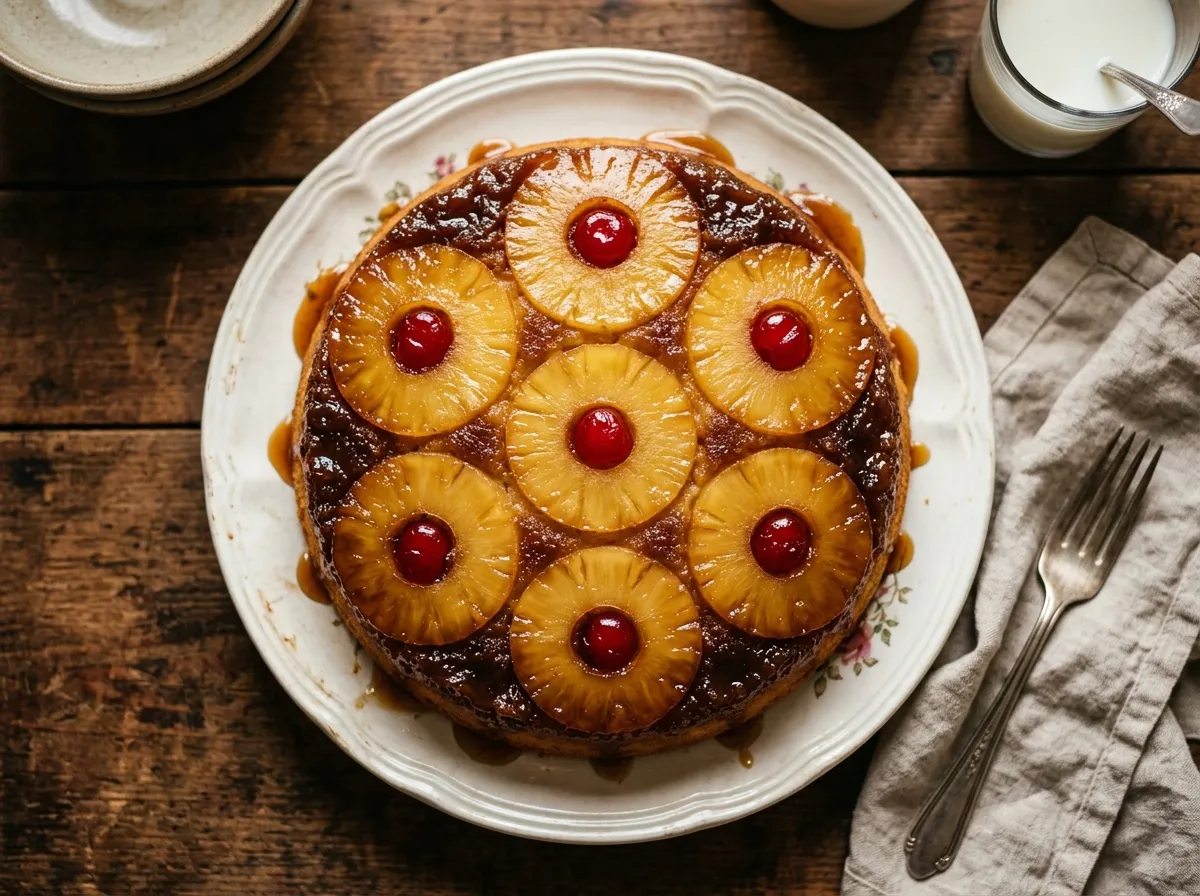
Pineapple rings disappear under the batter, then reappear on top when the pan is turned over. Brown sugar and butter surround them, making the fruit pattern the cake's finish as well as its first layer. An upside-down cake gets its decoration done before it goes into the oven.
A pattern built from the fruit
Canned rings give the top a ready-made design: one in the center, more around it, and optional red cherries in the openings. The pineapple is still the attraction without the cherries. Once the cake is turned out, there is no frosting to make and no blank surface left to decorate.
Read more about this recipe
An inspired cake, with its own formula
This is a contemporary, 1920s-inspired recipe. Dole records a pineapple recipe contest in 1925, but we haven't recovered a period original for these exact quantities. The 1920s connection is an inspiration; this ingredient list isn't a historical transcription.
The butter is underneath
All the listed butter goes into the fruit layer. It surrounds the pineapple with brown sugar; it isn't a second fat portion to beat into the cake batter. The batter begins with eggs and white sugar beaten until thick and pale, then flour, baking powder and boiling water are added.
The cake beneath the fruit therefore starts differently from a creamed butter cake. Its egg mixture gives it a light beginning, with flour providing structure. The rich topping supplies the buttery part of each slice. Reading the two components separately makes sense of a short ingredient list that doesn't ask for milk or softened butter in the batter.
Use pineapple packed in juice, and drain it as directed. That leaves the fruit ready for its place on the sugar rather than bringing an unmeasured quantity of packing liquid into the pan. The boiling water in the batter has its own measured place.
A pan deep enough for both layers
A nine-inch iron skillet gives the cake a sturdy cooking vessel, but the recipe also allows a round cake pan. Depth matters as well as diameter: the fruit layer and batter need to fit together before either has baked. The listed two-inch minimum is a useful shopping and cupboard check.
Turning the cake out calls for a heatproof plate and oven mitts. The brief cooling interval comes before inversion, while the pan and topping are still hot. Having the plate nearby makes that moment a planned part of the bake.
Occasionally a ring may stay behind in the pan; the method allows you to return it to the cake. That is an advantage of a decoration made from recognizable pieces of fruit. A misplaced ring can be set back into its pattern, and the cake still has its pineapple top.
A slice brings the two layers back together: light cake beneath fruit, butter and brown sugar, with a little of the pattern in each portion. The turning-out moment is pleasing, but it also explains the dessert's whole construction.
Make it your wayOriginal: 8 servings · Makes 1 9-inch cake
Original recipe: 1 9-inch cake
Ingredients
For 1 9-inch cake. Quantities are shown as written.
Source measurement convention: US customary. Explicit unit definitions take precedence; unconfirmed measures must be checked before conversion.
Original quantities for 1 9-inch cake.
- Butter1/2 cup
- Brown sugar1 cup
- (20 oz) Can sliced pineapple (packed in juice), drained1
- Large eggs3
- White sugar1 cup
- All-purpose flour1 cup
- Baking powder1 tsp
- Boiling water1/4 cup
- Maraschino cherries (optional)8
Measurement notes
- butter, brown sugar, white sugar, all-purpose flour, boiling water: US cup: 1 = 236.5882 ml (rounded).
- baking powder: US tsp: 1 = 4.9289 ml (rounded).
Measurement notes
Original ingredients
- 1/2 cup butterUS cup: 1 = 236.5882 ml (rounded).
- 1 cup brown sugarUS cup: 1 = 236.5882 ml (rounded).
- 1 (20 oz) can sliced pineapple (packed in juice), drained
- 3 large eggs
- 1 cup white sugarUS cup: 1 = 236.5882 ml (rounded).
- 1 cup all-purpose flourUS cup: 1 = 236.5882 ml (rounded).
- 1 tsp baking powderUS tsp: 1 = 4.9289 ml (rounded).
- 1/4 cup boiling waterUS cup: 1 = 236.5882 ml (rounded).
- 8 maraschino cherries (optional)
Equipment
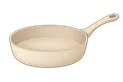 9-inch iron skillet or round cake pan (at least 2 inches deep)
 Electric mixer
Instructions
The Caramel Base
Preheat the oven
Preheat oven to 350 degrees F (175 degrees C).
Melt butter in the pan
Melt the butter in a heavy 9-inch iron skillet on the stovetop (alternatively, melt it and pour it into a standard 9-inch round cake pan).
Add the brown sugar layer
Sprinkle the brown sugar evenly over the melted butter in the pan.
Arrange pineapple and optional cherries
Arrange the drained sliced pineapple rings over the sugar, putting one in the center and the rest around it. Place an optional maraschino cherry in the center of each ring.
The Cake Batter
Beat eggs and sugar
Beat the eggs until very light and frothy, then gradually beat in the white sugar until the mixture is thick and pale.
Fold in flour and add boiling water
Gently fold in the all-purpose flour and baking powder, then stir in the boiling water.
Pour batter over the pineapple
Pour the batter evenly over the pineapple in the skillet or cake pan.
Bake and check the center
Bake for 45 minutes, until a toothpick inserted into the cake comes out clean.
Cool briefly and invert carefully
Let the cake cool in the pan for 5 minutes. Place a heatproof serving plate over the pan. Using oven mitts, carefully invert the pan and plate together, then lift off the pan. If a pineapple ring sticks, return it to its place on the cake.
Estimated calories 410 kcal
Nutrition portion: 1/8 of recipe · Original yield: 1 9-inch cake
Source & assumptions
Ingredient-based estimate using CoFID 2021, USDA SR Legacy (2018). About 410 kcal per nutrition portion (1/8 of the recipe). Standard nutrition portion: one-eighth of the original 9-inch cake. This slice count is editorial. Uses a representative drained pineapple yield; optional cherries are excluded. Actual ingredients and preparation affect the estimate.
Recipe notes
When adjusting quantities
Use additional pans of the original size for a larger batch. Changing the pan diameter or depth changes the bake; the tool does not calculate a new cooking time.
Original recipe notes
These notes describe the original recipe. Quantities mentioned here do not change when you adjust servings.
Use a 9-inch pan at least 2 inches deep, as listed in the equipment. A shallow pan may not hold the fruit, topping and batter.
Drain the pineapple before arranging it in the pan. Have the serving plate ready before the final cooling and turning-out step.
Read the scaling guide. Times, temperatures and equipment need their own consideration. Open the recipe tool to review and correct individual amounts.

Sources and attribution
A modern, 1920s-inspired pineapple upside-down cake. Dole records a pineapple recipe contest in 1925; no historical original for this exact formula has been recovered.
Historical reference: Dole's recipe associated with its 1925 contest (a different formula)
Recipe details
- Cuisine
- American
- Main ingredient
- Fruit
- Browse category
- Baking & Desserts