
- Vintage
- 1920s
- Refrigerator cooking
Inside a 1927 Electric Refrigerator Cookbook
Explore six adaptations from Alice Bradley’s 1927 refrigerator cookbook, from decorative punch ice to frozen lemon sherbet and a layered gelatin ring.
Alice Bradley puts one tomato salad in the freezer and keeps another away from it. In her refrigerator cookbook, cold is an ingredient in the dish’s texture: it can make a filling frosty, turn fruit juice slushy or help a savory jelly hold its shape. The word chilled doesn’t quite cover all that work.
Published for General Electric with a 1927 copyright, Electric Refrigerator Menus and Recipes also shows the appliance helping with afternoon bridge. Salads and desserts are prepared in the morning, punch ingredients combined and decorated ice frozen. When refreshments are wanted, they can be carried to the card tables on a tray. The cold work happens earlier; the serving can stay sociable.
Six adaptations follow those uses of the refrigerator, from a small decoration inside a drink cube to a layered ring that takes several stages to set. The useful question is what sort of cold each dish needs, and what the cook must do while it waits.
A refrigerator with more than one kind of cold
Bradley was writing specifically for an electric refrigerator. The title page names General Electric, and her foreword presents recipes adapted for its appliance. This is a manufacturer’s cookbook with an enthusiastic sales pitch as well as cooking instructions; it is a close look at what one book offered its readers, rather than proof that every household cooked this way.
The appliance chapter makes a distinction that matters throughout the recipes. Its chilling unit operates below freezing and is used for ice, frozen desserts and frozen salads. The rest of the refrigerator provides a different place for chilling and setting. In a modern kitchen, that means reading each recipe for its intended texture and following the adaptation’s refrigerator or freezer instructions, rather than treating every reference to cold as interchangeable.
The six dishes below are arranged around those changes of texture. Some need to freeze solid, some stop at a soft slush, and others hold their shape because gelatin sets in the refrigerator. A tray of slushy fruit and a mold of set jelly make different demands on both the appliance and the cook.
Start with the ice and the fruit
Bradley’s bridge-party page recommends making the salads and desserts in the morning, combining the punch ingredients in advance and having decorated ice ready. A separate recipe explains how to center a decoration in an ice cube: freeze part of the water, add the decoration with a little more water to hold it, then finish filling and freezing.
Our card-party fruit cup borrows that decorative idea, combining cherry and mint in the cubes. The white grape juice, lemon and ginger ale are a modern composed drink inspired by the menus, not a beverage formula copied from Bradley. Freeze the decorated cubes before mixing the pale fruit drink.
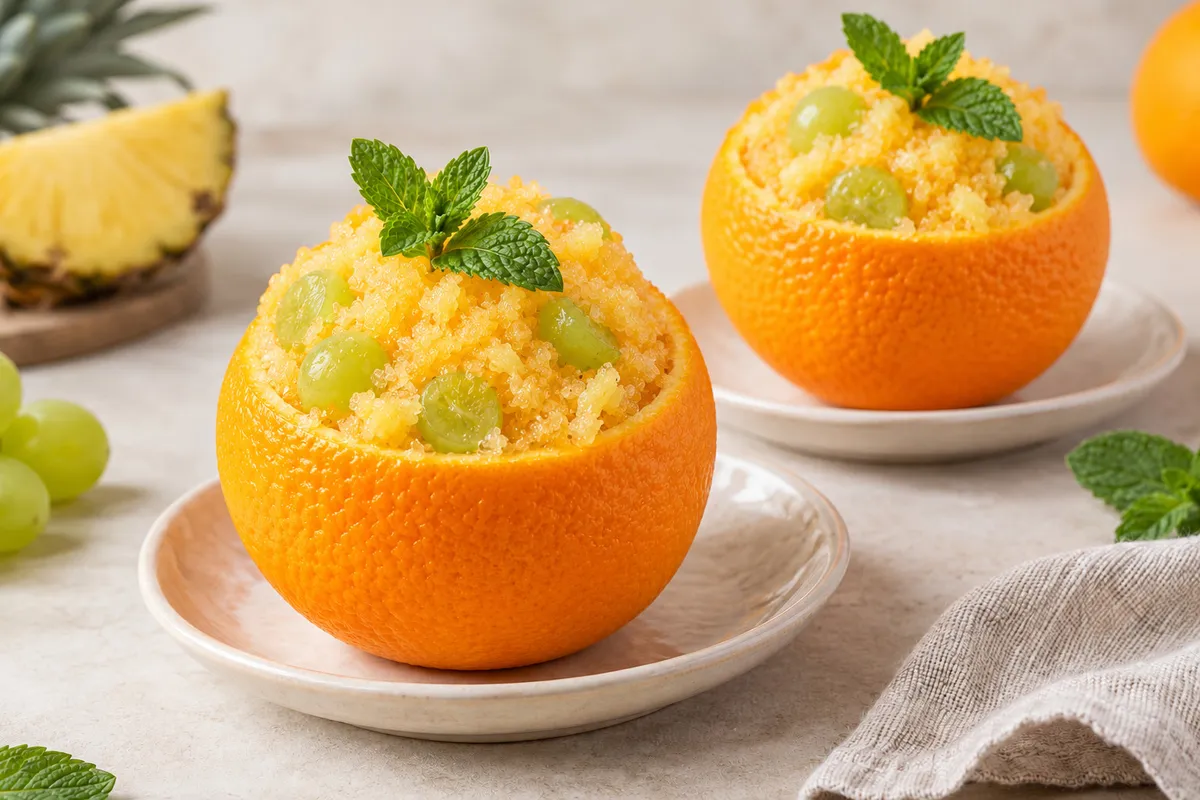
For the orange fruit cups, the container also comes from the ingredients. Bradley removes the pulp and juice from small oranges, combines them with grapes and crushed pineapple, and freezes the mixture until mushy, stirring occasionally. It can be served in the saved orange skins or in glasses. Our version keeps the orange-shell presentation, with measured seasoning and a mint garnish.
This is a spoonable fruit starter. Its target is a soft slush, so the freezing stage needs attention near serving time. It has a different finish from the solid decorated cubes, even though both begin in the freezer.
Card-Party Fruit Cup
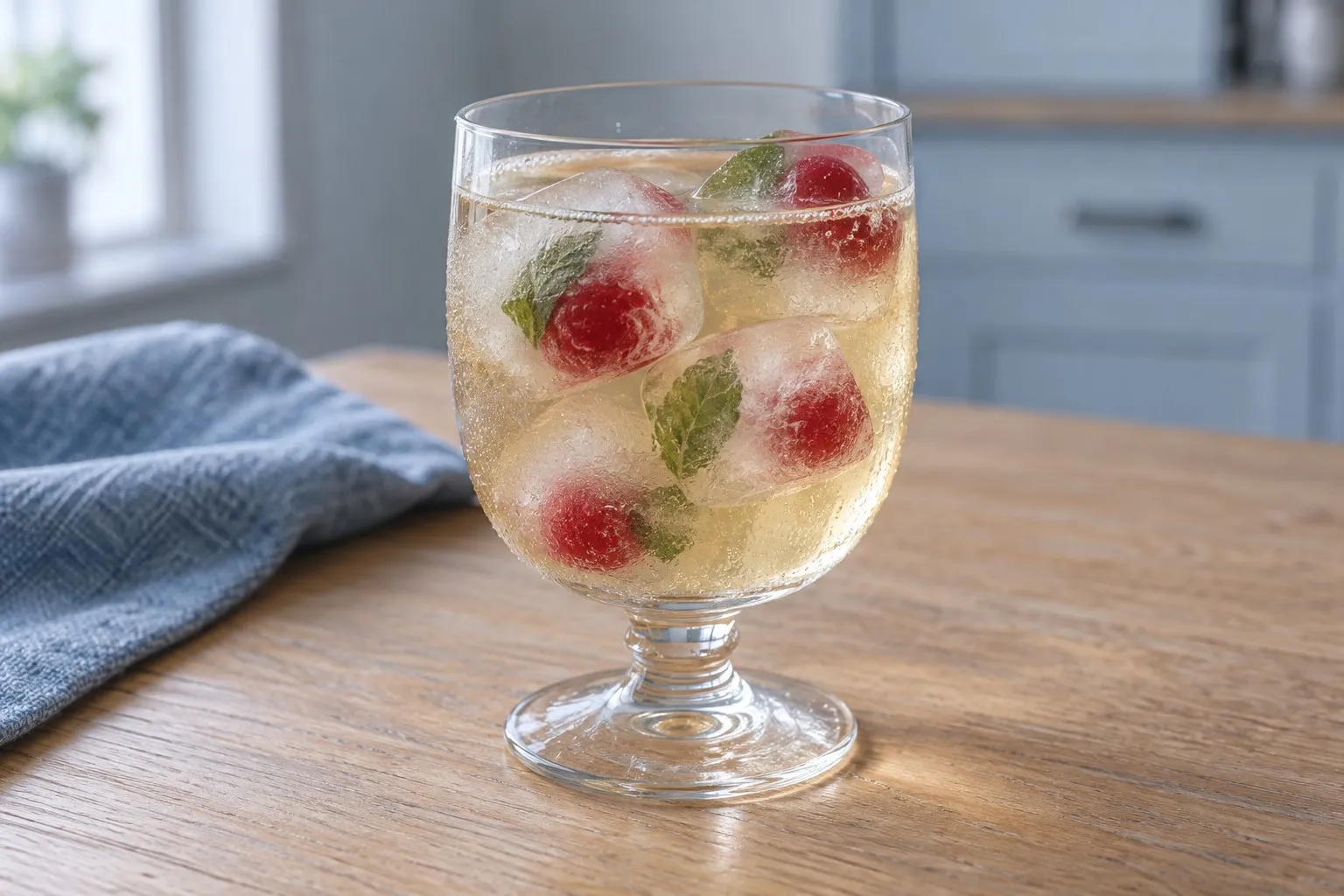
Source: Bradley, pp. 18 and 55; composed drink inspired by the menus and garnished ice
White grape juice, lemon and ginger ale leave the decorated ice clearly visible. Cherries and mint freeze inside the cubes, making this a small make-ahead detail with a cheerful result. Prepare the ice before mixing the drink.
Frozen Orange-Pineapple Fruit Cup
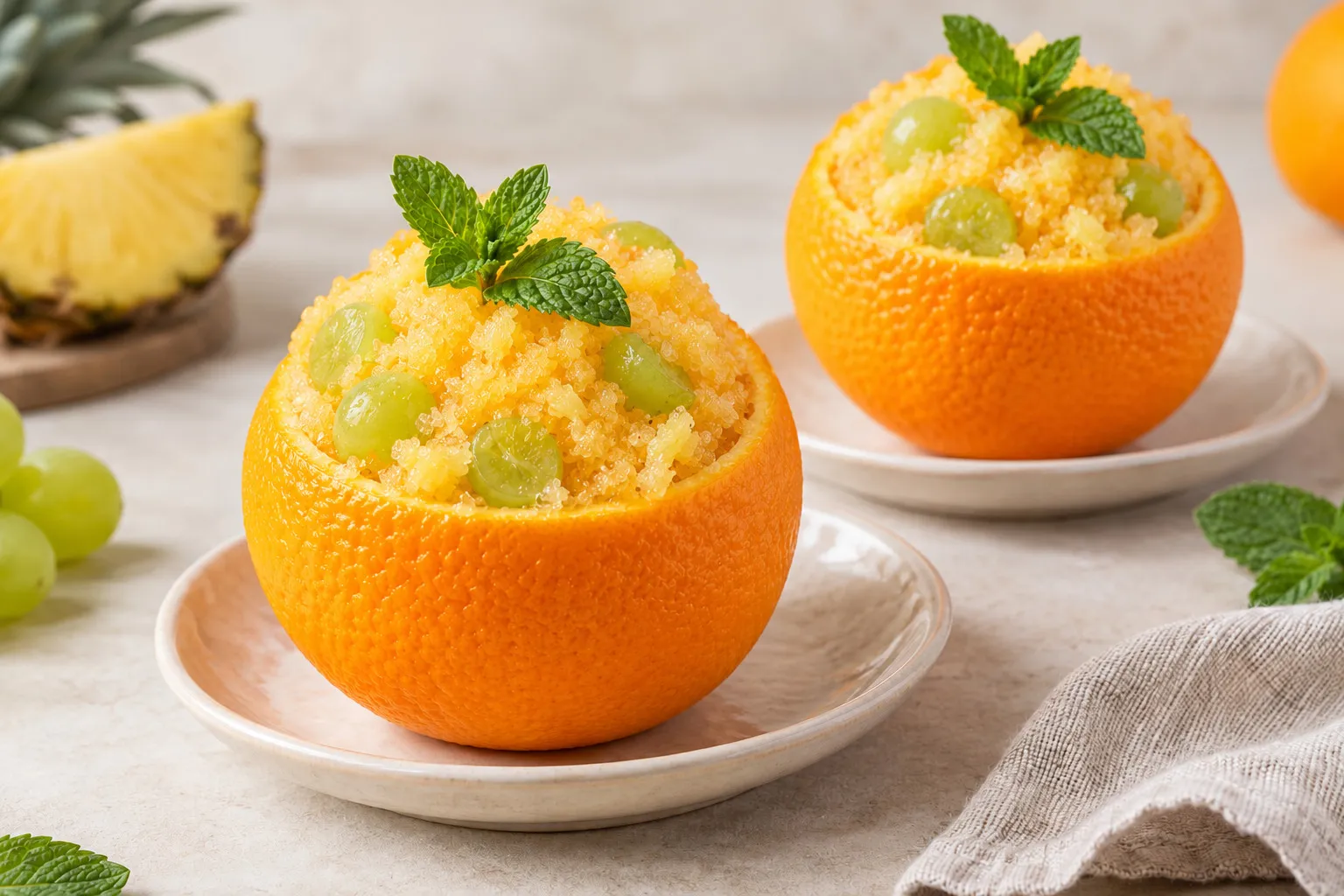
Source: Bradley, p. 63
Orange, pineapple and grapes are chilled to a soft slush and spooned into the saved orange skins. Stir during freezing to break up the crystals, then serve while the fruit is still easy to eat with a spoon.
Two tomatoes, two different results
The tomato dishes are easy to confuse by name, but they use cold differently. In Bradley’s “Tomatoes Stuffed with Frozen Salad,” the scooped-out tomato pulp and juice join chopped cucumber and green pepper, mayonnaise, gelatin and seasonings. That mixture is frozen separately, then served inside the tomatoes. The shells remain containers for a frosty filling.
Our Frozen Cucumber and Green Pepper Salad follows that idea with modern measured amounts, smaller tomatoes and milder onion and mustard seasoning. Gelatin helps bind the creamy filling, which is frozen until firm enough to pile into the shells. The cut vegetables remain part of its texture.
Stuffed Tomatoes in Aspic works the other way around. Here the tomato holds a celery, nut and mayonnaise filling, while savory gelatin surrounds it in a mold. Bradley specifically places the filled molds in the refrigerator away from the chilling unit until firm. Our adaptation likewise sets them in the refrigerator.
These are worth choosing between before making space in the refrigerator. A shallow tray holds the frozen salad filling, with the tomato shells kept chilled separately. The aspic needs individual molds that fit their tomatoes closely enough for the jelly to cover them, and time for the broth mixture to cool before meeting the mayonnaise filling.
Frozen Cucumber and Green Pepper Salad
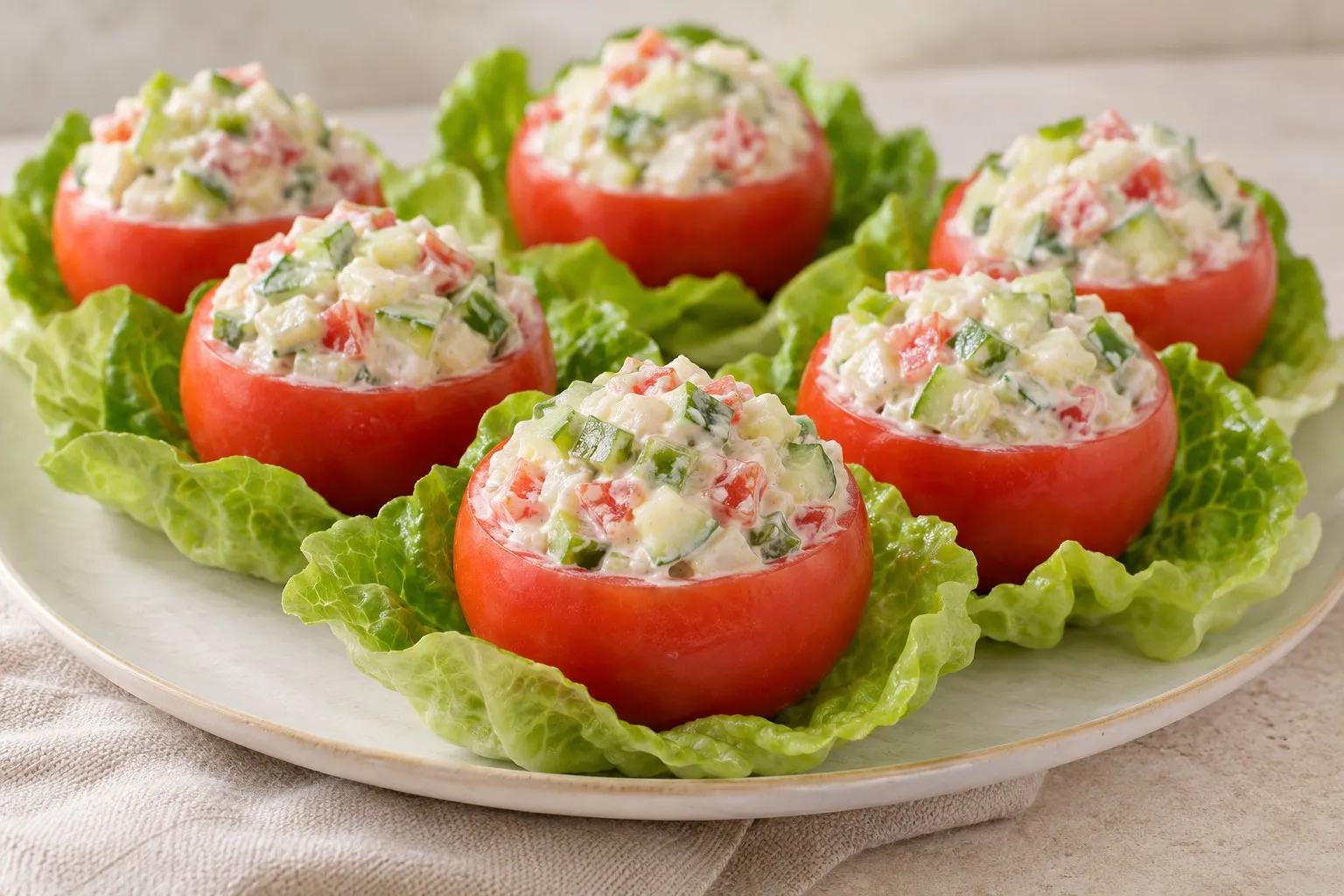
Source: Bradley, p. 67
Finely chopped cucumber, green pepper and tomato are folded into seasoned mayonnaise and gelatin, then frozen before filling the tomato shells. It’s a savory, creamy salad with an unusual frosty finish, served on crisp lettuce.
Stuffed Tomatoes in Aspic Jelly
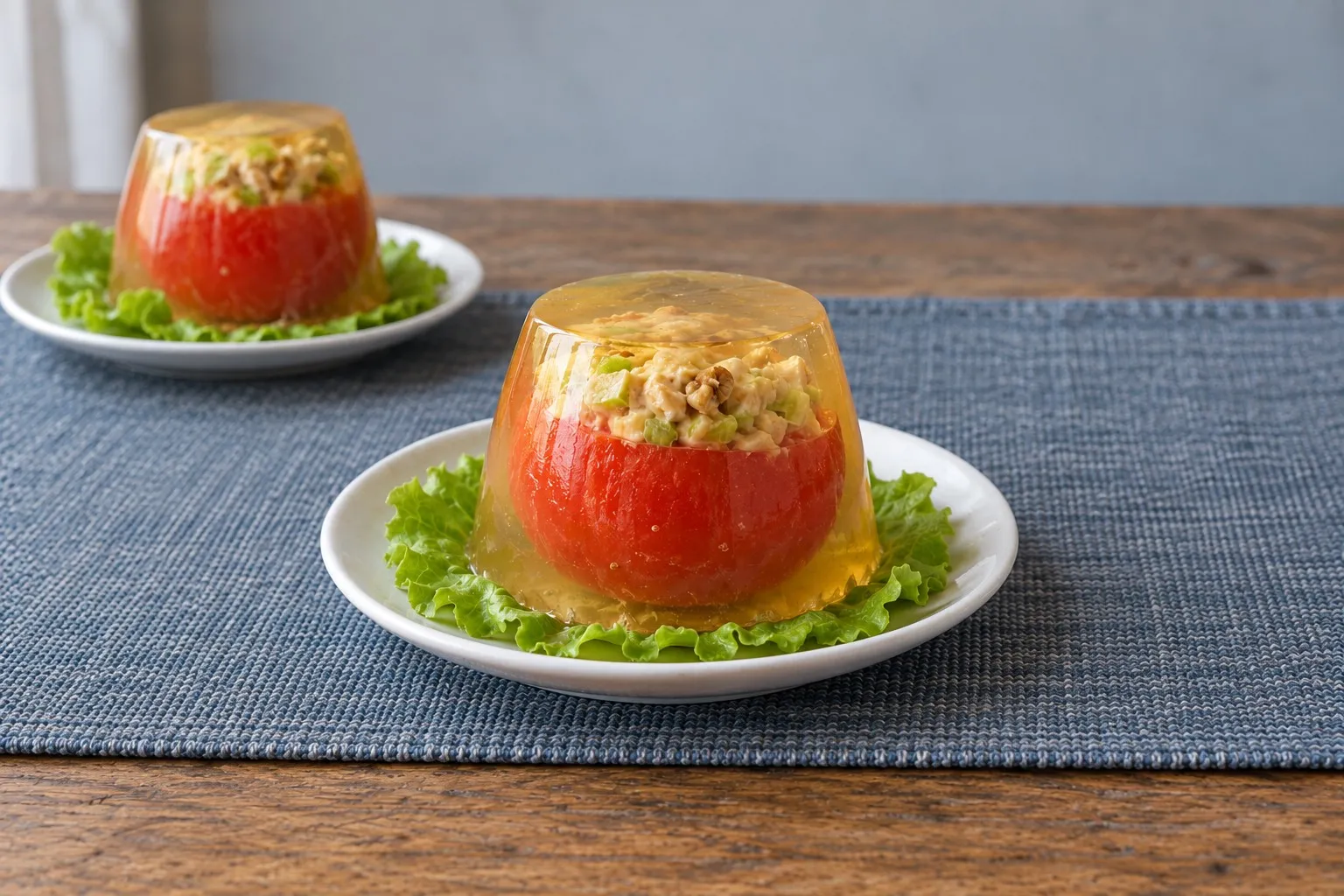
Source: Bradley, pp. 59 and 61
Peeled tomatoes hold a celery, walnut and mayonnaise filling inside individual molds of savory aspic. Choose molds that leave space for gelatin around each tomato, and let the broth cool before it touches the filling.
Frozen lemon sherbet and a layered gelatin ring
Bradley calls the lemon dessert “Lemon Cream Sherbet.” It contains milk, cream, lemon juice and gelatin, and its instructions include beating the chilled mixture until very light before returning it to freeze. She even notes that a separated, icy bottom may need another beating. The book is asking the cook to watch the mixture, not simply put it away and wait.
Our No-Churn Lemon Cream Sherbet is an adaptation of that recipe. It partly freezes in a shallow tray, is beaten until frothy, then freezes again. No ice cream churn is needed, but there is a hands-on stage between the two waits. Beat it while it is still soft, then let it become firm enough to scoop.
The orange gelatin ring changes character partway through as well. Bradley’s original builds up decorated layers and beats a reserved quarter of the jelly until light. Strawberries and banana are already in her recipe, alongside marshmallows and pistachios used in the elaborate decoration.
Our version leaves out the marshmallow and pistachio decoration and simplifies the arrangement into clear jelly, fruit and a whipped-gelatin layer containing fruit. The order is adapted too. The pale layer is beaten gelatin, while the cream is served separately in the center. Those are two different components, even though both appear pale on the plate.
No-Churn Lemon Cream Sherbet
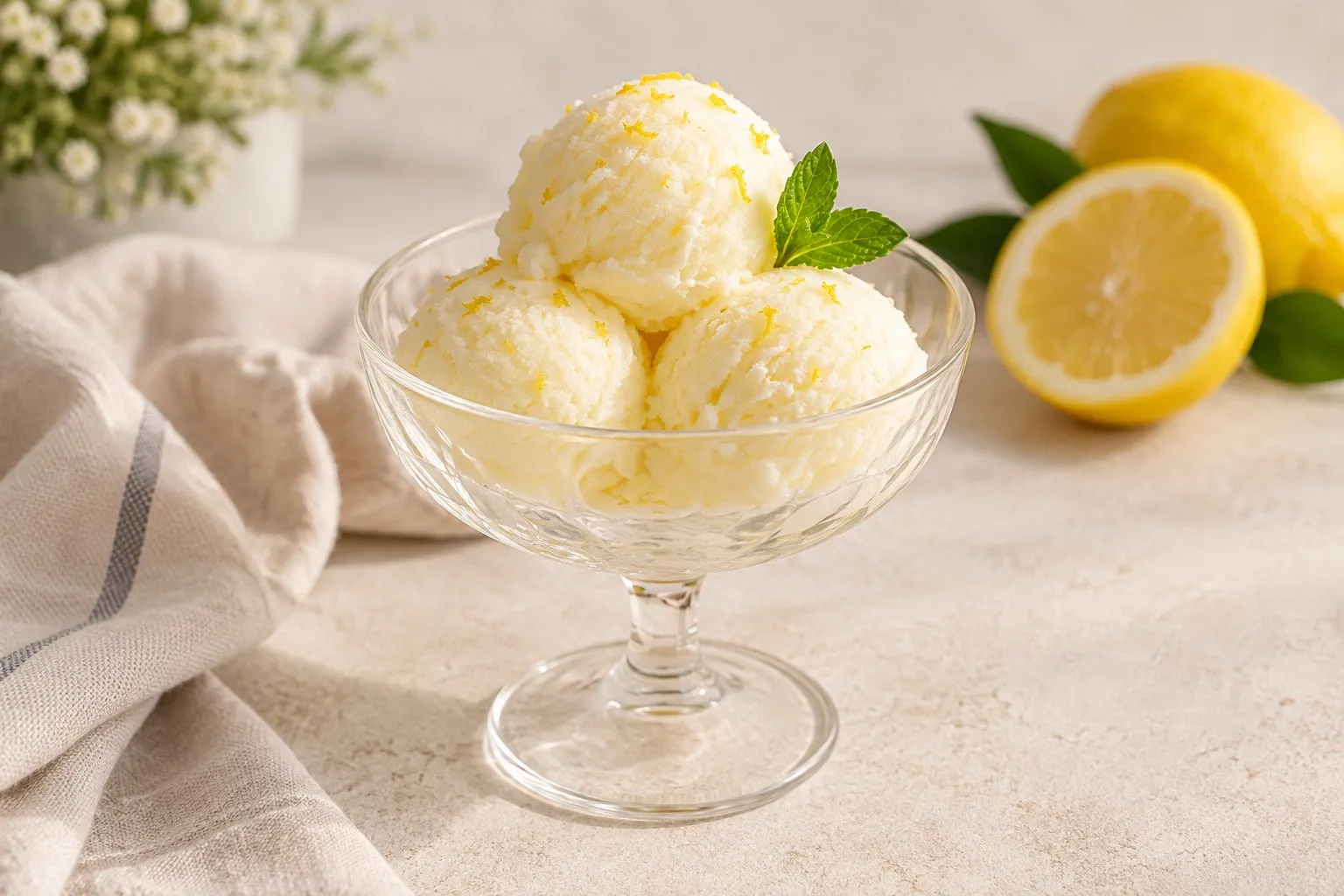
Source: Bradley, p. 75
Milk, cream and lemon become a pale frozen dessert without an ice cream churn. The mixture is partly frozen, beaten until frothy, then frozen again. Allow time for both stages; the hands-on work comes between them.
Layered Orange and Berry Gelatin Ring
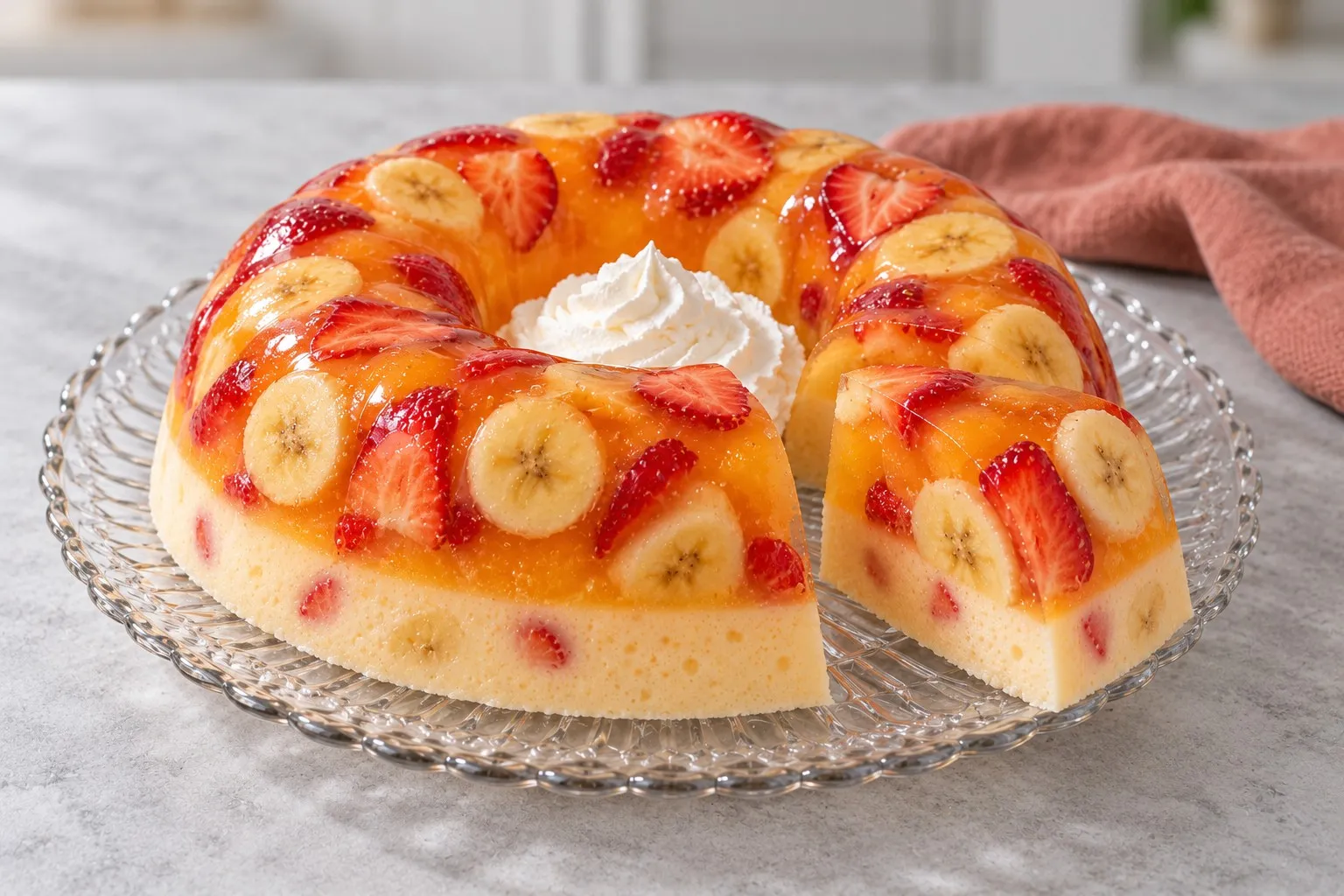
Source: Bradley, p. 114; simplified layers
Clear citrus gelatin holds sliced fruit above a pale whipped-gelatin layer. The ring is served with cream in the center. This version simplifies Bradley’s more elaborate arrangement while keeping the contrast between clear jelly and fruit sponge.
Planning: freezing, setting and return visits
These dishes offer different kinds of preparation ahead. Decorated ice can be ready before the drink is mixed. Molded aspic and the gelatin ring need time to become firm. The lemon sherbet needs the cook to return for beating, while the orange fruit cups need occasional stirring and a check for their slushy finish.
Decorated ice is the smallest project here. It gives a drink a cheerful detail without committing to a whole molded dish. The tomato salads offer a more unusual savory choice, and the ring asks for several visits as its layers set. Choose the amount of attention you want to give: a freezer can do the cold work, but it can’t stir the fruit cups or catch the lemon mixture at its beating stage.
For drinks that begin in the pantry, Two 1920s Drinks Cupboards compares fruit, cream, preserves and brewed drinks across two home-entertaining books.
Source note
Alice Bradley, Electric Refrigerator Menus and Recipes, prepared for General Electric, copyright 1927. The consulted scan identifies itself as the fourth edition, September 1928. The foreword and printed pages 18 and 31 provide the entertaining and appliance context; the recipes appear on pages 55, 59, 61, 63, 67, 75 and 114.
The Internet Archive record for the book provides a public entry point. The linked recipes explain their modern quantities and method changes. The card-party drink is a composed adaptation of the menus and garnished ice; the lemon dessert derives from “Lemon Cream Sherbet”; the gelatin ring simplifies and rearranges the original layers.