
- Cocktails
- Vintage recipes
- Recipe scaling
Same Cocktail, Different Balance: How Cocktail Ratios Changed
Savoy Martinis, Johnson's Manhattan and the Picador show how to distinguish unit conversion, scaling and a deliberate change of balance.
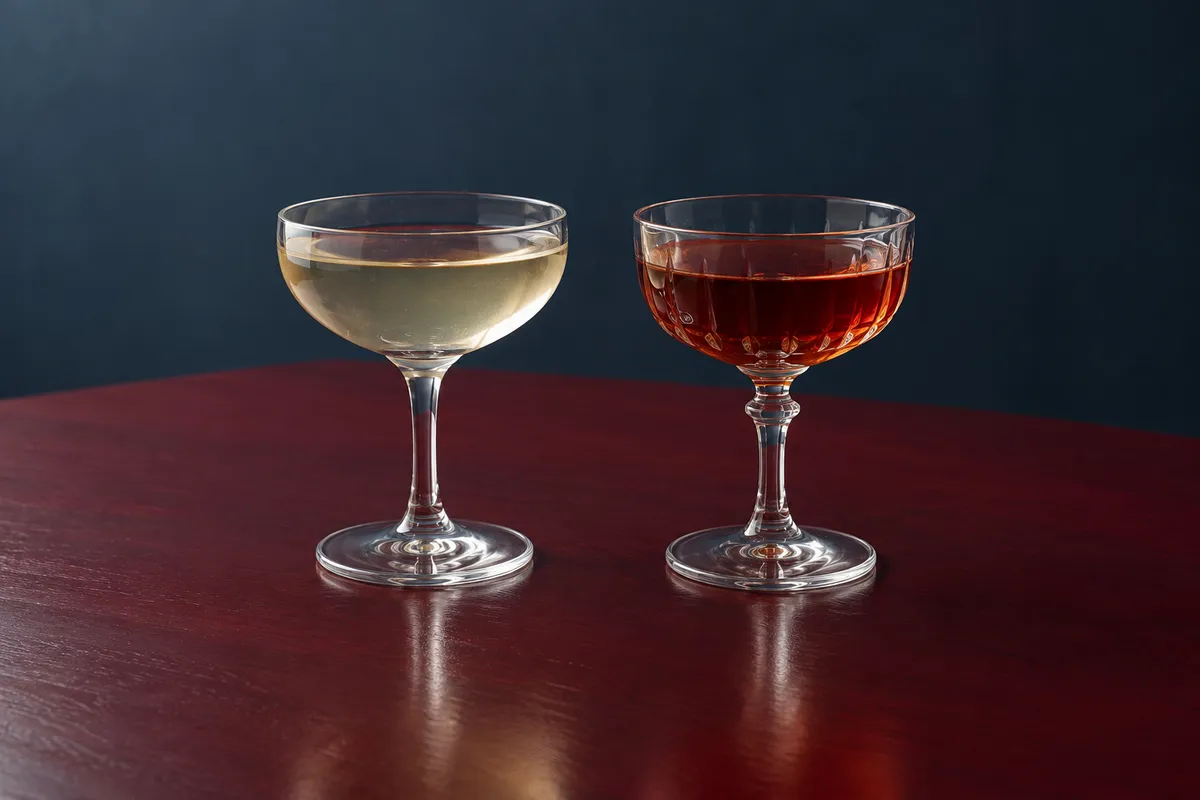
On page 62 of the 1930 Savoy Cocktail Book, a Dry Martini contains equal parts gin and French vermouth. On page 102, a separate Martini marked dry has twice as much gin as French vermouth. Same book, same year, two balances. If dry doesn’t settle the matter within one volume, it can’t tell us everything we need to know about a Martini today.
That is a useful starting point for reading old cocktail recipes. A familiar name can conceal a different arrangement of ingredients, and translating the measures won’t necessarily turn it into the drink you expected. Before adjusting anything, decide whether you’re converting a quantity, scaling a serving or changing the balance. Each answers a different question.
Three changes that look similar on paper
Convert means expressing the same quantity in another unit. Milliliters and fluid ounces can describe the same volume, provided you use the right fluid-ounce definition. A historical half-wineglass is another matter: without evidence of that measure’s size, assigning it a precise modern volume would be an assumption, not a secure conversion.
Scale means multiplying the relevant ingredient amounts by the same factor. A drink with 30 ml gin and 30 ml vermouth becomes 60 ml of each when you double it. There is more drink, but the gin-to-vermouth ratio stays one to one. The same principle applies to the small additions, even though fractional dashes can be awkward to dispense.
Rebalance means changing the relationship. Keep 30 ml gin and reduce the vermouth to 15 ml, and you’ve made a two-to-one mixture. You haven’t translated or halved the equal-parts recipe. You’ve chosen another balance, which may be precisely what you want.
Our guide to scaling a recipe without losing its balance works through the practical arithmetic. These drinks add a different question: which relationship are you trying to preserve? The answer comes from reading the ingredients and the source, rather than trusting the name to supply a fixed formula.

How much vermouth is a dry Martini?
The two Savoy entries make a neat comparison because the principal ingredients stay closely related. Both specify French vermouth. The page 62 Dry Martini pairs it equally with gin and includes a dash of orange bitters. The page 102 Martini (Dry) has one-third French vermouth and two-thirds dry gin, with no bitters listed. Both call for shaking and straining. Savoy, printed pages 62 and 102.
Beside the Dry Martini on page 102 sits a Martini (Medium): half dry gin, a quarter French vermouth and a quarter Italian vermouth. The total share of vermouth is larger, and its composition changes too. Within this pair, the labels accompany a change of vermouth mixture as well as proportion. Read both the ingredient names and their fractions when choosing a drink; “dry” alone leaves you with two different Savoy ratios.
For a contemporary reference, the International Bartenders Association’s Dry Martini specifies 60 ml gin and 10 ml dry vermouth. That is six to one. Its method is stirred, and it offers expressed lemon oil or a green olive if requested. It doesn’t list the orange bitters from Savoy page 62. Calling the change simply less vermouth would leave those choices behind.
Imagine holding the combined gin-and-vermouth volume at 60 ml. The equal-parts version would use 30 ml of each; the two-to-one version would use 40 ml gin and 20 ml vermouth. A six-to-one example at that same total would have about 51.43 ml gin and 8.57 ml vermouth. That last pair is arithmetic for comparison, not a recommendation to measure a cocktail to two decimal places.
Holding the total steady exposes the proportion change. It doesn’t predict the alcohol content, the dilution or the exact flavor. Different bottles introduce their own differences. If you want to understand the vermouth’s role, keep the bottles consistent and change the ratio deliberately. Otherwise the ingredients and their quantities move at the same time, and the result tells you less about either.
The Manhattan has more than two ingredients
Harry Johnson’s Manhattan, in his 1900 Bartenders’ Manual, uses half a wineglass each of whiskey and vermouth. It also includes one or two dashes of gum syrup, one or two dashes of orange bitters, an optional dash of curaçao or absinthe, and lemon peel expressed over the drink. The method is stirred and strained. The recipe runs across printed pages 162–163.
On the continuation page, Johnson leaves absinthe to the customer’s choice and instructs the bartender to ask whether the drink should be dry or sweet. It’s a good question to bring to your own drinks tray. Which vermouth would you choose? Johnson’s ingredient lines leave that open; our recipe selects sweet vermouth and rye whiskey.
Our 30 ml measures keep Johnson’s equal balance at a practical serving size. His half-wineglass measures give us the relationship, while our recipe supplies the volume.
Beside that formula, the IBA Manhattan has 50 ml rye whiskey, 20 ml sweet red vermouth and a dash of Angostura bitters, with a cocktail cherry garnish. Its principal ratio is five to two. A bar showing more whiskey and less vermouth captures that difference, but it cannot represent the whole recipe unless the other ingredients are shown separately.
Gum syrup is a sweetening addition; orange bitters supply a different accent from Angostura. Curaçao and absinthe are alternatives, with orange and anise-led flavors respectively, rather than two extra ingredients to add together. Lemon oil and a cherry are different finishing decisions. None of these facts becomes less relevant because the quantity is too small for a useful share of a diagram.
This is where a ratio can mislead through tidiness. Two equal bars might look identical while their small additions differ, and two unequal bars might look like the whole explanation when they omit a change of bitters. Read the short ingredient lines as carefully as the large measures.
Picador and Margarita: resemblance without a family tree
The Picador in W. J. Tarling’s 1937 Café Royal Cocktail Book combines half tequila, a quarter Cointreau and a quarter fresh lime or lemon juice. The entry calls for shaking. Choosing lime gives a tequila–orange–lime combination that will look familiar to a Margarita drinker, under another name. Café Royal, Picador entry.
It’s an earlier related formula, without settling the Margarita’s origin.
Our Picador uses 40 ml blanco tequila, 20 ml Cointreau and 20 ml lime juice. Blanco and the serving size are explicit choices for this adaptation; lime selects one of Tarling’s citrus alternatives. The principal ratio remains two to one to one.
The IBA Margarita specifies 50 ml tequila, 20 ml triple sec and 15 ml freshly squeezed lime juice, plus an optional half-salt rim. Cointreau is a particular orange liqueur, while triple sec is a broader category. Keep that distinction visible instead of letting the word orange make the products seem automatically equivalent. The Picador entry doesn’t supply a salt rim.
The proportions also change. Picador has equal orange liqueur and citrus; the IBA Margarita has more triple sec than lime. Their tequila shares differ too. Simply increasing the Picador’s batch size could never produce those new relationships, because scaling preserves the relationships it starts with.
Compare shares, then return to the glass
The table compares principal ingredient proportions before dilution, not serving size. Small additions sit outside the principal proportions and are listed separately. A source fraction or half-wineglass establishes a relationship, without necessarily establishing an absolute volume.

| Formula / method | Proportions / stages | Additions / ice destination |
|---|---|---|
| Savoy Dry Martini · p. 62 | Gin: 1 part; French vermouth: 1 part | Orange bitters; shaken and strained. No garnish listed. |
| Savoy Martini (Dry) · p. 102 | Dry gin: 2 parts; French vermouth: 1 part | No bitters listed; shaken and strained. |
| Savoy Martini (Medium) · p. 102 | Dry gin: 2 parts; French vermouth: 1 part; Italian vermouth: 1 part | No bitters listed; shaken and strained. French and Italian vermouth remain distinct. |
| IBA Dry Martini | Gin: 6 parts; Dry vermouth: 1 part | Stirred; expressed lemon oil or a green olive if requested. |
| Johnson Manhattan · pp. 162–163 | Whiskey: 1 part; Vermouth: 1 part | Gum syrup; orange bitters; optional curaçao or absinthe; expressed lemon peel. Stirred and strained. |
| IBA Manhattan | Rye whiskey: 5 parts; Sweet red vermouth: 2 parts | Angostura bitters; cocktail cherry. |
| Picador · 1937 | Tequila: 2 parts; Cointreau: 1 part; Citrus: 1 part | Source citrus: fresh lime or lemon; our recipe chooses lime. Shake. No salt rim listed. |
| IBA Margarita | Tequila: 10 parts; Triple sec: 4 parts; Fresh lime: 3 parts | Optional half-salt rim. Triple sec is a category; Picador names Cointreau. |
The Sidecar already on the site offers another compact example: McElhone’s thirds sit beside our 45:25:20 brandy, Cointreau and lemon adaptation. That recipe makes its balance change explicit; our quantities aren’t the IBA’s separate specification.
When you choose a ratio, give yourself a clear starting point. Record the bottles, the citrus choice and the small additions as well as the principal measures. Decide whether the next change should move the spirit-to-vermouth relationship, the sweetening or the citrus. Keep the other choices steady enough to understand the result. The useful question is as specific as the next measure you pour: which ingredient do you want to give more room?