
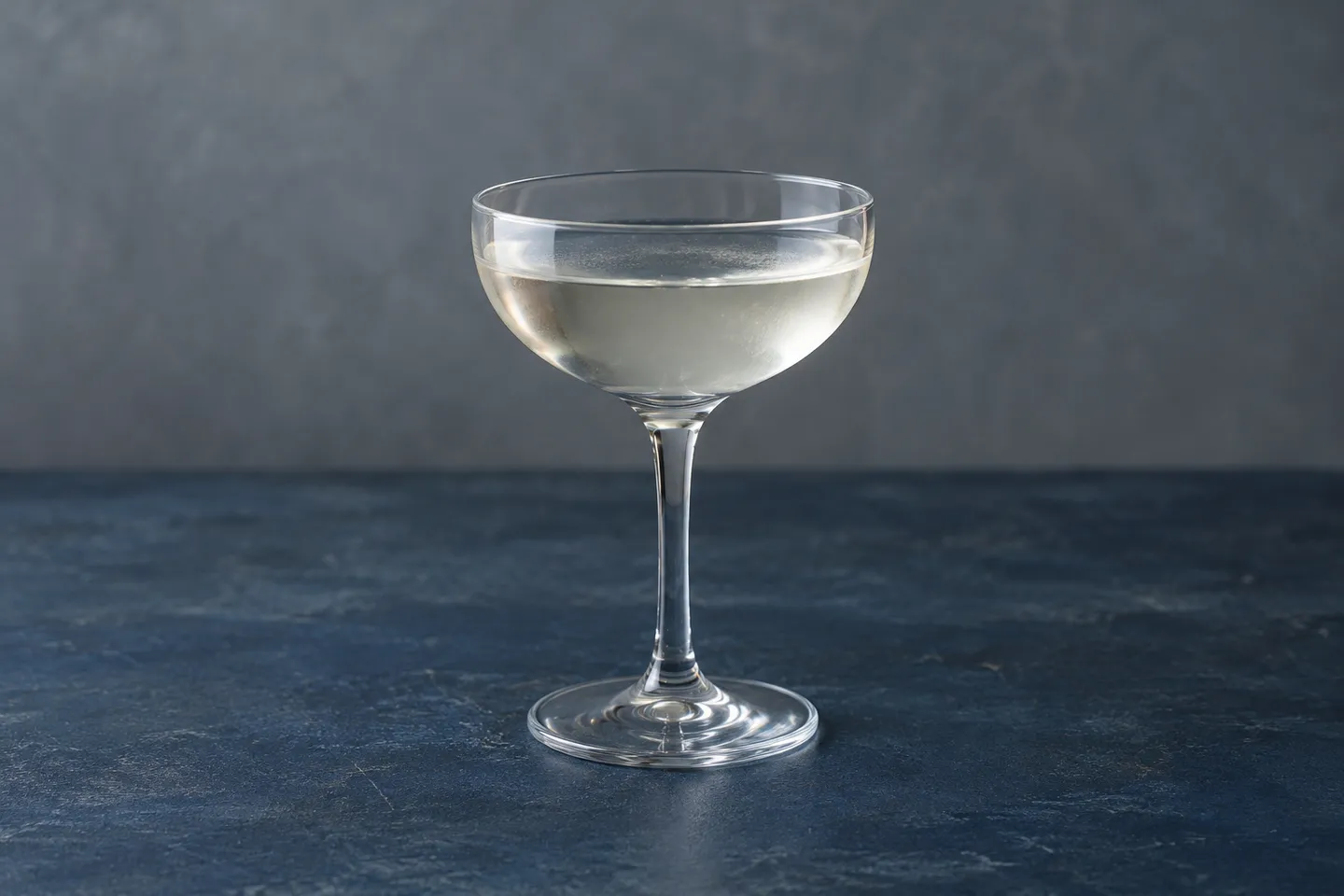
Savoy 50/50 Dry Martini (1930)
Equal measures of gin and dry vermouth, shaken with orange bitters, follow the balance of the Savoy's 1930 Dry Martini.
- Original yieldYield
- 1 cocktail1 cocktail
- PrepPrep time
- TotalTotal time
Estimated active and elapsed time, including chilling the glass with ice while measuring.
Published
Original recipe: 1 cocktail
The story behind the recipe
Half the drink is vermouth. That detail makes the Dry Martini on page 62 of Harry Craddock's 1930 Savoy Cocktail Book a useful surprise: a familiar name, an emphatic share of wine, and a dash of orange bitters. It gives you a Martini in which gin and vermouth meet on equal terms.
Two Dry Martinis in one book
Turn to page 102 of the same book and there's another Martini marked dry, this time with two parts gin to one part French vermouth. Both entries ask for shaking. The book offers more than one answer before we even leave 1930, so the word dry cannot tell you the proportions by itself.
Read more about this recipe
Let vermouth be an ingredient
Vermouth is an aromatized, fortified wine. Here, a dry French-style version gives its wine character and botanical flavors a substantial part of the glass. Dry vermouth can contribute herbal, floral and bitter notes, with the particular mix depending on the bottle. Gin brings its own botanicals, including juniper, so choosing the two bottles is part of choosing the drink.
Read the vermouth label and choose a bottle you would be willing to give half the recipe. Sweet red vermouth would change both the color and the flavor, even at the same equal measures. A different gin also leaves the ratio intact while changing the flavors within it. The bottles deserve as much attention as the measuring glass.
What the small dash contributes
Orange bitters add a concentrated citrus and bitter accent. They're a small addition with a clear place in this version: page 62 includes the dash, while the separate page 102 Martini leaves it out. That one line distinguishes the recipes beyond their larger gin and vermouth measures.
Our 30 ml measures keep the equal balance at a practical size. We select dry French-style vermouth and retain the source's shake-and-strain method and single dash of orange bitters, with chilling ice and a coupe added for serving.
A different point on the Martini scale
For a named contemporary comparison, the International Bartenders Association specifies 60 ml gin and 10 ml dry vermouth in its Dry Martini. That is six parts gin to one part vermouth. It also calls for stirring and offers lemon oil or a requested olive garnish. Those details belong beside the ratio; increasing the gin is only one difference between the recipes.
Choose the equal-parts Savoy version when you want to explore the vermouth's contribution. For a small side-by-side comparison, keep the bottles and method consistent while changing the proportions. That gives the wine's larger share a chance to explain itself. The two Martinis also open our guide to cocktail ratios through time, where a familiar name turns out to hold several different balances.
Make it your wayOriginal: 1 serving · Makes 1 cocktail
Original recipe: 1 cocktail
Ingredients
For 1 cocktail. Quantities are shown as written.
Source measurement convention: Metric. Explicit unit definitions take precedence; unconfirmed measures must be checked before conversion.
Original quantities for 1 cocktail.
- Gin30 ml
- Dry French-style vermouth30 ml
- Orange bitters1 dash
Measurement notes
Measurement notes
Original ingredients
- 30 ml gin
- 30 ml dry French-style vermouth
- 1 dash orange bitters
Equipment
 Cocktail shaker
 Jigger or measuring glass
 Hawthorne strainer
 Coupe glass
Instructions
Chill the coupe
Fill a coupe glass with ice cubes and water to chill while you measure the drink.
Measure the Martini ingredients
Measure the gin, dry vermouth and orange bitters into a cocktail shaker. Add enough ice cubes to fill the shaker about two-thirds full, leaving space for them to move.
Shake until cold
Seal the shaker and shake until its outside feels thoroughly cold, about 10 to 15 seconds. Empty the chilling ice and water from the coupe.
Strain and serve
Strain the drink into the chilled coupe, leaving the mixing ice in the shaker. Serve immediately without added ice or garnish.
Estimated calories 110 kcal
Nutrition portion: whole recipe · Original yield: 1 cocktail
Source & assumptions
Ingredient-based estimate using CoFID 2021, representative labels for 58 and CO London Dry Gin (43% ABV), The Bitter Truth Orange Bitters (39% ABV). About 110 kcal per nutrition portion (whole recipe). Uses representative London dry gin at 43% ABV and a dry-vermouth reference at 15–19% ABV. Includes one representative 1 ml orange-bitters dash; ordinary dash variation changes the estimate by less than 2 kcal. Actual ingredients and preparation affect the estimate.
Recipe notes
When adjusting quantities
Ingredient amounts scale; chilling time, shaking time and shaker capacity do not. Mix in batches with room for the ice to move.
Original recipe notes
These notes describe the original recipe. Quantities mentioned here do not change when you adjust servings.
Use orange bitters, rather than an orange liqueur or orange juice. A dash is a practical small measure from the bitters bottle, not a universal number of milliliters.
Refrigerate opened vermouth and follow the producer's storage guidance. Mix the finished cocktail just before serving; ice continues to change the drink while it stands.
Read the scaling guide. Times, temperatures and equipment need their own consideration. Open the recipe tool to review and correct individual amounts.
Sources and attribution
Adapted from Harry Craddock, The Savoy Cocktail Book (1930), printed page 62.
The historical formula is the Dry Martini on printed page 62 of The Savoy Cocktail Book, published in 1930. The IBA Dry Martini supplies the contemporary comparison.
Recipe details
- Recipe tradition
- Vintage
- Course or meal
- Drink
- Cuisine
- American
- Source decade
- 1930s
- Browse category
- Drinks & Cocktails