
Cherry Shrub (1862 Warm-Extraction Adaptation)
Tart cherries warmed gently over water, strained, sweetened, and finished with vinegar and brandy for a fruit cordial.
- Original yieldYield
- About 650 ml cordial, approximately 14 portions of 45 mlAbout 650 ml cordial, approximately 14 portions of 45 ml
- PrepPrep time
- CookCook time
- TotalTotal time
Includes 15 minutes straining and 45 minutes initial cooling; complete chilling or slow draining may extend the schedule.
Published Updated
Original recipe: About 650 ml cordial, approximately 14 portions of 45 ml
The story behind the recipe
Tart cherries are warmed gently for this vinegar-and-brandy shrub. Their juice becomes a sweetened cordial to pour over ice and finish with sparkling water. A batch begins with a substantial bowl of cherries; each glass needs only a small pour.
An old arrangement for gentle heat
Jerry Thomas describes ripe acid cherries in an earthen pot set inside an iron pot of water in his 1862 How to Mix Drinks. He keeps the fruit over that indirect heat until the juice comes out, then strains it through cloth and sweetens it to taste.
The arrangement is easy to picture. The outer water surrounds a vessel holding the fruit, protecting it from the direct heat beneath the larger pot. Our heatproof bowl sits above simmering water, a modern way to pursue the same gentle extraction without finding a matched pair of historical pots.
It's a good preparation for someone who enjoys making a drink ingredient as much as mixing the final glass. The cherries soften into their juice; a pitcher of red cordial follows later. There's less waiting than in the raspberry shrub, which spends a day in vinegar, but more active attention around the saucepan.
Read more about this recipe
Tart cherries are the starting point
Buy tart cherries for the stated recipe. They're the fruit behind Thomas's “acid cherries” and bring sharpness before vinegar enters the mixture. Sweet cherries would give a different cordial. Reaching for them is a new flavor adjustment, not a change that disappears once sugar is added.
The listed weight is taken after stems and pits have been removed. A bowl of whole cherries weighs more than the fruit you'll actually use, which matters when shopping for a batch. Pitting also makes the modern straining stage a little less cluttered.
Vinegar and water are additions to our formula; Thomas's short cherry entry doesn't list them. They give this cordial a separate tang and a defined liquid starting point. That's why its taste belongs beside the vinegar-based raspberry shrub, although its historical source takes a different route.
Sweetness beside the cherry
The strained juice is sweetened before the brandy is added. Sugar changes the way you meet the tart fruit: a concentrated cordial can be sharply fruity and sweet at the same time, ready for water to bring it down to a drinking strength.
Thomas offers brandy, Irish whiskey or Monongahela whiskey. This recipe chooses brandy. A rye-whiskey variation is described in the notes for someone who'd like another spirit alongside the cherry, but the brandy bottle is all you need for the batch as written.
The spirit goes into cold syrup and remains in the finished cordial. A glass with sparkling water is therefore alcoholic too. The dilution gives the flavors room; it doesn't turn the drink into a mocktail.
Serving from one batch
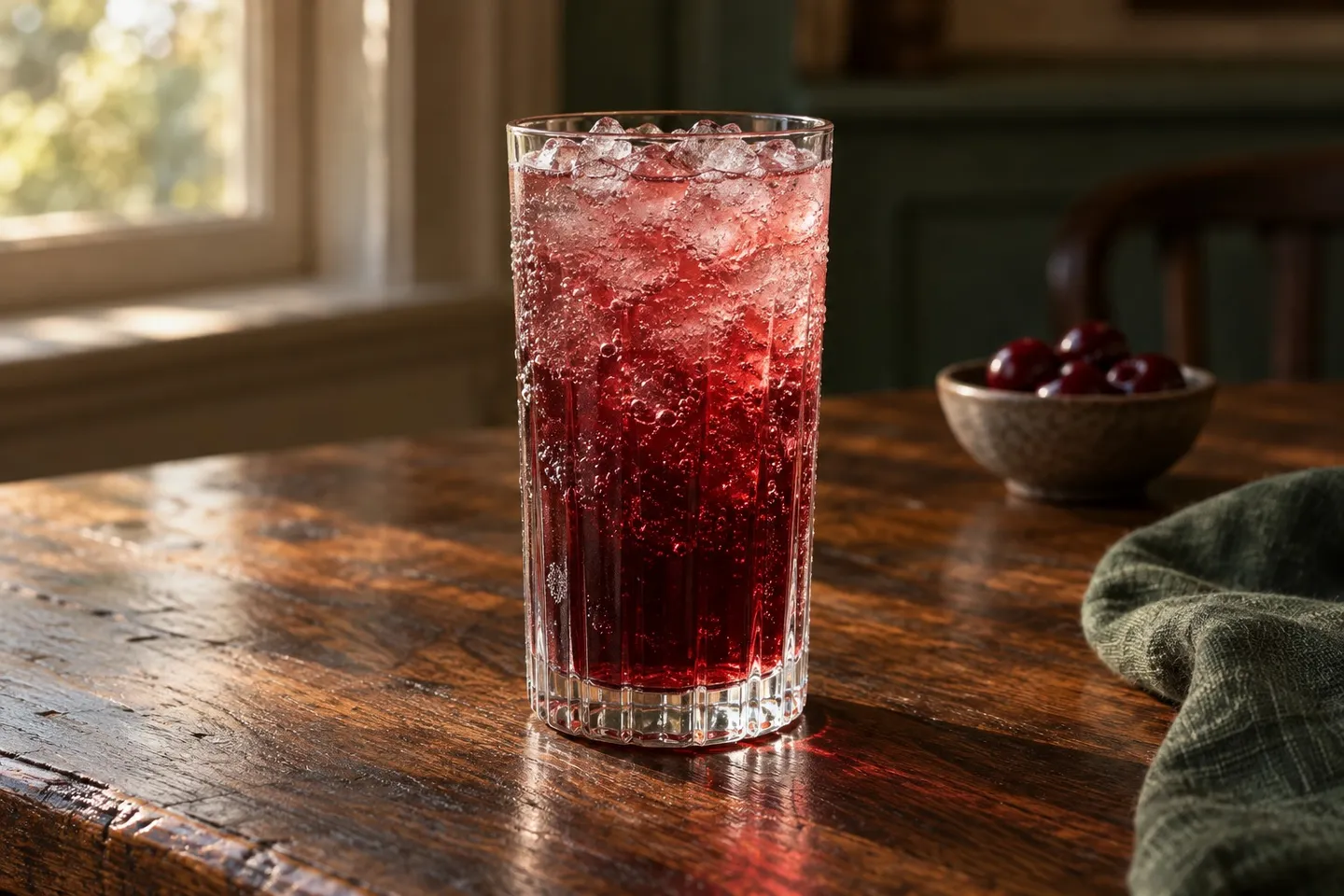
About 45 ml cordial with 120 ml sparkling water is the starting serve. A highball leaves space for ice, and you can add more water if you prefer a lighter glass. Keep the cordial cold and finish each drink with fresh carbonation.
The finished yield depends on how much liquid the cherries release and how much remains in the strained fruit. Measure what you recover before promising a fixed number of servings. The suggested portions are a way to plan the gathering, with room for the fruit to vary.
Thomas's three shrub preparations use different routes to a cordial. Here, gentle heat releases the cherry juice before it is strained and sweetened. Raspberry spends a day in cold vinegar, while English rum shrub takes a separate path through milk clarification.
The name covers more than one tradition. Our sister site, Forgotten Drink, explores the two different drinks called shrub.
Make it your wayOriginal: 14 servings · Makes About 650 ml cordial, approximately 14 portions of 45 ml
Original recipe: About 650 ml cordial, approximately 14 portions of 45 ml
Ingredients
For About 650 ml cordial, approximately 14 portions of 45 ml. Quantities are shown as written.
Source measurement convention: Metric. Explicit unit definitions take precedence; unconfirmed measures must be checked before conversion.
Original quantities for About 650 ml cordial, approximately 14 portions of 45 ml.
For the cordial
- Tart cherries, weighed after removing stems and pits800 g
- Apple cider vinegar, labeled 5% acidity120 ml
- Water120 ml
- Granulated sugar400 g
- Brandy, 40% alcohol by volume120 ml
For serving
- Sparkling water, for serving
Measurement notes
Measurement notes
Original ingredients
- 800 g tart cherries, weighed after removing stems and pits
- 120 ml apple cider vinegar, labeled 5% acidity
- 120 ml water
- 400 g granulated sugar
- 120 ml brandy, 40% alcohol by volume
- Sparkling water, for serving
Equipment
 Double boiler (or saucepan and heatproof bowl)
 Fine-mesh strainer
 Small 1.5-liter saucepan
 Highball glass
- Airtight glass container
Instructions
Set the cherries over simmering water
Place the pitted cherries, water, and vinegar in the heatproof upper vessel. Fit it securely over a saucepan of gently simmering water, with its base above the water. Check that it is stable and the pan will not boil dry.
Heat the cherries gently
Cover loosely and heat for about 30 minutes, stirring occasionally and pressing softened fruit gently with a spoon. Keep the lower water at a simmer; top it up if needed. The cherries should soften and release juice.
Strain the cherry juice
Drain through the fine-mesh strainer lined with clean cooking cloth into the small saucepan for about 15 minutes. Discard the pulp and skins.
Dissolve the sugar
Add the sugar and heat gently, stirring for about 3 to 5 minutes until dissolved. Avoid a prolonged reduction.
Cool and refrigerate the syrup
Cool the syrup in a shallow heatproof vessel in an ice-water bath, keeping outside water out. Refrigerate promptly within two hours, or one hour above 32°C (90°F), allowing about 45 minutes for initial cooling.
Add brandy and bottle the cordial
When cold, stir in the brandy and measure the finished cordial. Transfer to clean containers or bottles with at least 1 liter total capacity and refrigerate. About 650 ml is an estimate; the actual fruit extraction affects yield.
Serve with sparkling water
Serve about 45 ml cordial over ice in a highball glass with about 120 ml chilled sparkling water, adjusted to taste.
Estimated calories 150 kcal
Nutrition portion: 1/14 of recipe · Original yield: About 650 ml cordial, approximately 14 portions of 45 ml
Source & assumptions
Rough ingredient-based estimate per one-fourteenth batch, nominal 45 ml before dilution. Uses a published sour-cherry juice yield and tart-juice profile to model straining losses; sugar and brandy added afterward are included. Actual extraction and yield vary. This is a modeled estimate, not a measured result. The listed milliliters describe the approximate original yield, not a measured dose.
Recipe notes
When adjusting quantities
Ingredient amounts can be adjusted; vessel capacity, cooking, cooling and curing times need their own checks.
Original recipe notes
These notes describe the original recipe. Quantities mentioned here do not change when you adjust servings.
Use tart cherries; sweet cherries need their own flavor adjustment. This recipe selects brandy from Thomas's spirit choices, with rye whiskey an optional variation.
Keep all stages refrigerated at 4°C (40°F) or below. Use within four days from the start of preparation. This is a conservative short-use plan, not evidence for a longer shelf life; don't store the cordial in a pantry.
Source: Jerry Thomas, How to Mix Drinks, or The Bon-Vivant's Companion (1862), no. 154, p. 63. Vinegar, water, fixed quantities, pitting and the bowl-over-steam setup are modern changes. Thomas gives a gill of spirit per bottle without defining the bottle. Our 120 ml brandy is a chosen batch amount; a conditional US gill is about 118.3 ml, rounded to 120 ml, but that doesn't establish the original finished strength.
Read the scaling guide. Times, temperatures and equipment need their own consideration. Open the recipe tool to review and correct individual amounts.
Recipe details
- Recipe tradition
- Vintage
- Course or meal
- Drink
- Cuisine
- American
- Main ingredient
- Fruit
- Browse category
- Drinks & Cocktails