
New York Sour
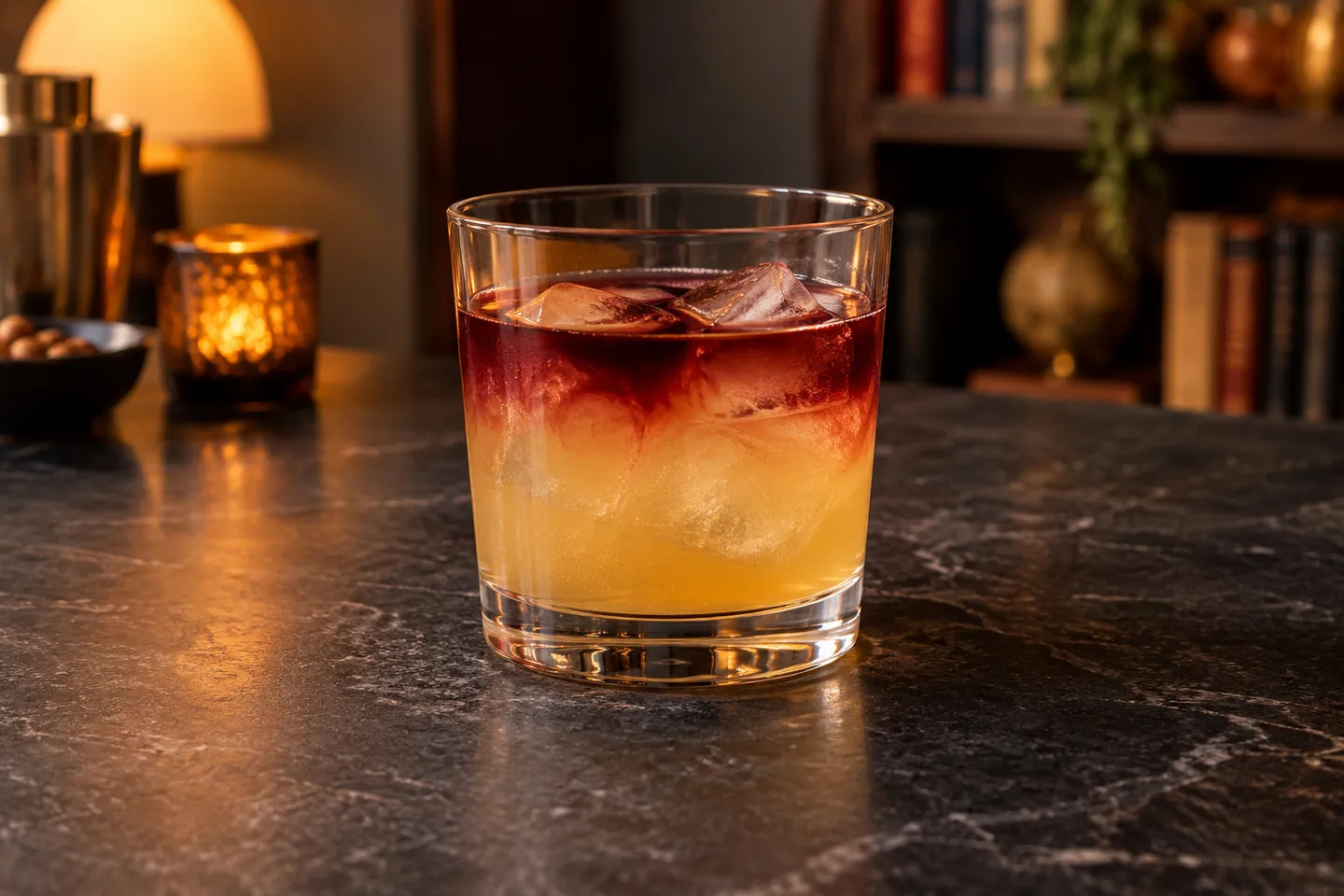
A contemporary New York Sour with whiskey, lemon and one-to-one syrup, served over ice with a red-wine float. This version has no egg white or garnish.
- Original yieldYield
- 1 cocktail1 cocktail
- PrepPrep time
- TotalTotal time
About 5 minutes with chilled glasses, prepared syrups and ice ready; advance preparation is additional.
Published Updated
Original recipe: 1 cocktail
The story behind the recipe
Red wine sits above a golden whiskey sour, with a little color drifting down between the ice cubes. New York Sour makes its final pour visible. It gives a host a whiskey option that looks quite different from the pink foams and pale citrus cocktails around it.
The wine joins the flavor too
The topping is 15 ml of dry red wine. It supplies a color contrast, but it also becomes part of the drink as you sip and the layers begin to meet. Choose wine you like drinking, not a bottle bought only because its red is dark enough for the picture.
Beneath it is whiskey, lemon and simple syrup. Rye or bourbon fits the ingredient choice. Their flavors differ, so keep the citrus and syrup steady when comparing the two; otherwise several changes arrive at once.
This contemporary recipe follows the current International Bartenders Association liquid base, with its listed egg white and garnish left out. The surface stays open for the wine.
Read more about this recipe
An older sour with claret
Thomas Stuart's Fancy Drinks and How to Mix Them, in its November 1904 printing, gives a Continental Sour of whiskey, lemon, sugar and claret. The wine tops a drink that has been shaken and strained into a sour glass.
That is an interesting earlier comparison for the wine-topped combination. It isn't a recipe called New York Sour, and its old spoon and wine-glass measures aren't the quantities used below.
The party article places the modern drink alongside four Vintage adaptations. You can enjoy the older precedent without needing to turn the whole menu into a reconstructed historical evening.
Pour close to the surface
A slow pour over the back of a spoon spreads the wine gently across the sour. Holding the spoon near the surface reduces the distance the wine drops into the liquid.
Ice makes the boundary irregular. Wine can slip between cubes or feather into the layer below, and a finished glass changes while someone drinks it. A visible red topping is the aim; a permanent ruler-straight stripe isn't necessary.
The float belongs to each serving. If you shake enough sour base for two glasses, divide that base first and add a measured wine pour to both. Stirring the whole batch together would lose the appearance you're choosing this cocktail for.
Prepare the ice, glass and syrup
The mixing ice chills and dilutes the sour in the shaker. Fresh cubes then go into the serving glass, where they stay with the drink. That gives the final wine pour a cold mixture to meet.
A modest rocks glass needs space for both the liquid and those cubes. Fill it with enough room remaining for the measured wine, rather than finding out at the rim that there's nowhere for the topping to go.
The syrup uses equal weights of sugar and water. Richer syrup contains more sugar in the same measure and changes the sour underneath the wine. Prepare and chill the stated syrup before the brief mixing stage.
Once the bottles and glasses are ready, the last pour is the only slow part. Let it happen when the drink is about to be served. The dark red settling across the golden liquid provides the finishing touch without a cherry or citrus decoration.
Make it your wayOriginal: 1 serving · Makes 1 cocktail
Original recipe: 1 cocktail
Ingredients
For 1 cocktail. Quantities are shown as written.
Source measurement convention: Metric. Explicit unit definitions take precedence; unconfirmed measures must be checked before conversion.
Original quantities for 1 cocktail.
- Rye whiskey or bourbon60 ml
- Fresh lemon juice30 ml
- Simple syrup (equal weights sugar and water)23 ml
- Dry red wine15 ml
Measurement notes
Measurement notes
Original ingredients
- 60 ml rye whiskey or bourbon
- 30 ml fresh lemon juice
- 22.5 ml simple syrup (equal weights sugar and water)
- 15 ml dry red wine
Equipment
 Cocktail shaker
 Jigger or measuring glass
 Tumbler or large rocks glass
 Bar spoon
Instructions
Shake the whiskey sour
Measure the whiskey, lemon juice and simple syrup into a shaker. Add ice cubes, close securely and shake for 10 to 15 seconds until very cold.
Strain over fresh ice
Put fresh ice cubes in a rocks glass with about 250 ml capacity. Strain the shaken sour over the fresh ice, leaving the mixing ice behind.
Float the red wine
Hold the back of a bar spoon just above the drink surface and slowly pour the dry red wine over it. Move the spoon slightly as needed so the wine spreads across the top. Serve promptly without stirring or adding a garnish.
Estimated calories 200 kcal
Nutrition portion: whole recipe · Original yield: 1 cocktail
Source & assumptions
Ingredient-based estimate using CoFID 2021. Approximately 200 kcal per nutrition portion. Uses 40% ABV whiskey, dry red wine and equal-weight sugar-and-water syrup. Ingredients, brands and preparation affect values.
Recipe notes
When adjusting quantities
Measure larger batches accurately, but shake only what your shaker comfortably holds. Pour the measured wine float separately onto each serving over fresh ice.
Original recipe notes
These notes describe the original recipe. Quantities mentioned here do not change when you adjust servings.
Contemporary formulation following the IBA New York Sour liquid base; its listed egg white and garnish are omitted here.
Historical comparison: Thomas Stuart, Stuart's Fancy Drinks and How to Mix Them (1904), p. 65, Continental Sour. It supports the whiskey-lemon-sugar-claret combination, not the modern name or exact quantities.
Use prepared syrup made with equal weights of sugar and water; making and cooling it takes additional time. Leave mixing ice behind and use fresh cubes in the glass. Add the wine separately to each serving after straining.
Read the scaling guide. Times, temperatures and equipment need their own consideration. Open the recipe tool to review and correct individual amounts.
Sources and attribution
Recipe details
- Course or meal
- Drink
- Cuisine
- Other / International
- Cooking method
- No-cook
- Occasion
- Entertaining
- Browse category
- Drinks & Cocktails