
- Cocktail parties
- Vintage drinks
- Home entertaining
A Night at the Speakeasy: Five Cocktails to Make at Home
Plan a home cocktail party around Clover Club, South Side, Mary Pickford, New York Sour and White Lady, with a focused shopping list and practical serving order.
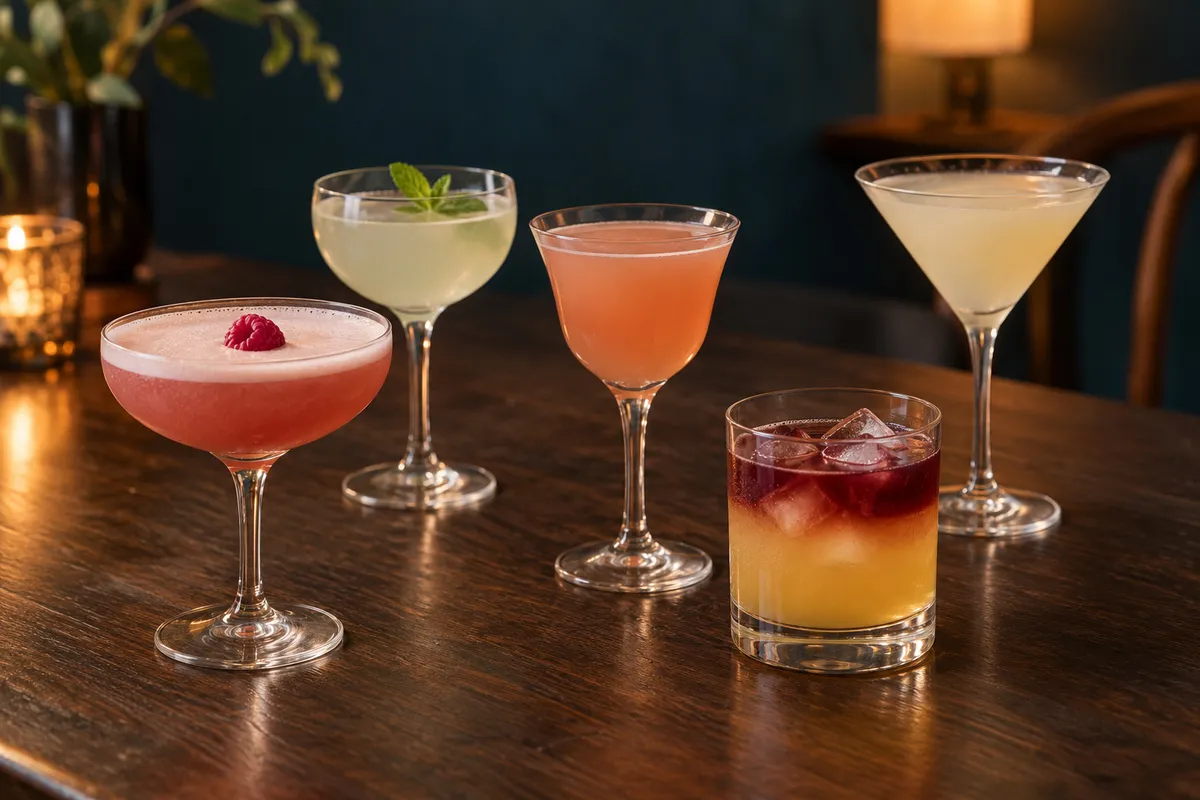
A good home cocktail menu gives someone an easy choice: raspberry and foam, fresh mint, pineapple and rum, or whiskey beneath a red-wine float. This speakeasy-themed party has five options with different flavors and finishing touches. Choose the ones you want to offer, then organize the small jobs that need doing as each glass is served.
Gin appears in three of the drinks, with rum and whiskey adding two more directions. That overlap keeps the shopping focused. The theme is a present-day evening built around old printed recipes and a contemporary sour, with cold glasses and careful measures doing more work than period props.
Give the Menu a Little Range
Choose by flavor first. The Clover Club is raspberry, lemon and gin with a light egg-white texture. South Side brings mint, lemon and a small soda finish. Mary Pickford offers pineapple and rum with two smaller syrup and liqueur accents. New York Sour puts a red-wine float over whiskey and lemon. White Lady keeps to gin, Cointreau and lemon.
If you want a compact menu, pair one gin drink with the rum or whiskey choice. Clover Club and New York Sour give you two striking surfaces; South Side and Mary Pickford give you mint and pineapple. White Lady suits someone who wants a simple citrus cocktail without foam or a garnish. The five are alternatives for guests to choose among, not a suggested sequence for everyone to drink.
Clover Club: Raspberry Beneath the Foam
The Clover Club starts with gin, raspberry syrup and lemon, then adds a measured pasteurized egg white suitable for uncooked recipes. A short shake without ice begins the foam; shaking again with ice chills and dilutes the drink. Fine-strain into a small coupe and finish with one raspberry.
The raspberry version follows Savoy’s 1930 Clover Club with a changed syrup and a gin-led measure. Raspberry also appears in the Ciro’s ABC formula, where Italian vermouth joins it. Keep raspberry syrup and grenadine separate on the shopping list if Mary Pickford is on the menu too; their fruit flavors aren’t the same.
Make this one close to serving, with the chilled coupe and raspberry already ready. The foamed surface is the finishing detail; a line of completed glasses left waiting will have a different top from a freshly strained drink.
South Side: Mint with a Small Soda Finish
The South Side gives gin and lemon a fresh mint scent. Two small mint sprigs go into the shaker, then the mixture is fine-strained into a chilled stemmed glass. A short garnish sprig sits at the rim. The serving contains no retained ice.
The little finish matters: the Savoy entry adds a dash of siphon soda. This adaptation keeps it as a measured 15 ml addition, poured after straining. Add it separately to each glass and stir gently; carbonated liquid belongs outside the closed shaker.
Mint is easy to organize before the party. Wash and dry it, choose sound small sprigs for mixing, and set the neatest short ones aside for garnishing. Avoid filling the glass with a large bouquet. The drink is a short pour, and a little mint at the rim supplies plenty of aroma.
Mary Pickford: Pineapple and Rum
In the Mary Pickford, rum and pineapple juice share the base in equal parts. Grenadine adds color and sweetness, while maraschino liqueur contributes a small concentrated accent. Shake with ice and serve cold in a small flared stemmed glass, without a garnish.
Buy maraschino liqueur, not the syrup from a cherry jar. The practical 2.5 ml amount is a larger accent than Savoy’s six drops. A marked half-teaspoon from a set with a 5 ml teaspoon measures it conveniently; a full teaspoon would double that liqueur.
This is the pineapple option on the menu, so keep the juice chilled and choose unsweetened juice rather than a sweetened tropical drink. It may develop a little natural froth when shaken, but it has no egg-white topping. The soft peach-pink color can vary with the grenadine you use.
New York Sour: Take Your Time with the Last Pour
The New York Sour is the whiskey choice. Shake whiskey, lemon and one-to-one syrup, then strain over fresh cubes in a modest rocks glass. Pour the measured red wine slowly over the back of a spoon held near the surface. Leave the float unstirred for serving.
The wine boundary can be uneven, especially where it meets the ice. A little color drifting downward is natural. The aim is a visible red topping, not a stripe that has to remain ruler-straight through every sip. Use a dry red wine you like, because it joins the flavor as the glass is emptied.
This is a contemporary New York Sour formulation, with no egg white or garnish. An earlier printed comparison is Stuart’s Continental Sour in 1904: whiskey, lemon, sugar and claret. That older entry gives the wine-topped combination a useful history while leaving the modern recipe’s name and measures clear.
White Lady: Three Ingredients, Clearly Measured
The White Lady uses the Savoy’s proportions of two parts gin to one part each Cointreau and lemon. Our starting mixture is 50 ml gin, 25 ml Cointreau and 25 ml juice. Shake with ice and strain into a chilled stemmed cocktail glass.
There is no egg white, extra syrup or garnish in this version. Cointreau supplies both orange flavor and sweetness; lemon brings acidity. Its pale cloudiness comes from the citrus rather than a foam cap. Set a modest glass out first so the short serving has a vessel that suits it.
White Lady also helps keep a focused party menu practical. Gin and lemon are already needed for Clover Club or South Side, leaving the orange liqueur as its additional bottle. You can add it as a third option without introducing another fruit to prepare.
Set Up Once, Finish Each Glass
Write the chosen drinks on a short menu and count the servings before shopping. Two choices with different spirits or textures are enough for a focused evening. Work out the ingredient totals for those choices, then plan comfortable shaker batches rather than one oversized mix.
Prepare one-to-one simple syrup in advance if you are making South Side or New York Sour, and chill it before service. Squeeze and strain lemon juice, refrigerate the pineapple juice, wash the mint and set the garnishes aside. Keep pasteurized egg white refrigerated according to its label and add it when making the Clover Club batch.
Separate the mixing station from the glasses ready to hand over. A shaker, accurate measures and strainer handle most of the work; the wine float needs a spoon. Keep a second supply of fresh serving ice for New York Sour, since its shaker ice is left behind. Chill the stemmed glasses and avoid filling the shaker beyond a comfortable working batch.
Have water, food and an alcohol-free choice available from the start. Vintage Mocktails offers another direction for the menu. Let guests choose, make a drink when it is wanted, and leave the host time to sit down too.
For a dessert to go with the drinks, try our 1920s-inspired pineapple upside-down cake.

The Books Behind the Theme
Four adaptations use Harry Craddock’s The Savoy Cocktail Book (1930): Clover Club, p. 48; Mary Pickford, p. 103; South Side, p. 152; and White Lady, p. 175. The New York Richard R. Smith edition is the reference here; the public 1930 copy has the parallel London Constable imprint.
The raspberry comparison is recipe 46, p. 22, in “Harry” of Ciro’s ABC of Mixing Cocktails, attributed to 1923; the copy’s title page is undated. The wine-topped comparison is Continental Sour, p. 65, in the November 1904 printing of Stuart’s Fancy Drinks and How to Mix Them. The current International Bartenders Association New York Sour provides its modern liquid base, with its listed egg white and garnish omitted here.
Five Jazz Age Cocktails from Paris and London Bar Books follows different formulas and their bar-book credits. For this menu, keep the last jobs small: a raspberry onto the foam, soda into the mint drink or a slow wine pour over the sour. Those are pleasant finishing moments when the rest of the preparation is already done.