
South Side (1930 Adaptation)
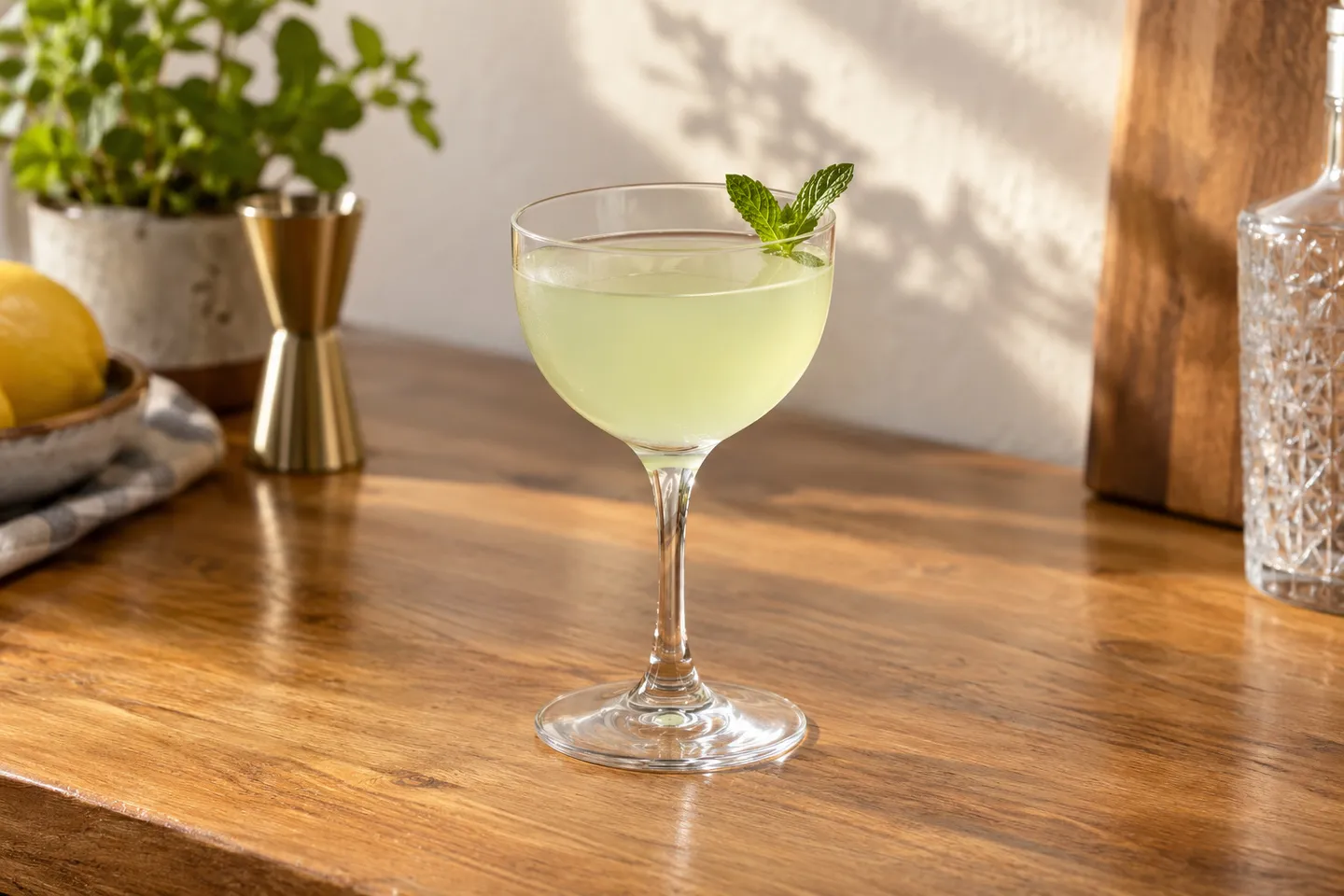
A mint and lemon gin cocktail adapted from the 1930 Savoy South Side, finished with its dash of soda and served without ice in a small stemmed glass.
- Original yieldYield
- 1 cocktail1 cocktail
- PrepPrep time
- TotalTotal time
About 5 minutes with chilled glasses, prepared syrups and ice ready; advance preparation is additional.
Published Updated
Original recipe: 1 cocktail
The story behind the recipe
South Side offers mint without a mountain of leaves. A small sprig sits at the rim of a chilled stemmed glass, above gin and lemon with a short soda finish.
The little splash in the old recipe
Harry Craddock's 1930 Savoy Cocktail Book finishes South Side with a dash of siphon soda. That detail is retained here as a measured 15 ml addition. It gives the short shaken drink a small sparkling lift, without turning it into a full highball.
The book's other ingredients are dry gin, fresh mint, half a lemon's juice and powdered sugar. Prepared syrup replaces the sugar in the modern recipe, while fixed liquid measures make it easier to repeat a round.
The practical distinction is in the final glass. If someone is expecting mint and a tall serving packed with ice, describe this as a short gin-and-lemon cocktail. The soda is a small finish, and the mixing ice stays behind.
Read more about this recipe
Fresh mint for flavor and scent
Two small sprigs flavor the mixture. A separate short sprig is the garnish, giving you a fresh scent near the rim after the drink has been strained.
Choose sound leaves and stems with a clean mint aroma. A wilted bunch can still smell of mint, but it makes a poor invitation above a carefully chilled glass. Set the garnish piece aside before the other sprigs go into the shaker.
Gentle pressure helps begin the release of aroma. Grinding the sprigs into a paste introduces a tangle of small leaf pieces that the fine strainer then has to remove. Mint doesn't need rough handling to be noticeable here.
Lemon and a measured sweetness
Fresh lemon juice supplies the tart side of the mixture. The 25 ml measure tells you what to pour even when the lemons vary in size. Strain out seeds before measuring.
The simple syrup uses equal weights of sugar and water. It joins the drink easily, with no sugar crystals needing to dissolve in cold gin. A more concentrated syrup changes the sweetness at the same volume, so use the specified preparation.
Dry gin is the base, not a minor splash. Its botanical flavor sits among the mint and lemon, with enough space to remain recognizable. The recipe doesn't specify a brand, so choose a dry gin you enjoy.
Add the soda at serving
Cold soda is added after straining, outside the closed shaker. A gentle stir joins it to the liquid while leaving some of its bubbles to enjoy.
This is convenient for several guests. The still ingredients can be measured in comfortable shaker batches, but the soda and garnish belong to each glass. Count them as finishing jobs rather than pouring all the fizz into a large batch in advance.
A Night at the Speakeasy sets South Side beside raspberry foam and pineapple rum. Mint gives that menu a different scent before anyone has taken a sip.
Read the original wording
Historical reference only. Follow the ingredients and cooking steps below when cooking.
Historical ingredients
- The Juice of ½ Lemon.
- ½ Tablespoonful of Powdered Sugar.
- 2 Sprigs Fresh Mint.
- 1 Glass Dry Gin.
Historical method
Shake well and strain into medium size glass. Add dash of siphon soda water.
Make it your wayOriginal: 1 serving · Makes 1 cocktail
Original recipe: 1 cocktail
Ingredients
For 1 cocktail. Quantities are shown as written.
Source measurement convention: Metric. Explicit unit definitions take precedence; unconfirmed measures must be checked before conversion.
Original quantities for 1 cocktail.
- Dry gin60 ml
- Fresh lemon juice25 ml
- Simple syrup (equal weights sugar and water)15 ml
- Fresh mint, small2 sprigs
- Fresh mint, short, for garnish1 sprig
- Chilled soda water15 ml
Measurement notes
Measurement notes
Original ingredients
- 60 ml dry gin
- 25 ml fresh lemon juice
- 15 ml simple syrup (equal weights sugar and water)
- 2 sprigs fresh mint, small
- 1 sprig fresh mint, short, for garnish
- 15 ml chilled soda water
Equipment
 Cocktail shaker
 Jigger or measuring glass
 Fine strainer
 Coupe or Nick & Nora glass
Instructions
Measure gin, lemon and mint
Chill a small coupe or Nick & Nora glass. Put the dry gin, lemon juice, simple syrup and 2 mint sprigs in a shaker. Press the sprigs gently once or twice with the back of a spoon; do not grind them into a paste.
Shake cold
Add ice cubes, close the shaker and shake for 10 to 15 seconds until the outside feels very cold.
Fine-strain and add soda
Fine-strain into the chilled glass, leaving the ice and mint fragments behind. Add the chilled soda water and give one gentle stir.
Finish with mint
Set the remaining short mint sprig at the rim and serve promptly, without ice in the serving glass.
Estimated calories 170 kcal
Nutrition portion: whole recipe · Original yield: 1 cocktail
Source & assumptions
Ingredient-based estimate using CoFID 2021. Approximately 170 kcal per nutrition portion. Uses 40% ABV gin and equal-weight sugar-and-water syrup; mint leaves and garnish are excluded. Ingredients, brands and preparation affect values.
Recipe notes
When adjusting quantities
Measure larger batches accurately, but shake only what your shaker comfortably holds. Add the measured soda and mint garnish separately to each glass.
Original recipe notes
These notes describe the original recipe. Quantities mentioned here do not change when you adjust servings.
Adapted from Harry Craddock, The Savoy Cocktail Book (1930), p. 152. Fixed gin and lemon amounts and 1:1 syrup replace its glass, half-lemon and powdered-sugar measures. The 15 ml soda interprets its dash; pressing, fine-straining and the separate garnish sprig are modern details.
Use prepared, cooled syrup made with equal weights of sugar and water. Making and cooling it takes additional time. Never shake the carbonated water; add it to each strained serving.
Read the scaling guide. Times, temperatures and equipment need their own consideration. Open the recipe tool to review and correct individual amounts.
Sources and attribution
Recipe details
- Recipe tradition
- Vintage
- Course or meal
- Drink
- Cuisine
- Other / International
- Source decade
- 1930s
- Cooking method
- No-cook
- Occasion
- Entertaining
- Browse category
- Drinks & Cocktails