
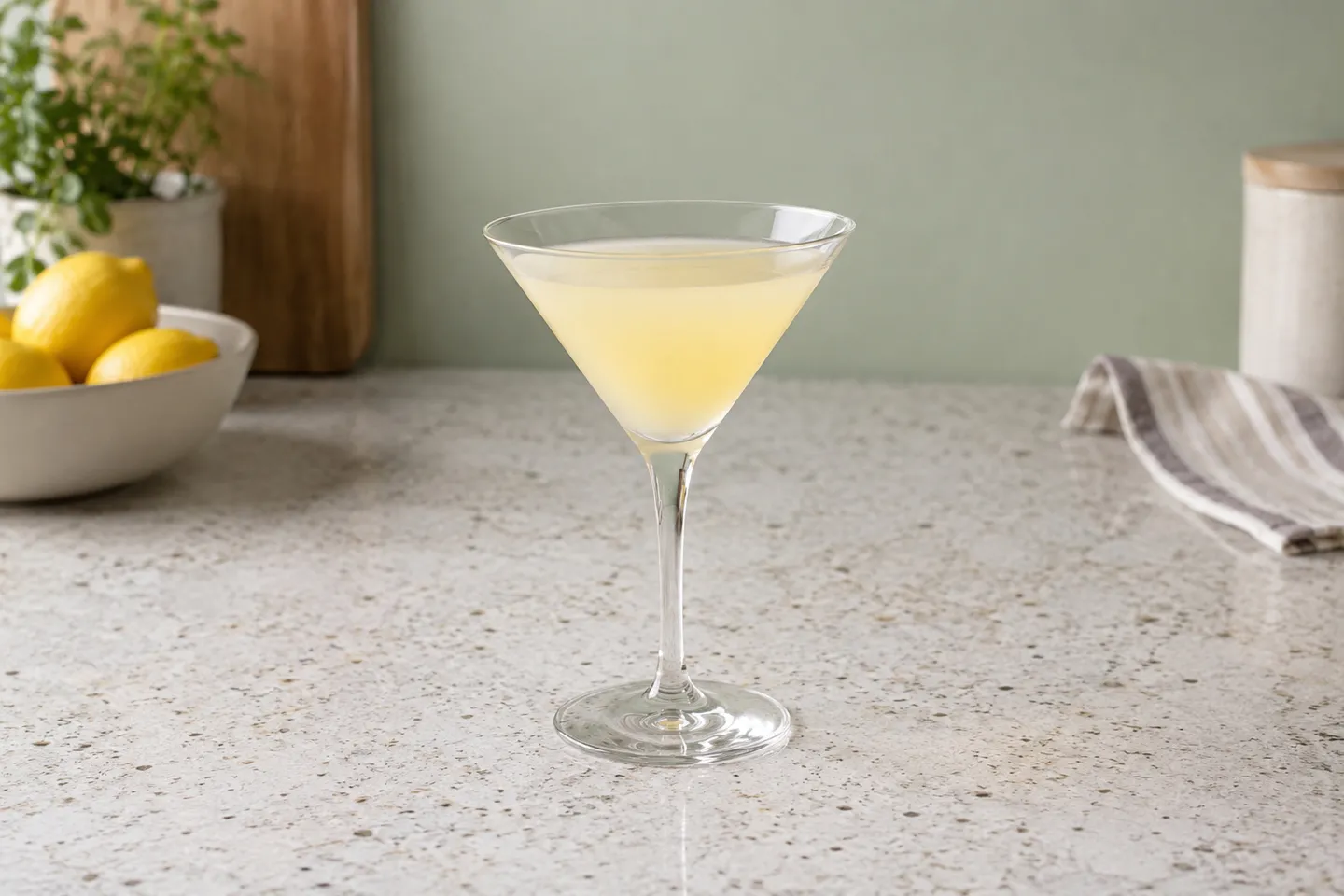
White Lady (1930 Adaptation)
Gin, Cointreau and lemon in the 2:1:1 proportions of the 1930 Savoy White Lady. This measured adaptation is shaken and served without egg white or garnish.
- Original yieldYield
- 1 cocktail1 cocktail
- PrepPrep time
- TotalTotal time
About 5 minutes with a chilled glass, strained lemon juice and ice ready; glass chilling and juice preparation are additional.
Published Updated
Original recipe: 1 cocktail
The story behind the recipe
Cointreau sweetens the White Lady as well as giving it orange flavor. Lemon brings tartness, gin brings the botanical base, and the three liquids make the whole drink. It's a short citrus cocktail that has no need for a separate syrup.
The orange bottle matters
Cointreau is the orange liqueur named in Harry Craddock's 1930 Savoy Cocktail Book recipe. It occupies the same measure as the lemon juice, with twice as much dry gin as either.
That 2:1:1 relationship is kept in this serving. It's easy to remember, but it also explains the flavor: gin has the largest share, while sweet orange and sharp lemon sit beside each other. The 100 ml starting mixture gains some dilution in the shake.
Use the named liqueur when you want to follow this recipe. Another orange liqueur could have a different sweetness or strength, changing the glass even if the same measure goes in.
Read more about this recipe
Lemon isn't another kind of orange
The two citrus ingredients meet from different directions. Orange liqueur brings sweetness and orange aroma; fresh lemon brings acidity. Neither has to stand in for the other.
The lemon's size is less important than its measured juice. Fruit acidity still varies, so a fixed amount doesn't promise that every batch of lemons will taste identical. It does give you a consistent starting mixture when comparing servings.
There's no extra sugar syrup in the written formula. If a sweeter drink is what you prefer, that's a further variation. Taste the three-ingredient drink before deciding whether to add syrup.
The simple surface is part of the appeal
The shaken citrus makes the pale liquid lightly cloudy. This recipe uses no egg white, so there isn't a broad foam cap to hide the drink beneath.
That makes White Lady a useful companion to a Clover Club. Both contain gin and lemon, but the raspberry and egg-white texture of Clover Club offer a different choice from sweet orange liqueur.
No garnish is needed here. The source's three-liquid formula is enough to present plainly in a small stemmed glass. Keep the surface free of loose shaking ice so the liquid stays easy to sip.
A focused addition to a party menu
Gin and lemon may already be out for another cocktail. Cointreau is the extra bottle that makes White Lady available, which helps a host add a choice without collecting another fruit to prepare.
A Night at the Speakeasy includes it for that focused citrus direction. Its simplicity is useful, especially alongside a wine float or an egg foam requiring more finishing attention.
The cold glass can be ready before measuring. Once the ice is in the shaker, chilling and dilution begin together; having everything at hand keeps that short stage orderly. The method's timed cue goes with the cold feel of the shaker, since ice and starting temperatures can differ.
Allow room above the 100 ml starting mixture for dilution. That makes a modest stemmed glass a better fit than a very large bowl, and leaves the pale citrus liquid open to the nose.
Read the original wording
Historical reference only. Follow the ingredients and cooking steps below when cooking.
Historical ingredients
- ¼ Lemon Juice.
- ¼ Cointreau.
- ½ Dry Gin.
Historical method
Shake well and strain into cocktail glass.
Make it your wayOriginal: 1 serving · Makes 1 cocktail
Original recipe: 1 cocktail
Ingredients
For 1 cocktail. Quantities are shown as written.
Source measurement convention: Metric. Explicit unit definitions take precedence; unconfirmed measures must be checked before conversion.
Original quantities for 1 cocktail.
- Dry gin50 ml
- Cointreau25 ml
- Fresh lemon juice25 ml
Measurement notes
Measurement notes
Original ingredients
- 50 ml dry gin
- 25 ml Cointreau
- 25 ml fresh lemon juice
Equipment
 Cocktail shaker
 Jigger or measuring glass
 Small flared stemmed cocktail glass
Instructions
Measure the three ingredients
Chill a small stemmed cocktail glass. Measure the dry gin, Cointreau and lemon juice into a shaker.
Shake cold
Add ice cubes, close securely and shake for 10 to 15 seconds until the outside of the shaker feels very cold.
Strain into the chilled glass
Strain into the chilled glass, leaving the mixing ice behind. Serve promptly without egg white or a garnish.
Estimated calories 200 kcal
Nutrition portion: whole recipe · Original yield: 1 cocktail
Source & assumptions
Ingredient-based estimate using CoFID 2021, USDA household-measure references, representative labels for 58 and CO London Dry Gin (43% ABV), Cointreau L’Unique (40% ABV). About 200 kcal per nutrition portion (whole recipe). Uses representative London dry gin at 43% ABV and the named Cointreau at 40% ABV. Actual ingredients and preparation affect the estimate.
Recipe notes
When adjusting quantities
Measure larger batches accurately, but shake only what your shaker comfortably holds. Divide among chilled glasses and serve promptly.
Original recipe notes
These notes describe the original recipe. Quantities mentioned here do not change when you adjust servings.
Harry Craddock, The Savoy Cocktail Book (1930), p. 175. The gin:Cointreau:lemon ratio remains 2:1:1, at a chosen 100 ml starting volume. Shaking and straining follow the source; the timed cue and chilled-glass guidance are supplied here.
Have strained lemon juice and a chilled glass ready before the five-minute mixing stage. No egg white, syrup, garnish or retained serving ice is required.
Read the scaling guide. Times, temperatures and equipment need their own consideration. Open the recipe tool to review and correct individual amounts.
Sources and attribution
Recipe details
- Recipe tradition
- Vintage
- Course or meal
- Drink
- Cuisine
- Other / International
- Source decade
- 1930s
- Cooking method
- No-cook
- Occasion
- Entertaining
- Browse category
- Drinks & Cocktails