
Pat's Special Cocktail (1925)
Equal measures of gin, dry sherry and Dubonnet with dashes of blackcurrant and apricot liqueurs, finished with a cherry and orange slice.
- Original yieldYield
- 1 cocktail1 cocktail
- PrepPrep time
- TotalTotal time
Published Updated
Original recipe: 1 cocktail
The story behind the recipe
Pat's Special uses five bottles, but the main measures couldn't be easier to remember: equal parts gin, sherry and Dubonnet. Blackcurrant and apricot liqueurs come in as small accents, with cherry and orange to finish the glass. It's a wine-rich gin cocktail for someone who'd like fruit without a citrus sour.
The credit beneath the name
Nina Toye and A. H. Adair credit Hatchett's Bar under the recipe in their 1925 Drinks: Long and Short. They leave Pat unexplained. That little bar credit is enough to connect the home host with a drink from a working bar, without inventing a biography for the name.
The book gives its recipes in glasses and dashes, generally for six people. Here the gin, sherry and Dubonnet receive the same share. The liqueurs need more care when bringing the batch down to one serving, because two dashes across six drinks aren't two dashes in every glass.
The feature on the book explores that move from a shared batch to modern single servings. Pat's Special makes the difficulty visible in a particularly tasty place: small sweet additions beside two different wines.
Read more about this recipe
Choose the sherry for its dryness
We choose dry sherry; the book leaves its style unspecified. The ingredient list allows Fino or dry Amontillado. They offer different flavors, so decide which you want to taste beside the gin and Dubonnet.
Dubonnet Rouge is the darker, bittersweet wine ingredient. It contributes fruit and herbal flavors as well as sweetness. With sherry beside it, the recipe has a substantial wine component; gin doesn't occupy the glass on its own.
A sweet sherry would alter that arrangement. If you have one open, save it for a drink that calls for that sweetness instead of quietly replacing the dry wine here.
Two fruit liqueurs in the background
Crème de cassis is blackcurrant liqueur. Apricot liqueur supplies a softer stone-fruit accent. Both are sweet, concentrated additions, and neither should become a large pour simply because a dash is awkward to estimate.
The historical apricot ingredient is called Abricotine. Buy a sweetened apricot liqueur for the modern recipe. An unsweetened apricot eau-de-vie puts the same fruit on the label but brings a different sweetness and strength to the glass.
The recipe's one dash of each liqueur per serving is fruitier than dividing the book's two dashes across six. Keep that in mind when choosing bottles: a forceful cassis may show up readily, while a gentler apricot liqueur can be quieter.
Cherry and orange, not orange juice
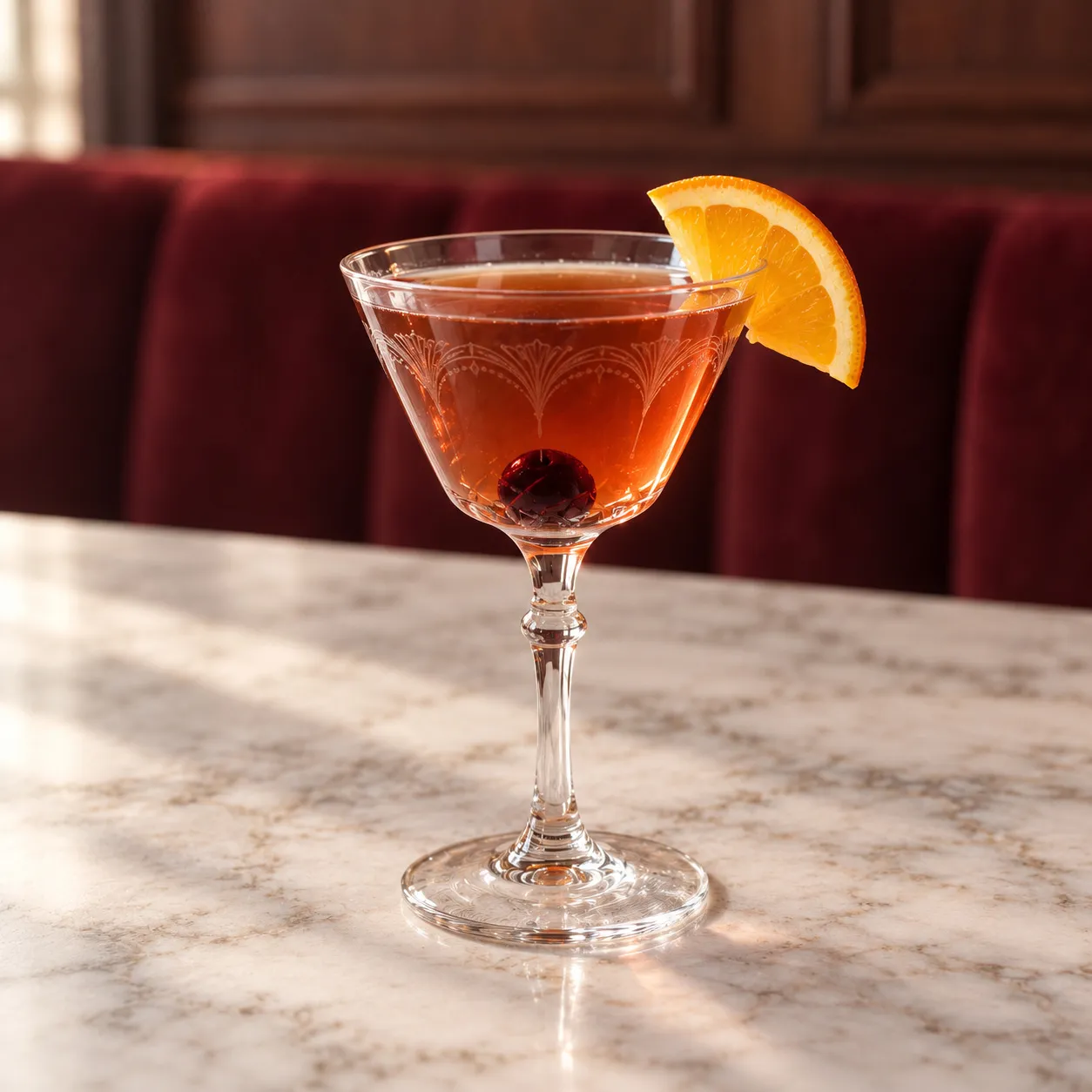
The orange half-wheel is a garnish. There's no measured orange juice in the drink, and the fruit slice shouldn't suggest that this is a sweet orange cocktail. The cherry gives the dark mixture a little decoration and a fruit accent at the end.
The printed recipe also uses cherry and orange, so those details aren't a new attempt to dress up a plain old formula. Keep them small enough for the stemmed glass.
Pat's Special is shaken, following the book, then strained into a chilled glass. Have the wines cold and the glass ready. With three equal main measures and just a little of each liqueur, the finished drink has plenty going on before the garnish enters.
Make it your wayOriginal: 1 serving · Makes 1 cocktail
Original recipe: 1 cocktail
Ingredients
For 1 cocktail. Quantities are shown as written.
Source measurement convention: US customary. Explicit unit definitions take precedence; unconfirmed measures must be checked before conversion.
Original quantities for 1 cocktail.
- Dry gin3/4 fl oz
- Dry sherry (such as Fino or dry Amontillado)3/4 fl oz
- Dubonnet Rouge3/4 fl oz
- Crème de cassis1 dash
- Apricot liqueur (sweetened, not unsweetened eau-de-vie)1 dash
- Brandied or maraschino cherry (for garnish)1
- Thin half-wheel fresh orange (for garnish)1
Measurement notes
- dry gin, dry sherry (such as Fino or dry Amontillado), Dubonnet Rouge: US fl oz: 1 = 29.5735 ml (rounded).
Measurement notes
Original ingredients
- 3/4 fl oz dry ginUS fl oz: 1 = 29.5735 ml (rounded).
- 3/4 fl oz dry sherry (such as Fino or dry Amontillado)US fl oz: 1 = 29.5735 ml (rounded).
- 3/4 fl oz Dubonnet RougeUS fl oz: 1 = 29.5735 ml (rounded).
- 1 dash crème de cassis
- 1 dash apricot liqueur (sweetened, not unsweetened eau-de-vie)
- 1 brandied or maraschino cherry (for garnish)
- 1 thin half-wheel fresh orange (for garnish)
Equipment
 Cocktail shaker
 Hawthorne strainer
 Small flared stemmed cocktail glass
 Jigger or measuring glass
Instructions
Combine the drink ingredients
Combine the dry gin, dry sherry, Dubonnet Rouge, crème de cassis, and apricot liqueur in a cocktail shaker.
Add ice and shake
Add the cracked ice, seal the shaker firmly, and shake for 12 to 15 seconds until cold and frosted.
Strain into a chilled glass
Strain through a Hawthorne strainer into a chilled small flared stemmed cocktail glass.
Garnish with cherry and orange
Garnish with the cherry dropped into the bowl and the fresh orange slice rested on the rim.
Estimated calories 130 kcal
Nutrition portion: whole recipe · Original yield: 1 cocktail
Source & assumptions
Ingredient-based estimate using USDA SR Legacy (2018), representative labels for 58 and CO London Dry Gin (43% ABV), Alko’s French Dubonnet Rouge declaration (14.8% ABV), Alko’s De Kuyper Crème de Cassis declaration (15% ABV), Alko’s Bols Apricot Brandy declaration (24% ABV). About 130 kcal per nutrition portion (whole recipe). Uses a representative dry Amontillado-style fortified wine, French Dubonnet Rouge at 14.8% ABV, London dry gin at 43% ABV, and sweet cassis and apricot liqueurs. Each liqueur dash is estimated at 1 ml; ordinary dash variation changes the estimate by about 2 kcal. Includes one 5 g maraschino cherry; the orange garnish is excluded. Actual ingredients and preparation affect the estimate.
Recipe notes
When adjusting quantities
This single serving uses 1 dash of each liqueur per drink for practical home measuring, creating a fruitier profile. To mix a six-person batch matching this adaptation, combine 4 1/2 fl oz gin, 4 1/2 fl oz dry sherry, and 4 1/2 fl oz Dubonnet Rouge with 6 dashes of crème de cassis and 6 dashes of apricot liqueur. To mix a historical six-person batch matching the original subtle seasoning, use the same liquid volumes but only 2 dashes of each liqueur total.
Original recipe notes
These notes describe the original recipe. Quantities mentioned here do not change when you adjust servings.
Toye and Adair, Drinks: Long and Short (1925), p. 11, credited to Hatchett's Bar: original book. We retain the equal main measures. One dash of each liqueur per serving is three times the original two dashes across six drinks; the scaling note distinguishes both batches.
Use a dry sherry such as the Fino or dry Amontillado listed in the ingredients; Manzanilla is another dry option. A sweet sherry makes a sweeter drink.
Use sweetened apricot liqueur in place of the source's Abricotine. Unsweetened apricot eau-de-vie isn't an equivalent swap.
A small stemmed glass of about 150 ml capacity leaves room for dilution. The source doesn't prescribe the pictured shape.
Read the scaling guide. Times, temperatures and equipment need their own consideration. Open the recipe tool to review and correct individual amounts.
Sources and attribution
Nina Toye & A. H. Adair, Drinks: Long and Short (London: William Heinemann, 1925), p. 11, from Hatchett's Bar.
Recipe details
- Recipe tradition
- Vintage
- Course or meal
- Drink
- Cuisine
- British
- Source decade
- 1920s
- Browse category
- Drinks & Cocktails