

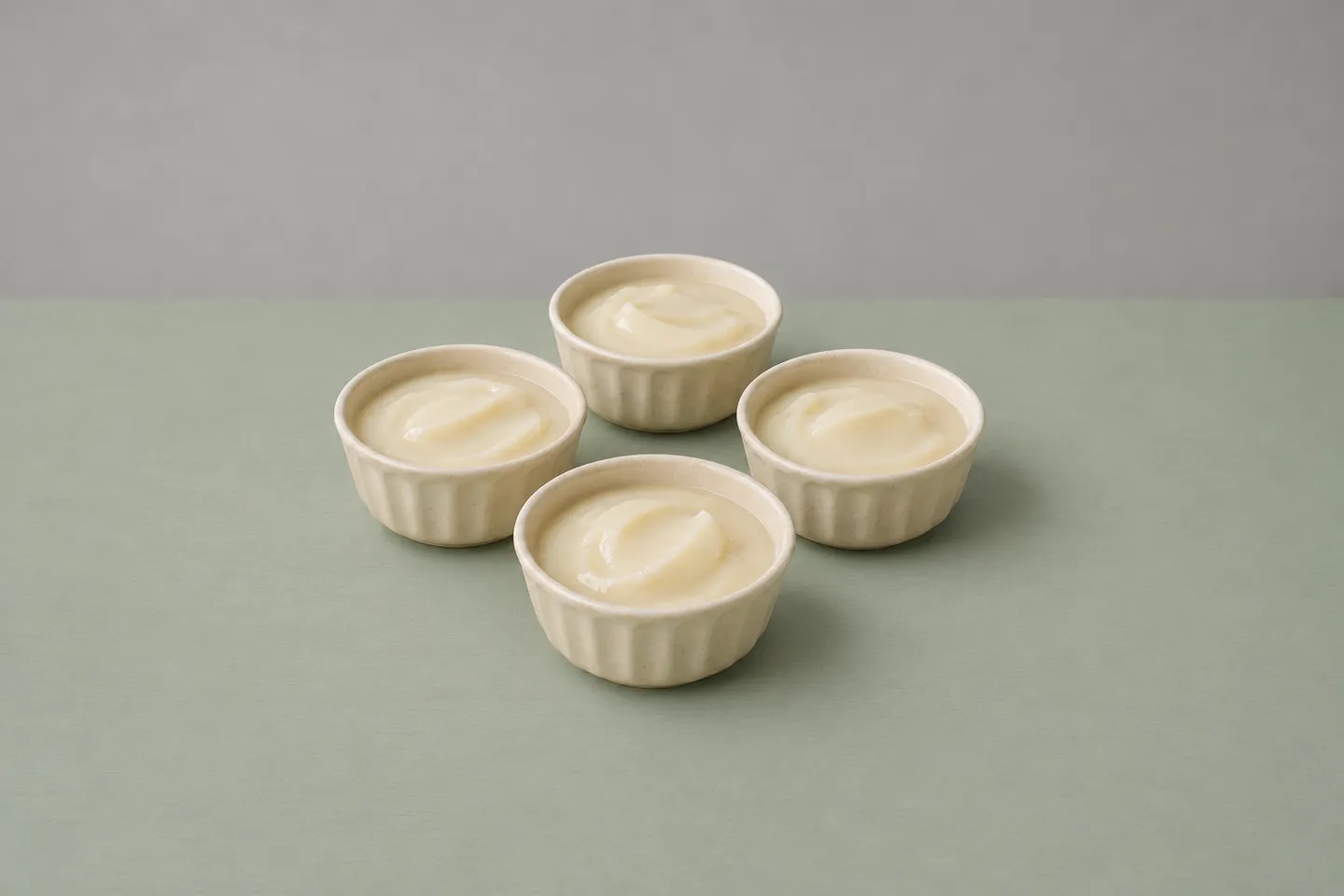
Rose-Scented Rice-Flour Blanc Mange (1863)
A spooned milk pudding thickened with plain white rice flour and gently flavored with culinary rose water, adapted from an 1863 recipe.
- Original yieldYield
- 4 small dessert cups, approximately 120 ml each4 small dessert cups, approximately 120 ml each
- PrepPrep time
- CookCook time
- TotalTotal time
Estimated time to warm serving; optional chilling is additional. Allow about 5 minutes to heat the milk and 15 minutes of gentle simmering after adding the slurry.
Published
Original recipe: 4 small dessert cups, approximately 120 ml each
The story behind the recipe
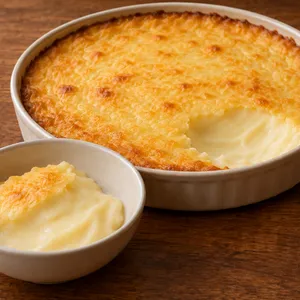
Rose water scents a smooth, spooned milk pudding. Finely milled rice flour thickens the sweetened milk at the stove, and the fragrance is added at the end. Serve it in small cups, with the pale pudding itself in view and a light floral flavor in each spoonful.
Rice flour at the stove
The rice flour is mixed smooth with cold milk, then stirred into hot milk and cooked to a spoonable pudding. Its fine texture distinguishes this dessert from a whole-rice pudding, where cooked kernels remain part of each spoonful.
Read more about this recipe
A short recipe with a long continuation
Rice Flour Blanc Mange appears across two pages of the Confederate Receipt Book, published in Richmond in 1863. The milk and flavorings begin on one page; the rice flour and the rest of the method follow on the next. Read only the opening and you'd have flavored milk, with the pudding still waiting on the other side of the page.
The pamphlet gathers household advice from several sources. Its rice-flour appendix follows a letter from Elizabeth B. Lewis, who said the recipes had been printed in Charleston years earlier. The date identifies this surviving printed version, rather than an invention of the dish in 1863. The recipe's immediate interest is its ordinary kitchen sequence: smooth a little flour with cold milk before adding it to the boiling pan.
The bag matters more than the color
Choose plain, finely milled white rice flour for this version. It should be a flour made from white rice, rather than a blend or sweet glutinous rice flour. Those names describe different products. A white powder in a bowl doesn't tell you which one you've bought, and a historical heading can't settle the contents of a modern package.
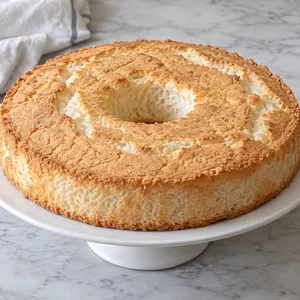
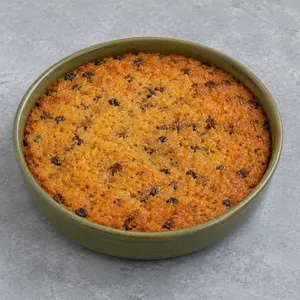
The distinction is especially helpful beside baked ground-rice pudding, which uses eggs as well as rice flour. Both begin with a milled ingredient, but their ingredient balances and cooking methods differ. Our guide to ground rice, rice flour and whole rice follows those differences from the old wording to the shopping bag.
Rose water, with room to stop
The source leaves sugar and rose water to the cook's taste. This version gives the sugar a measured amount and starts the fragrance gently, with the option to add a little more after cooking. Use food-grade culinary rose water. Rose oil, perfume and concentrated rose essence don't belong under the same spoon measurement.
Adding the rose water at the end lets you judge its strength in the cooked pudding. Milk remains the main ingredient, so the aim is a floral accent rather than a mouthful dominated by roses. Choose a culinary product without added alcohol if that matters for your table, and check the label rather than assuming every bottle has the same formulation.
A dessert cup is a useful decision
The old recipe directs the cook to pour the mixture into molds. Small cups suit the spooned version here and spare you the question of whether a chilled pudding will stand on a plate. Chilling is a serving choice; it isn't a promise of a firm, freestanding shape.
The measured milk total includes the cold portion used for the slurry. There isn't an extra splash outside the list.
Make it your wayOriginal: 4 servings · Makes 4 small dessert cups, approximately 120 ml each
Original recipe: 4 small dessert cups, approximately 120 ml each
Ingredients
For 4 small dessert cups, approximately 120 ml each. Quantities are shown as written.
Source measurement convention: Metric. Explicit unit definitions take precedence; unconfirmed measures must be checked before conversion.
Original quantities for 4 small dessert cups, approximately 120 ml each.
- Pasteurized whole milk, divided500 ml
- Plain white rice flour30 g
- Granulated sugar30 g
- Culinary rose water1/2 tsp
- Extra culinary rose water, optional, add up to this amount to taste1/2 tsp
Measurement notes
- culinary rose water, extra culinary rose water, optional, add up to this amount to taste: US tsp: 1 = 4.9289 ml (rounded).
Measurement notes
Original ingredients
- 500 ml pasteurized whole milk, divided
- 30 g plain white rice flour
- 30 g granulated sugar
- 1/2 US tsp culinary rose waterUS tsp: 1 = 4.9289 ml (rounded).
- 1/2 US tsp extra culinary rose water, optional, add up to this amount to tasteUS tsp: 1 = 4.9289 ml (rounded).
Equipment
 Medium saucepan (2-quart)
 Whisk
- Four shallow heatproof dessert cups (at least 150 ml each)
Instructions
Prepare the cold rice-flour slurry
Set out shallow heatproof dessert cups, each holding at least 150 ml. Allow four cups at the original quantity and adjust the count for the selected batch. Whisk the rice flour with enough of the measured cold milk to make a smooth, pourable slurry, about 60 ml from the original 500 ml batch. The rest of the measured milk goes into the saucepan; don't add extra milk beyond the ingredient-list total. Don't taste the uncooked slurry.
Heat the sweetened milk
Put the remaining measured milk and the sugar in a medium saucepan. Heat over medium-low heat, stirring, until the sugar dissolves and the milk reaches a gentle simmer.
Simmer the pudding
Whisk the slurry again, then pour it into the simmering milk while whisking. Return to a gentle bubbling simmer, lower the heat as needed and cook for about 15 minutes, stirring regularly and scraping the bottom and corners so the pudding doesn't catch. Aim for a smooth, thickened mixture; keep the bubbles gentle rather than letting the pan boil hard.
Add rose water and portion
Take the pan off the heat and stir in the first listed amount of culinary rose water. Taste a little cooked pudding on a clean spoon and add any of the optional extra rose water only if wanted. Divide between the cups; for a changed quantity, use more or fewer cups and keep each portion approximately 120 ml.
Serve warm or refrigerate promptly
Serve warm, or refrigerate promptly in the shallow cups for chilled serving. Don't leave the pudding out until it is completely cold: refrigerate within 2 hours of cooking, or within 1 hour if the room is above 90°F (32°C). Cover once chilled and serve directly from the cups.
Recipe notes
When adjusting quantities
Take the slurry milk from the measured total, using enough to whisk the flour smooth. Keep portions shallow and use more cups for a larger batch. Leave stirring room in the saucepan; divide large batches between pans. Cooking time does not multiply with the ingredients.
Original recipe notes
These notes describe the original recipe. Quantities mentioned here do not change when you adjust servings.
The source uses a quart of milk, four tablespoonfuls of rice flour and unspecified sugar, rose water and cold slurry milk. This version chooses 500 ml total milk, 30 g rice flour and 30 g sugar. These are modern working amounts, not exact conversions of the historical quart and spoons. The cold slurry milk is part of the total.
Use plain white rice flour and food-grade culinary rose water. Sweet glutinous rice flour, coarser ground rice, cornstarch and rose essence aren't automatic substitutions. The pudding contains milk. Its shallow cups are for spooning; no unmolding step is intended.
Don't taste raw flour mixtures; see the FDA's flour safety guidance. Prompt refrigeration follows USDA leftover guidance. The time above covers warm serving, with chilling additional; no chilling duration or keeping-quality claim is supplied.
Storage
For chilled serving or leftovers, refrigerate promptly in shallow cups, within 2 hours of cooking or 1 hour when the room is above 90°F (32°C).
Read the scaling guide. Times, temperatures and equipment need their own consideration. Open the recipe tool to review and correct individual amounts.
Sources and attribution
Confederate Receipt Book (Richmond: West & Johnston, 1863), Rice Flour Blanc Mange, pp. 26–27.
Confederate Receipt Book (Richmond: West & Johnston, 1863), Rice Flour Blanc Mange, pp. 26–27.
Adapted from Rice Flour Blanc Mange, pp. 26–27 of the 1863 *Confederate Receipt Book*.
Recipe details
- Recipe tradition
- Vintage
- Course or meal
- Dessert
- Cooking method
- Stovetop
- Browse category
- Baking & Desserts