
- Kitchen know-how
- Vintage
- Baking
- Oven temperatures
Slow, moderate or hot? Reading old oven directions
What temperature to use when an old recipe says to bake in a slow, moderate or hot oven, with period definitions, a modern chart and a worked example.
For American recipes from the early twentieth century, a moderate oven at 350 to 375°F (175 to 190°C) is a starting point. A hot oven is usually 400 to 450°F (205 to 230°C). Slow varies more: a modern reference chart gives 300 to 325°F (150 to 165°C), but Mary A. Wilson’s 1920 cookbook gives 250 to 275°F. Look in the book itself before choosing from a chart, then consider what you’re baking. Large, deep dishes generally need gentler heat than small, thin ones.
What the words meant in two period books
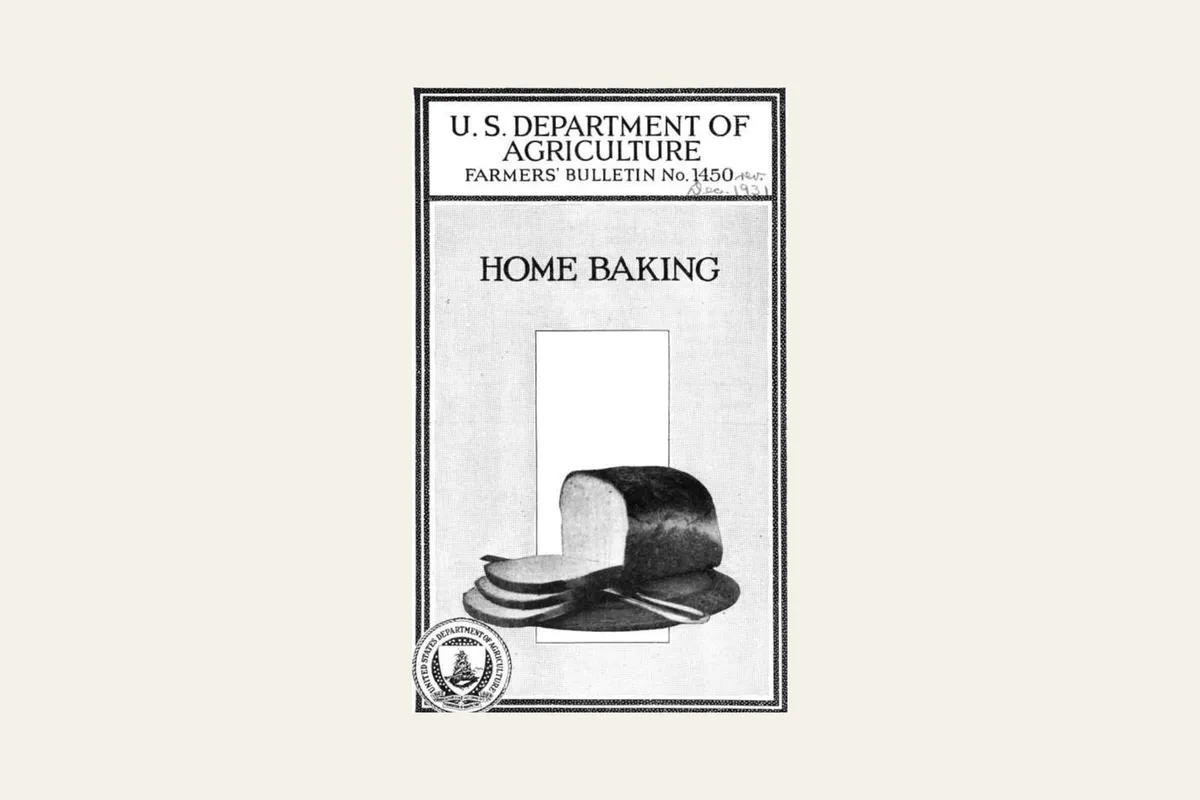
Wilson’s Mrs. Wilson’s Cook Book (Philadelphia, 1920) defines oven temperatures for gas ranges. Charlotte Chatfield’s Home Baking, a USDA Farmers’ Bulletin revised in 1931, pairs oven words with temperatures for particular products. Here they are beside today’s National Institute of Standards and Technology (NIST) chart:
| Old term | Wilson, 1920 | USDA Home Baking, 1931 | NIST chart today |
|---|---|---|---|
| Slow | 250–275°F; custard pies 250°F | Sponge cake “baked slowly at about 325° F.” | 300–325°F |
| Very moderate | Not used | Thick loaf of butter cake, about 325°F | 325–350°F (moderately slow) |
| Moderate | 350–375°F; pies 300–350°F | About 365°F (thin loaf of cottage pudding) to 375°F (shallow gingerbread) | 350–375°F |
| Moderately hot or fairly hot | Not defined | 375°F (drop cookies) to about 400°F (gingerbread in muffin pans) | 375–400°F |
| Hot | 425–450°F; one bread at 400°F called “the hot oven” | 400–425°F (muffins), 425°F (popovers to start) | 400–450°F |
| Very hot | Not defined | 450–500°F (biscuits) | 450–500°F |
NIST’s own Celsius figures run from 120°C for very slow to 260°C for very hot; Celsius elsewhere in this guide is our conversion, rounded to the nearest 5 degrees. NIST’s approximate equivalencies are not a standard any old cookbook was written to.
Moderate is fairly steady across the three columns. Slow is not: Wilson’s range sits near the modern chart’s “very slow,” while the USDA’s sponge cake reaches the top of the modern chart’s slow range.
What is a quick oven in old recipes?
Look at what the heat is meant to do. In the 1906 revised Mrs. Beeton’s Book of Household Management, scalloped oysters go into a quick oven just long enough to brown the surface. That instruction describes a finishing job; it does not give a numerical temperature or a general setting for everything called “quick.” Use the recipe’s own number or the book’s definition when available, then compare the same dish and method as described below.
What are brisk and slack ovens?
Beeton’s 1861 pastry discussion gives both words a practical context. Puff pastry needs a brisk oven, it says, while excessive heat blackens the crust and insufficient heat leaves it without rise or color. A glazed pastry needs a slacker oven so its icing does not scorch. The words describe the heat’s job in that passage; the page supplies no Fahrenheit scale. Treat them as clues to investigate, rather than exact synonyms you can substitute into any chart.
Why the same word moved around
The words began as judgments about a fire, not readings on a dial. The 1915 Suffrage Cook Book, compiled in Pittsburgh, describes judging heat by flour browning and by holding a hand in the oven while counting. These are historical practices, not tests to try: do not put your hand in a hot oven. Our adaptations use measured temperatures and an oven thermometer.
Amelia Doddridge’s Liberty Recipes (Cincinnati, 1918) prints two cakes on the same page, both baked for an hour in a loaf pan. One says “Bake slowly” and the next “in a moderate oven.” The reader had to supply the distinction.
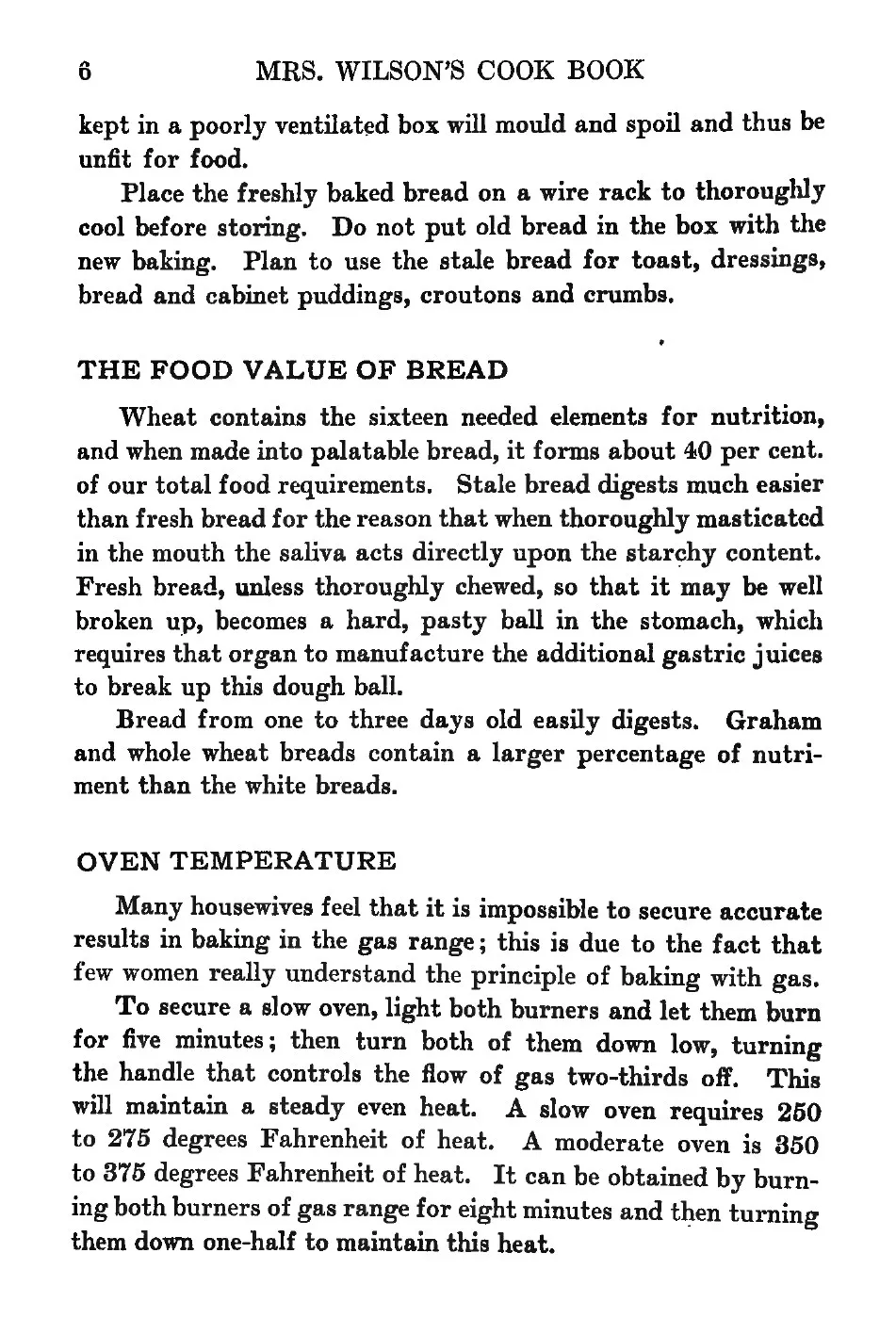
Wilson defines heat by burner timing: for moderate, both burners run eight minutes, then half down; for hot, twelve minutes, then a quarter down. Yet her pie pages call 300 to 350°F moderate, mostly below her general definition. She calls a hot oven “entirely too hot for breads,” then bakes rye bread at 450°F and orange bread “in the hot oven” at 400°F. One bread page says 350°F, “Do not have it any hotter than this,” then “Bake in a hot oven for 45 minutes.” A recipe’s own number outranks the book’s general definition.
The USDA says temperature depends on leavening, proportions and “the size and shape of the product.” Large, compact masses need slower baking than small, flat ones. Its cottage pudding batter takes about 390°F in muffin pans but about 365°F as one thin loaf. The food mattered as much as the word.
When the numbers arrived
Automatic controls reached American gas ranges in the mid-1910s. The American Stove Company’s Lorain regulator is usually named as the first, but published accounts give 1914 or 1915; we haven’t found a primary record settling the year.
Availability didn’t mean every kitchen had one. Wilson’s 1920 book teaches burner timing and says an oven thermometer “soon pays for itself.” In 1931, the USDA recommends “A reliable oven thermometer or an automatic temperature regulator that has been tested,” and a suitable thermometer for any oven. It still gives bread advice for coal or wood ranges. These books addressed mixed kitchens.
A method for vague directions
When a recipe gives only a word, work through four steps.
Start with the book itself. Look for an oven chapter, a front-matter table or recipes pairing the word with a number. Its definition outranks a modern chart.
Check a period reference. A source of similar date and kind, such as the 1931 USDA bulletin for American home baking, gives useful context.
Compare at least three similar modern recipes. Match the dish, batter or pastry, and pan size. Note temperature, time and pan.
Decide where the evidence meets. Choose within the period range where modern comparisons support it, then rely on doneness cues. If sources disagree, choose the lower-middle setting and check early; a pale crust can go back in, but a scorched one can’t.
A worked example: Wilson’s apple dowdy
Wilson’s New England dowdy has sliced apples or peaches tossed with flour and cinnamon, covered with brown sugar and a little water, then pastry. She specifies “a moderate oven for forty-five minutes,” giving us a useful test of the method.
The book. Her oven section gives 350 to 375°F; her pie pages, where the dowdy appears, give 300 to 350°F. They overlap only at 350°F. She warns that excess heat browns pastry “before the filling inside has had the time to cook.”
The period reference. The 1931 bulletin starts pies whose filling needs cooking at about 450°F, lowering the heat after 8 or 10 minutes to cook the filling without overbaking the crust. That’s hotter than either Wilson range.
Three modern recipes. We matched raw apples under pastry. Martha Stewart’s apple-cranberry pandowdy, published on TASTE, uses a 2-quart pan at 375°F for about an hour. King Arthur’s double-crust apple pan dowdy uses a 9-inch square pan, 45 minutes at 425°F and more time at 325°F. Yankee’s version uses pastry squares over raw apples in a 12-inch skillet at 425°F, about 30 minutes plus 10 to 15 more. Pre-cooked apples and biscuit toppings were weaker matches, so we set them aside.
The decision. Modern comparisons run roughly 375 to 425°F, with the USDA starting pies hotter still. Wilson’s crust warning argues against exceeding her definition. We chose 375°F (190°C), where her moderate range ends and the modern recipes begin. We’re confident about temperature and fairly confident about 45 to 50 minutes, since pans vary. Look for a firm, golden-brown crust, thick syrup bubbling at the edges and through the slits, and tender apples when a thin knife goes in through a slit. See the full New England apple dowdy adaptation.
When the source already gives a number
The USDA’s popovers start in “a hot oven (about 425° F.),” dropping to about 350°F after about 20 minutes to dry the insides without hardening the crust. Our popovers keep both settings.
Its angel food needs “about an hour in an oven at a temperature of 325° F.” for a fairly large cake. Our angel food cake keeps the temperature. For timing, Anna Olson’s modern eight-white cake in a 10-inch tube pan offers a close comparison: 30 to 35 minutes at 325°F. We allow 35 to 45 minutes, checking for a golden, springy top. The bulletin’s hour doesn’t automatically transfer to a different pan. Its 325°F setting also matches the sponge cake described as “baked slowly.”
Using the answer in your own oven
An oven dial is a target, not a measurement. A thermometer on the middle rack tells you whether your 350°F really is 350°F. If the oven runs hot or cold, correct the dial before reinterpreting the recipe.
Choose the lower end of a supported range for deep dishes and large loaves, the higher end for thin layers and small cookies. When changing batch or pan size, scaling a recipe without losing its balance explains why doneness checks matter more than a recalculated time.
For gills, teacups and other source-specific quantities, old recipe measurements explains what can be converted and what needs the book’s own definition. For ingredient weights, see cups, grams and the ingredients between.
Sources
- Mary A. Wilson, Mrs. Wilson’s Cook Book: Numerous New Recipes Based on Present Economic Conditions (Philadelphia: J. B. Lippincott, 1920), pp. 4, 6–7, 10, 13, 88–89, 94; checked against Cornell University Library’s scan of the third printing (Internet Archive cu31924000535777).
- Charlotte Chatfield, Home Baking, USDA Farmers’ Bulletin 1450 (Washington, D.C., revised December 1931), pp. 6, 10–14.
- The Suffrage Cook Book, compiled by Mrs. L. O. Kleber (Pittsburgh: Equal Franchise Federation of Western Pennsylvania, 1915), p. 242.
- Amelia Doddridge, Liberty Recipes (Cincinnati: Stewart & Kidd, 1918), p. 89.
- National Institute of Standards and Technology, Metric Kitchen: Culinary Temperature, accessed October 13, 2026.
- On the Lorain regulator: InspectApedia, Lorain Oven Heat Regulator and Magic Chef, accessed October 13, 2026.
- Modern comparison recipes: Martha Stewart, Apple-Cranberry Pandowdy (TASTE); King Arthur Baking, Apple Pan Dowdy; Yankee Magazine, Old-Fashioned Apple Pandowdy, accessed October 13, 2026.
- Angel food comparison: Anna Olson, Angel Food Cake, as checked in the recipe’s source review.
- Isabella Beeton, The Book of Household Management (London: S. O. Beeton, 1861), p. 609, paragraph 1190 and the following pastry discussion. Scan record.
- Mrs. Beeton’s Book of Household Management, new edition revised, enlarged and brought up to date (London: Ward, Lock & Co., 1906), pp. 357–358, recipe 567, “Oysters, Scalloped.” Scan record.