
- Vintage
- Medieval
- British
Butter, Cheese, and a Little Saffron: Cooking from The Forme of Cury
Explore five dishes from Richard II's medieval cookery collection, from buttered pasta to a saffron cheese tart, with practical recipes for a modern kitchen.
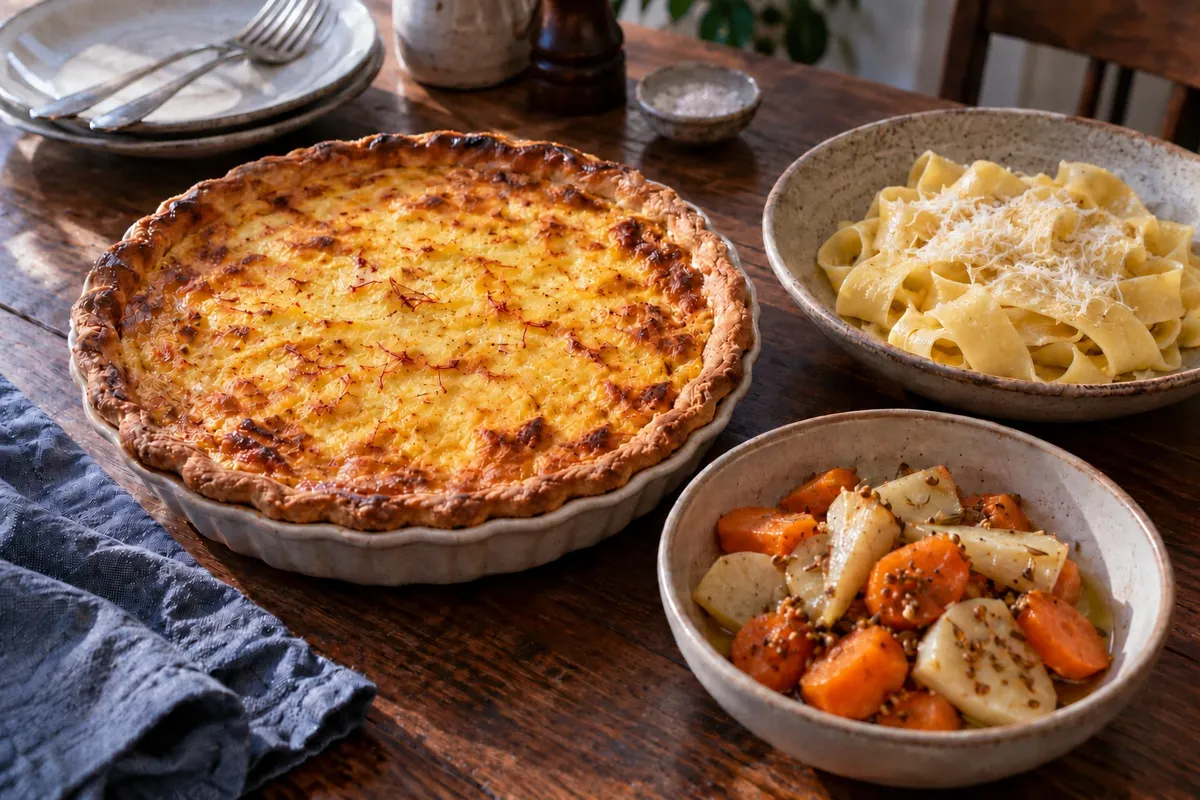
A thin sheet of dough goes into boiling water. Cheese is grated. Butter goes below and above. Then the dish is served.
The directions for macrows in The Forme of Cury take only a few lines, but they leave plenty for a modern cook to decide. How thin is thin? Which cheese? How much butter? Even the instruction to layer the ingredients points to another recipe, losyns, as though the cook already knows it.
The cheese tart is seasoned with ginger and saffron, a combination you can explore with a modern pastry shell and a piece of Brie.
The five home recipes below adapt the collection in different ways. The pasta retains the layering of butter and cheese. We roast cooked chickpeas for a snack and leave the wine-soaked bread in cubes instead of grinding it.
The collection behind the meal
The Forme of Cury is associated with the master cooks of King Richard II and was compiled around 1390. It is among the surviving English cookery collections that let us read medieval cooking instructions in detail. The version consulted here is Samuel Pegge’s 1780 printed edition, whose title page identifies that earlier composition.
The short directions take us close to the work: rolling dough, layering cheese, and seasoning vegetables. Their royal-kitchen association doesn’t keep the ingredients from looking familiar at a home counter.
There is a practical voice under the unfamiliar spelling. Make a thin sheet. Grate the cheese. Boil the vegetables. Cool them. Add vinegar. The cooks often name a spice powder without giving its formula and tell the reader to bake without specifying a temperature. Those directions assume knowledge that a modern recipe card has to supply.
Macrows: pasta with butter and cheese
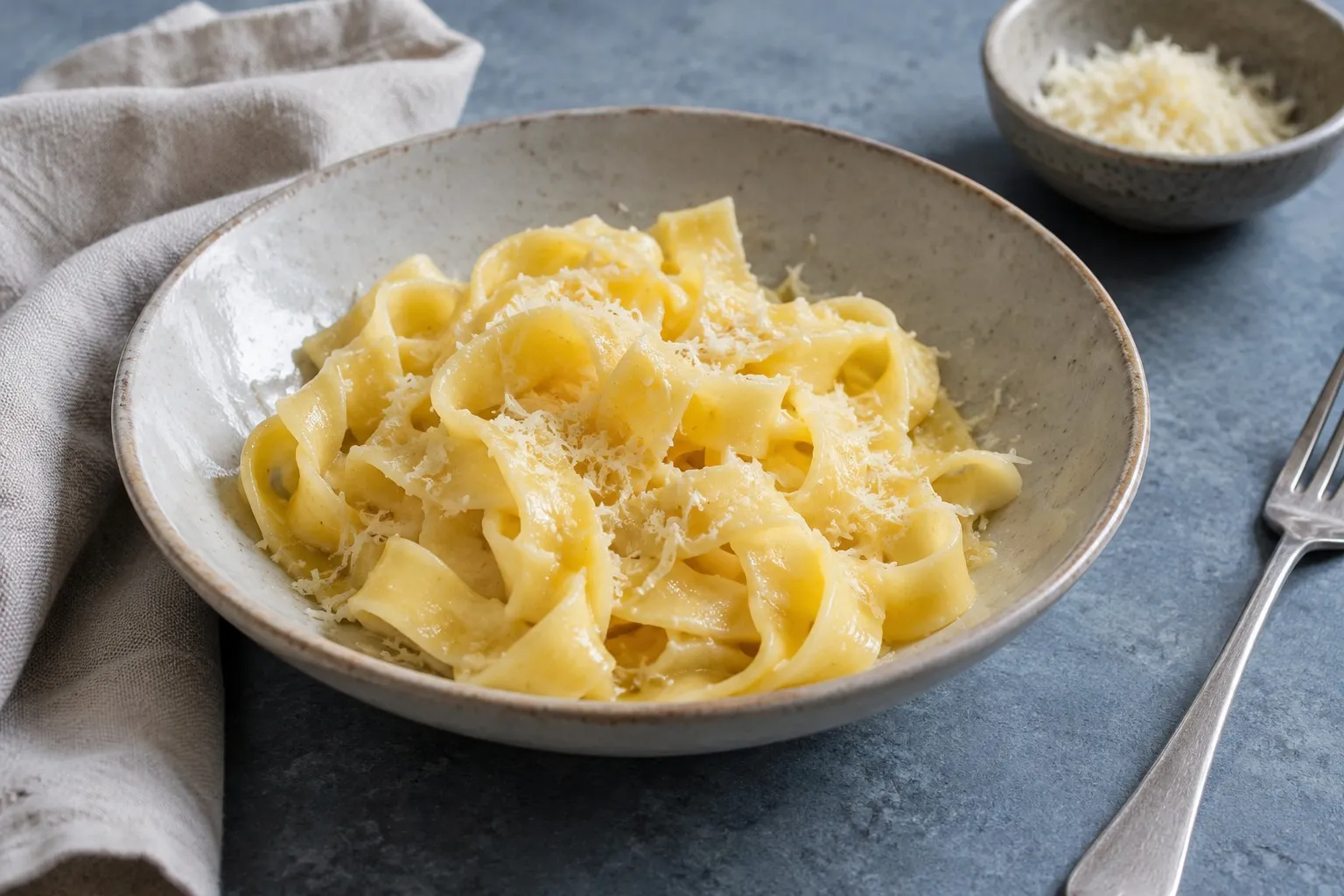
Macrows, medieval pasta with butter and cheese, is the most familiar place to begin. The original asks for a thin sheet of dough cut into pieces, boiled, and arranged with cheese and butter below and above. It compares the arrangement to losyns, another layered preparation. That comparison is about how to put the dish together, not an instruction to cut little lozenge shapes.
Ready-made fresh egg ribbons save the work of making and rolling dough. Cheddar supplies a familiar cheese; the original names no variety. Our added cooking-water finish helps spread butter and cheese between the folds, with some grated pieces still visible.
This is a different approach from making a thick cheese sauce and baking it over pasta. It resembles macaroni and cheese, although that resemblance does not establish a direct line of descent.
The recipe makes four small main-dish portions, or two more substantial pasta servings. Its fresh-pasta baseline matters: substituting the same weight of dried pasta would change the finished amount considerably. If you’re planning several dishes, small portions of this rich pasta leave room for the tart and vegetables.
Tart de Bry: a golden cheese and saffron tart
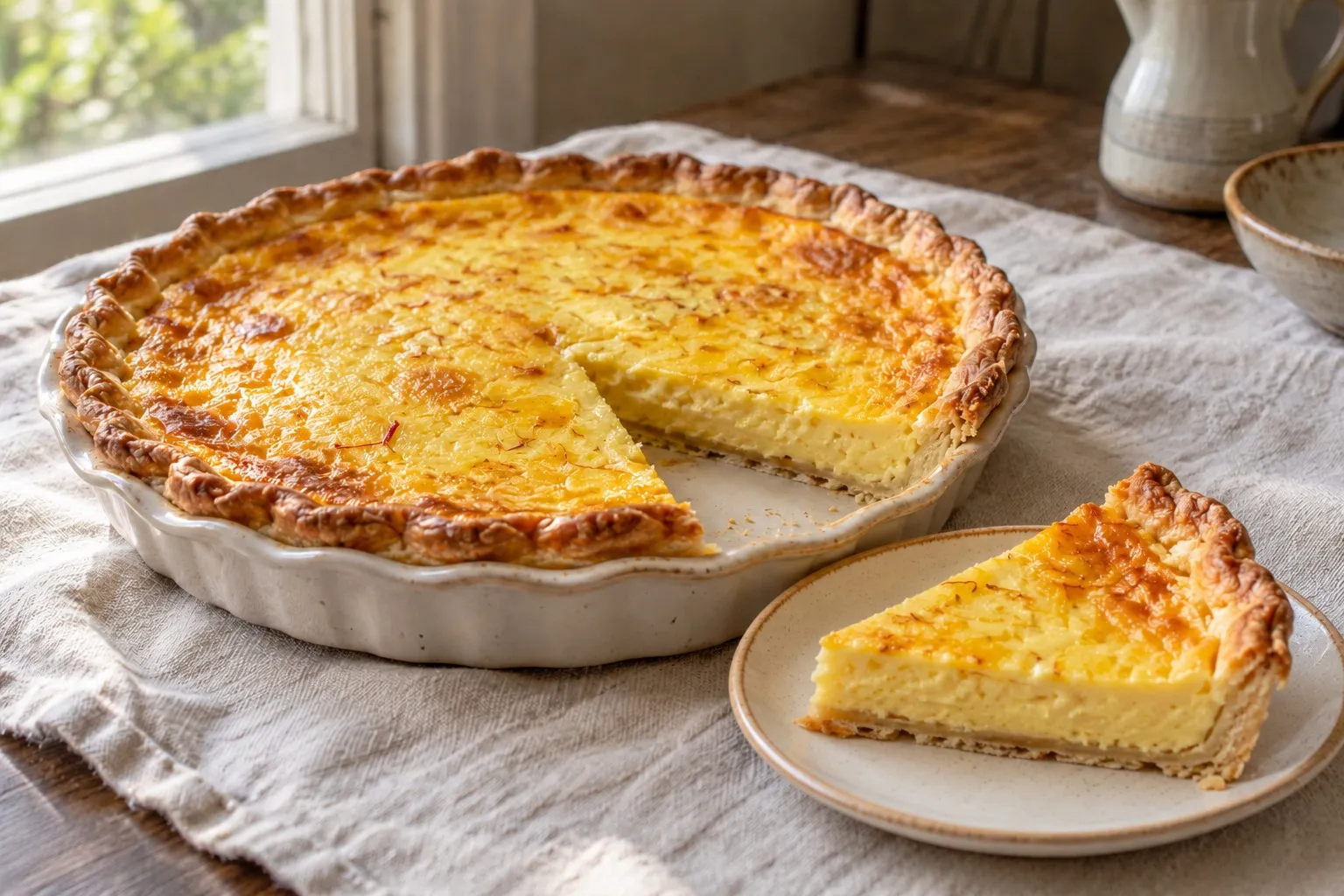
Tart de Bry, our Brie and saffron tart, has a short but distinctive filling: cheese and raw yolks mixed with ginger, sugar, saffron, and salt. The source asks for a crust an inch deep in a baking vessel.
The cheese wording, “chese ruayn,” deserves some care. Pegge’s notes on printed page 74 query Rouen for the cheese and Brie in the title. Those questions don’t establish the identity of a modern supermarket cheese. Brie is our convenient soft-cheese interpretation, with cream added to make the measured filling easier to combine.
Saffron gives this tart a reason to look different from an ordinary cheese quiche. A small amount steeped in warm water carries color through the egg mixture; ginger adds another point of interest. The sugar is restrained, so this version belongs comfortably with savory dishes.
Our nine-inch tart uses a partly baked shell and a lower-temperature finish for the filling. Small wedges suit its rich cheese-and-yolk mixture. The recipe supplies the set and temperature checks that a golden surface alone can’t answer.
Chyches: roasted spiced chickpeas
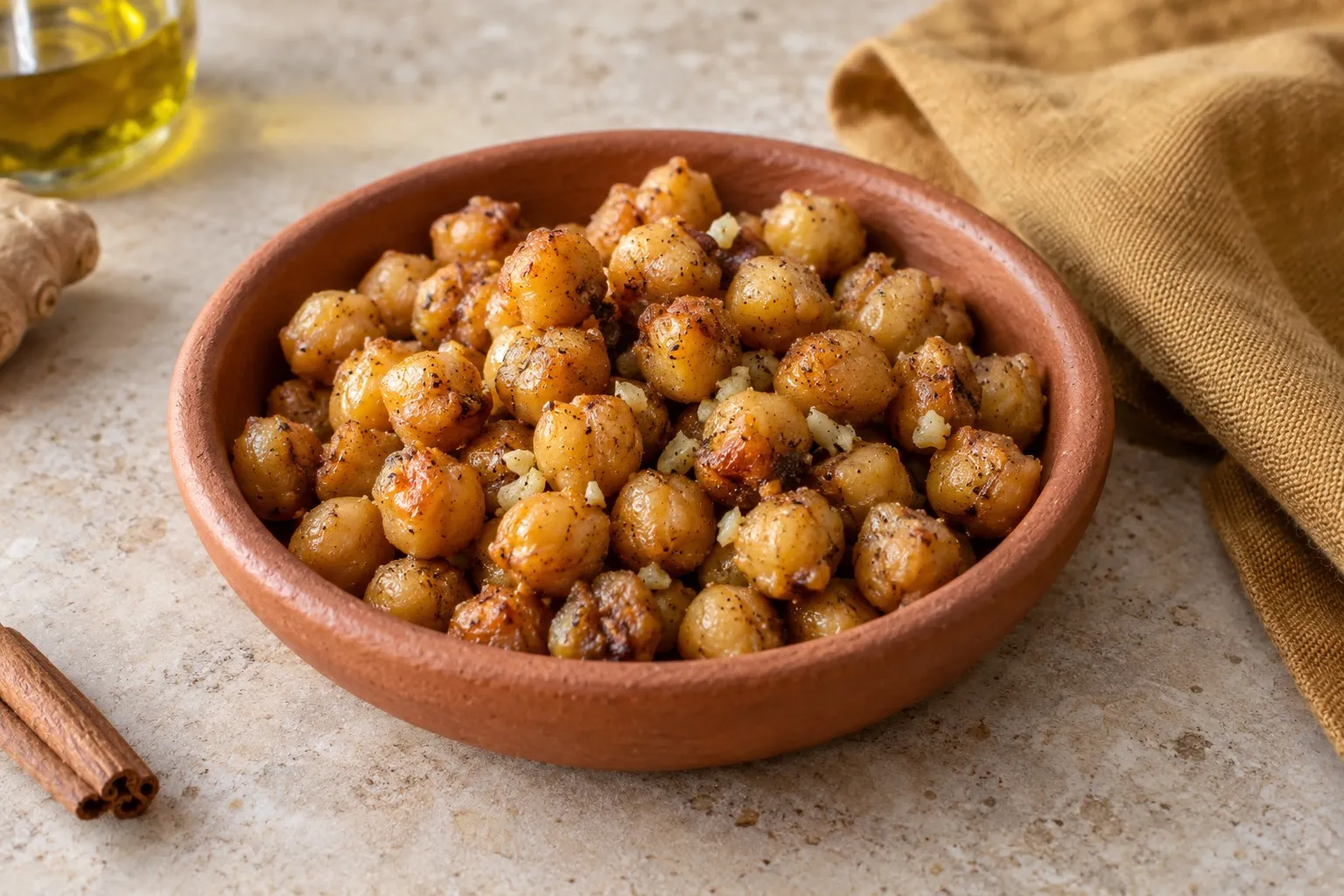
The source for Chyches, our spiced garlic chickpeas, includes an overnight treatment in ashes or hot embers, then washing and boiling in clean water. Oil, garlic, whole saffron, strong spice powder, and salt follow. The cooking directions are plainly more involved than our baking-sheet version.
We start with cooked chickpeas and roast them instead. That changes the dish into a modern snack or side, with a browned exterior and potentially tender center. Pepper and ginger provide a simple interpretation of strong spice powder; cinnamon is an addition and the saffron is omitted.
Minced garlic joins late because its small pieces can darken before the beans finish roasting. That separate timing is our choice, and gives the fresh garlic less time on the hot sheet.
Weigh the chickpeas after draining. A can’s total contents and its drained beans are different amounts, and that difference affects how crowded the sheet becomes. Serve warm if you want the best texture, and refrigerate what remains.
Payn fondew: bread and spiced wine
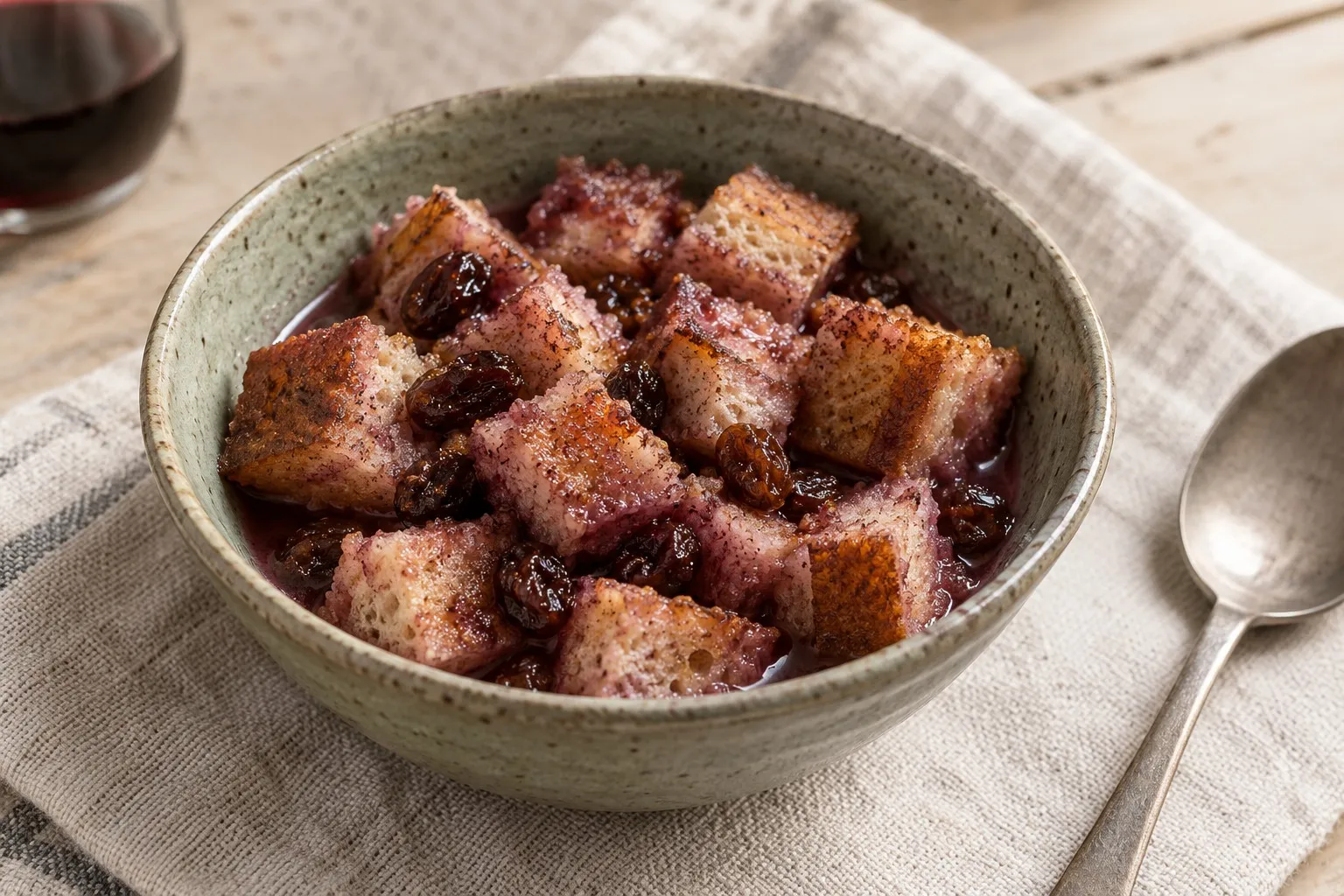
Payn fondew, our spiced wine bread pudding, begins in the source with bread fried in grease or oil, then laid in red wine and ground with raisins. Honey receives a separate clarification step with egg white and a little water before it joins the bread with sugar and spices. The final directions call for salt, a mixture thick enough to stand, and white candied coriander on top.
Grinding is an important detail. It points toward a softened bread preparation, while our version keeps the cubes and raisins whole. The browned edges remain visible even as the cubes take up the sauce.
Commercial honey, butter for frying, and a cinnamon, nutmeg, and ginger blend make the preparation simpler. Clarification, extra sugar, salt, and candied coriander are omitted. The result stays looser than the source’s mixture thick enough to stand. It is a stovetop dessert, with no egg custard or oven stage.
Give it a small bowl and a few minutes to absorb the sauce before serving. Red wine is central to the version described here. Short simmering doesn’t make it alcohol-free, and swapping in a fortified wine changes the result. Choose the recipe with that in mind if you’re cooking for guests who avoid alcohol.
Compost: a spiced root pickle for tomorrow
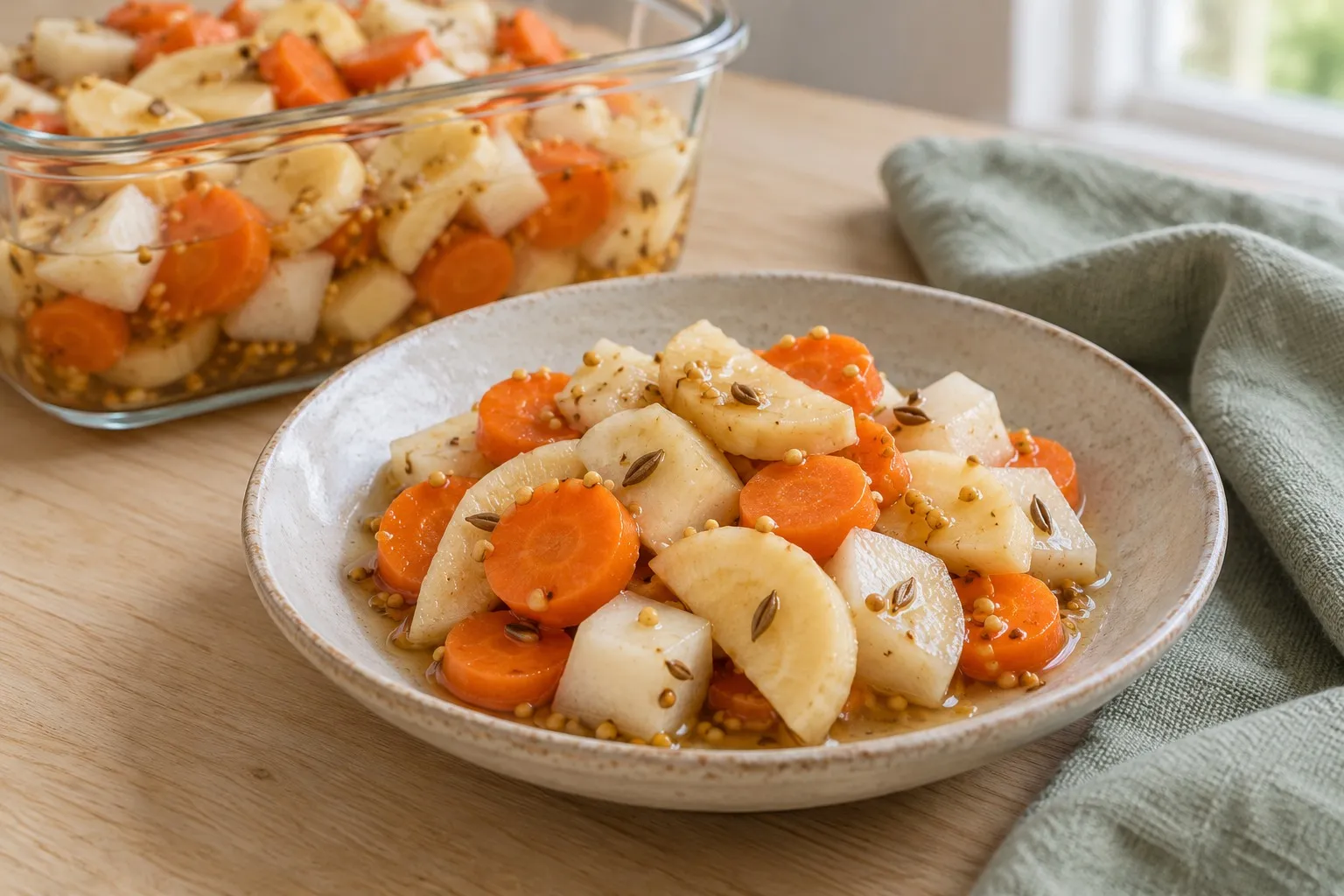
Compost, our spiced root pickle, is the preparation to start a day ahead. The source takes a longer route through roots, cabbage, and pears, followed by cooling, salt, vinegar, spices, and an overnight or all-day wait. Wine, clarified honey, mustard, currants, and more spices enter the final mixture.
The original already uses vinegar. Our smaller refrigerator version uses commercial 5% cider vinegar with carrots, parsnips, turnips, honey, mustard seeds, anise, and added ginger.
Roots of different thicknesses may soften at different rates. The pieces should stay recognizable in the dressing, whose honey and vinegar bring a sharp, sweet contrast to their mild flavor. A wide container leaves room for vegetables and liquid; the recipe gives a measured vinegar allowance if more coverage is needed.
This is a refrigerator dish, not a tested canned preserve. Keep it cold, count its 24-hour rest within the short storage plan, and make only the amount you’ll eat. Try a small portion alongside cheese, the tart, or roast meat.
Different dishes, different schedules
You can explore this collection without cooking all five at once. For an easy first meal, make the root pickle the day before, bake the tart the next day, and add a salad. For a more generous table, serve a small dish of macrows while the tart rests. The pasta is best assembled close to serving, so it is a poor candidate for a long wait while other dishes finish.
The chickpeas and bread dessert share little beyond their source collection. One needs oven space and prompt serving for texture; the other uses two pans and a short absorption rest. Choose between them if the cooking schedule is already crowded.
The recipes don’t all demand a grand occasion. Macrows can be a small pasta supper; the tart can be lunch. Payn fondew needs only enough appetite for a warm bowl of bread and spiced wine after a modest meal.
An earlier collection asks similar questions about quantities and substitutions. Our Apicius feature follows Roman patties, herb-braised chicken and spiced pears from brief directions to measured modern dishes.
Curious about the drinks of the period? Our sister site, Forgotten Drink, explores medieval beer, water and the evidence behind them.
Source note
The passages come from Samuel Pegge’s 1780 edition of The Forme of Cury: Payn Fondew, recipe 59, pp. 33–34; Chyches, recipe 72, p. 40; Macrows, recipe 92, p. 46; Compost, recipe 100, pp. 49–50; and Tart de Bry, recipe 166, pp. 74–75. The linked recipes provide practical modern amounts and clearly described adaptations.