
- Vintage
- Roman
- Historical cooking
- Sauces
Dining in Imperial Rome: The Flavors of Apicius
Explore five Roman recipes from Apicius, from pine nut sauce for eggs to spiced pears, with measured adaptations for a modern kitchen.
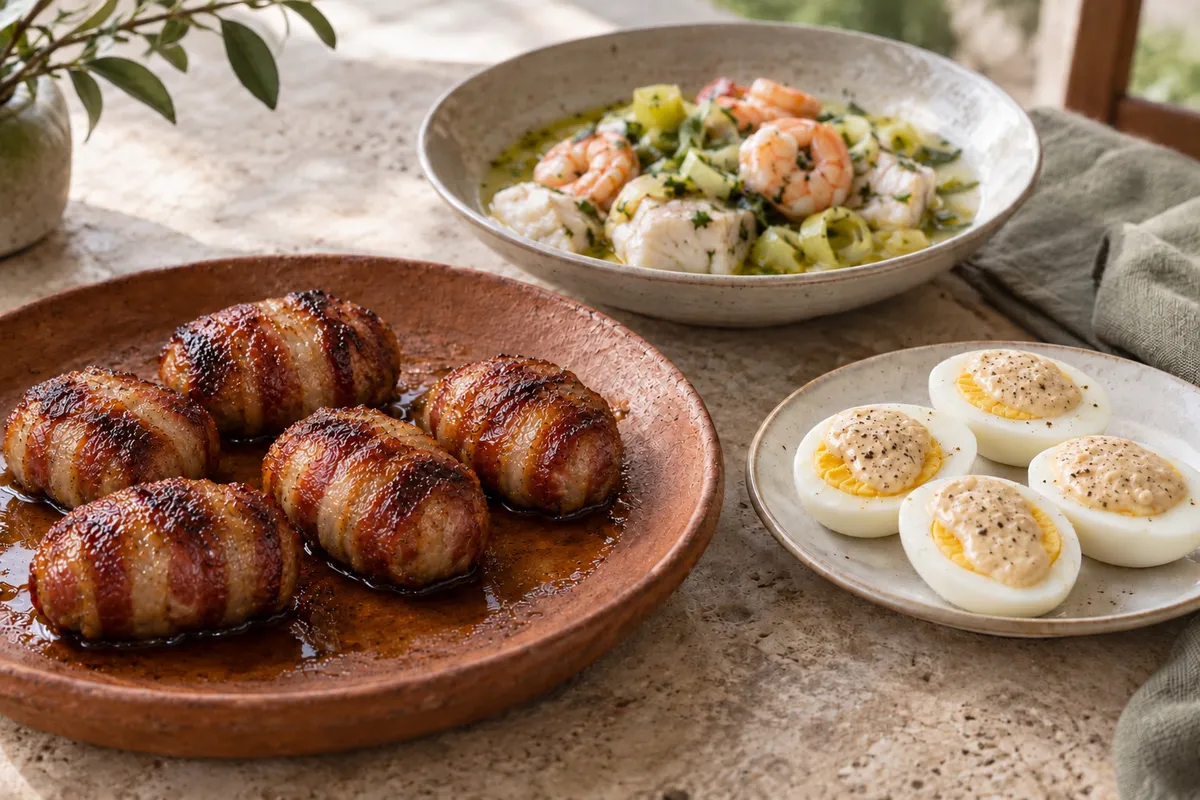
Pears, honey, and sweet wine make an inviting start to a dessert. Then the recipe asks for cumin, black pepper, and fish sauce. Before you reach the oven, an old Roman cookbook has already nudged you out of a familiar way of cooking.
That is the pleasure of opening De Re Coquinaria, the collection usually called Apicius. An egg sauce brings together soaked nuts, honey, and vinegar. Chicken cooks with dill, leek, savory, and fresh coriander before receiving a grape-syrup finish. The combinations are intriguing, but the dishes are recognizable enough to make you want to put a pot on the stove.
The five recipes here give those combinations a place in a home kitchen. Nut-dressed eggs can start lunch, herb chicken can make dinner, and the pears offer an unexpected finish. The seafood stew takes the freest approach to its source; the differences are explained with each dish.
Who wrote Apicius, and how it survived
Apicius brings together recipes associated with Roman cooking. Keio University Library’s account of its early printed edition describes a collection compiled and changed over time. Its transmission also matters: the surviving manuscripts discussed by Vehling are medieval copies of an older text. The collection preserves particular dishes from that cooking tradition.
The selected passages are brief. They name ingredients and describe an order of work, but supply no amounts for these five recipes. A modern cook must decide how much honey belongs in the sauce, how many eggs will set the pears, and how large to make the pork patties. Our weights, portions, temperatures, and times are those modern decisions.
Wine-soaked bread goes into the patties. Pears are cooked before they are mashed. The chicken’s coriander is green coriander, the leaves we usually call cilantro, rather than ground seed. The passages may be short, but they aren’t vague about every detail.
The Roman pantry: fish sauce, grape syrup and lovage
Fish sauce, honey, grape products, wine, and vinegar recur across the selection. Salt and savory seasoning meet sweetness and acidity, sometimes in the same spoonful. Pepper appears in all five passages, including the pear bake.
For liquamen, we use Southeast Asian fish sauce. It is a convenient way to supply the savory seasoning called for in the text. Brands differ in saltiness and strength, so choose one you already enjoy and follow the measured recipe before adding more. Its flavor and strength shape the modern dish.
The grape ingredients need a little attention too. Passum is a raisin wine; sweet passito wine or sweet Marsala is our practical choice for the pear dish. Caroenum and defrutum are reduced grape products, represented here by plain grape saba. Buy a grape syrup rather than a balsamic vinegar reduction, which would introduce a different sourness.
Lovage appears in the egg sauce and seafood passage. The measured adaptations use a little ground celery seed because it is easier to find. That keeps a celery-like herbal note in the dish, although the ingredients differ in intensity and character. If you have fresh lovage, the egg recipe gives a separate quantity for using it.
The fresh herbs are as specific as the bottled seasonings. Chicken takes dill, cilantro, and savory; cumin belongs with the pears. There is plenty to explore without adding an exotic spice to every dish.
Five dishes to explore
Pork patties with pine nuts and a grape finish
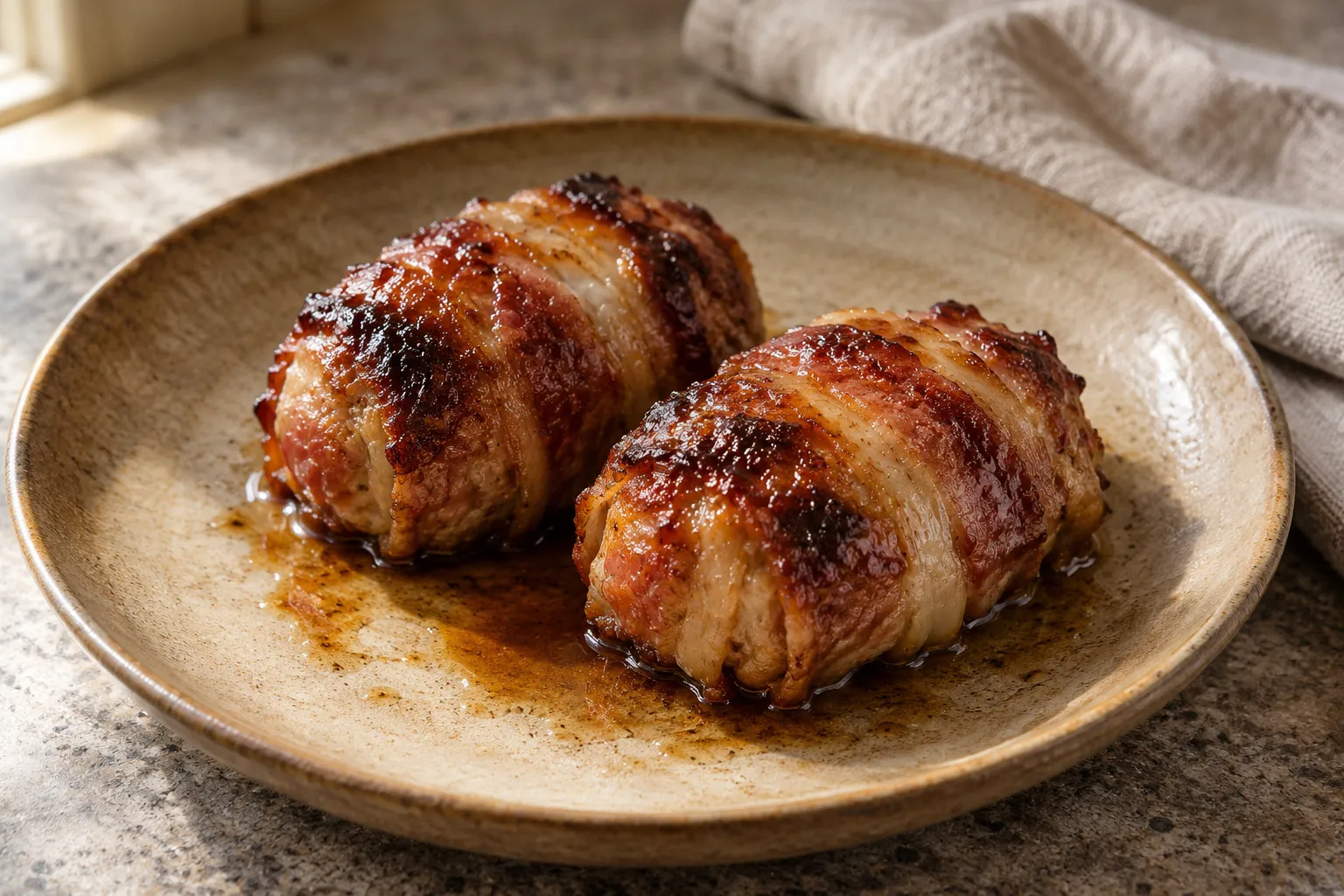
In Isicia Omentata, our Roman pork patties, wine-soaked bread joins ground pork, pine nuts, pepper, and fish sauce. Eight small patties make four servings. Thin bacon wraps each one, and a little grape syrup finishes the skillet sauce.
The source uses caul fat, a delicate fatty membrane, and includes optional myrtle berries. Thin unsmoked bacon replaces the caul here, with myrtle omitted. Wine-soaked bread softens into the pork mixture while the chopped nuts remain distinct. The grape finish is a small pan sauce, not a glaze meant to bury the patties.
Eggs with a sweet, sharp nut sauce
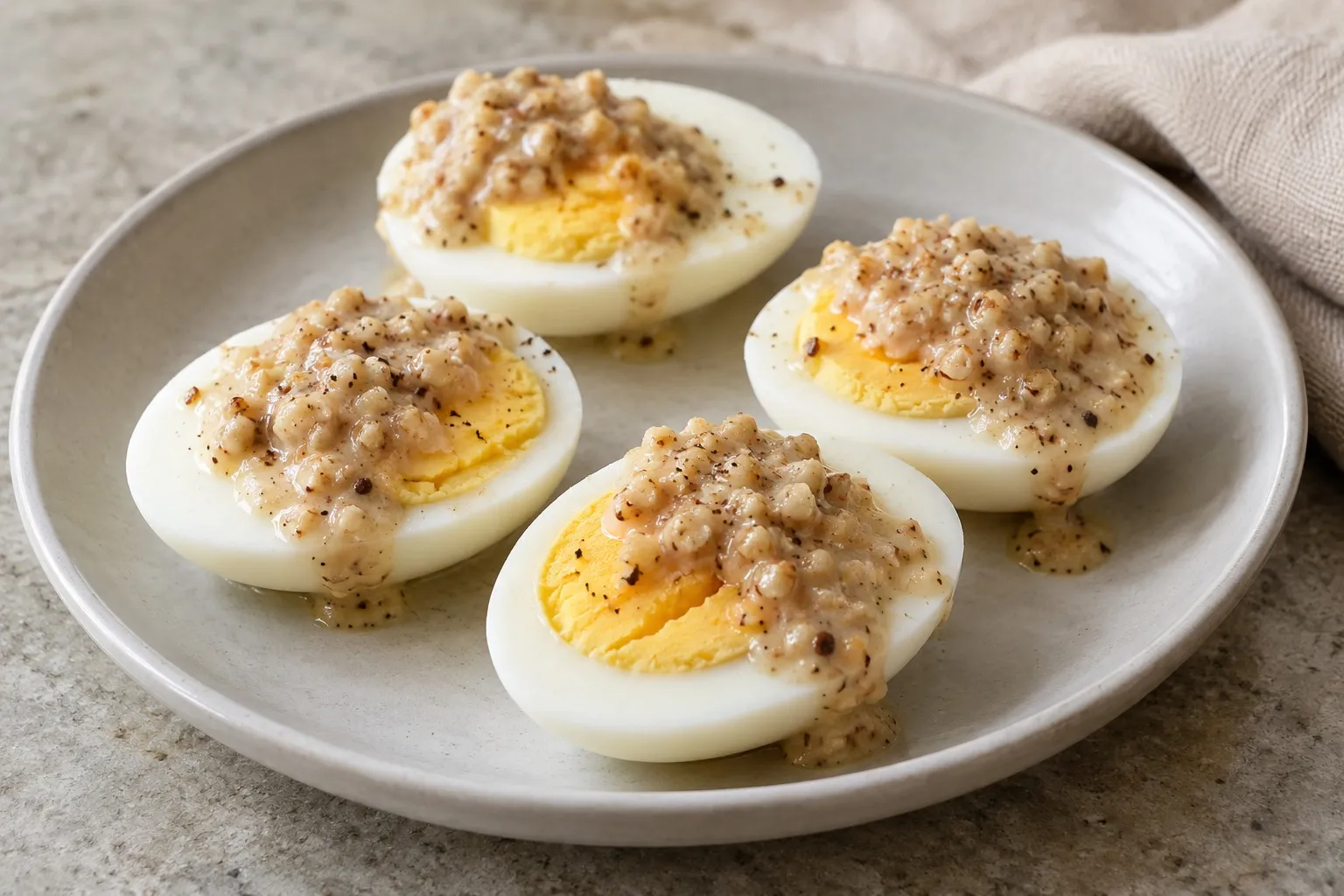
The appeal of Roman eggs with pine nut sauce is the combination on the spoon: soaked nuts ground with honey, vinegar, fish sauce, pepper, and a small measure of celery seed. The sauce should be fine enough to spoon over the cut eggs, with warm water added as needed to loosen it.
The source is In ovis apalis, a sauce for soft eggs, with soaked nuts whose species isn’t specified. Our version chooses pine nuts and firm-cooked halves. With honey and vinegar in the nut sauce, the appetizer has a different dressing from the more familiar mayonnaise. Two halves make a starter.
Chicken with fresh herbs and leeks
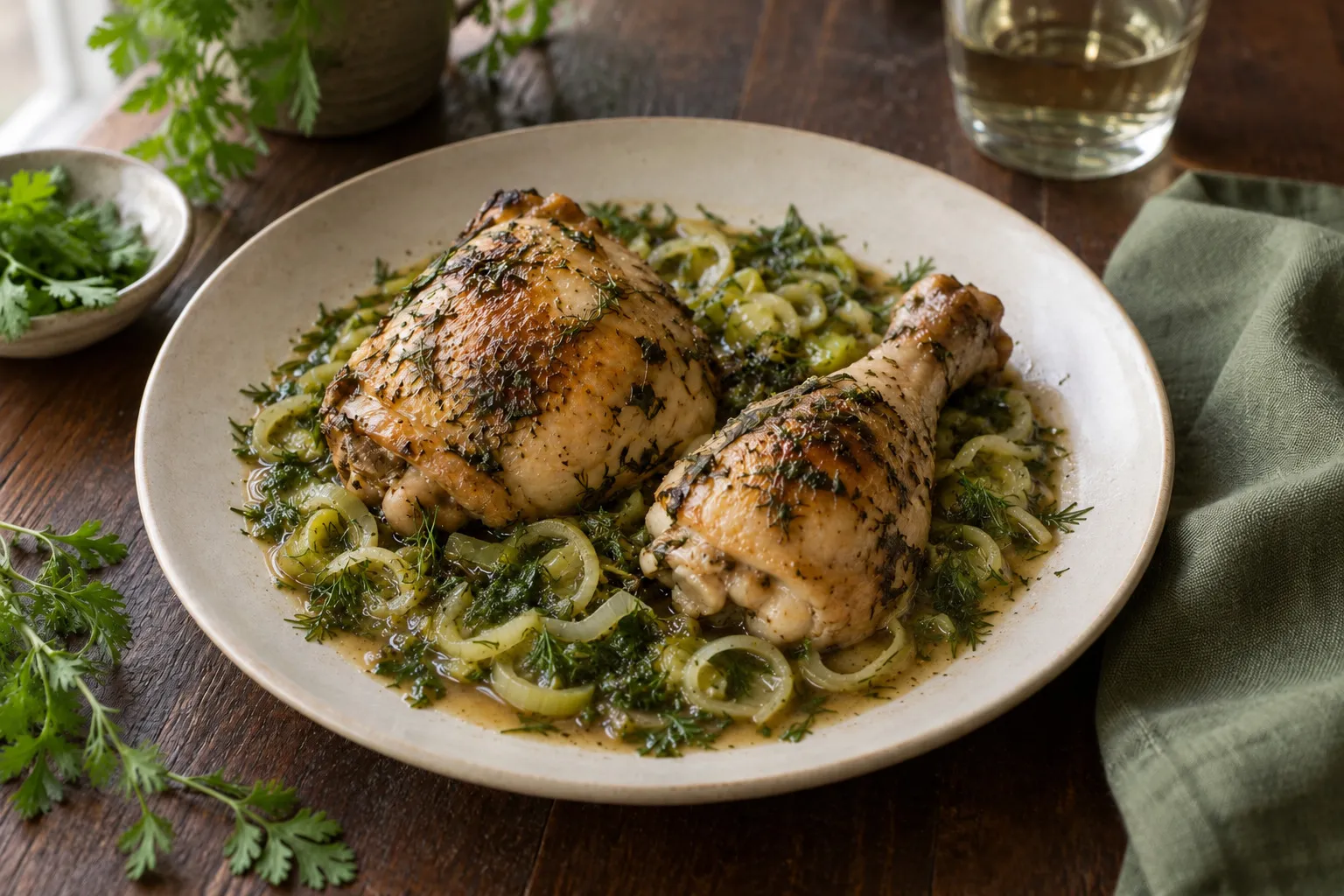
Pullum Frontonianum, chicken à la Fronto, offers another way into the collection. The person intended by the name Fronto is uncertain. Bone-in pieces cook with sliced leeks, dill, cilantro, and savory. Fish sauce seasons the pot; grape saba joins the cooking juices at the end.
Browning and a little low-sodium broth are added for the stovetop braise. The grape syrup waits until the finish, echoing the source’s order of serving the cooked chicken with defrutum and pepper. Chopped herbs remain with the leeks in the sauce instead of being tied into a bundle.
A simplified seafood stew
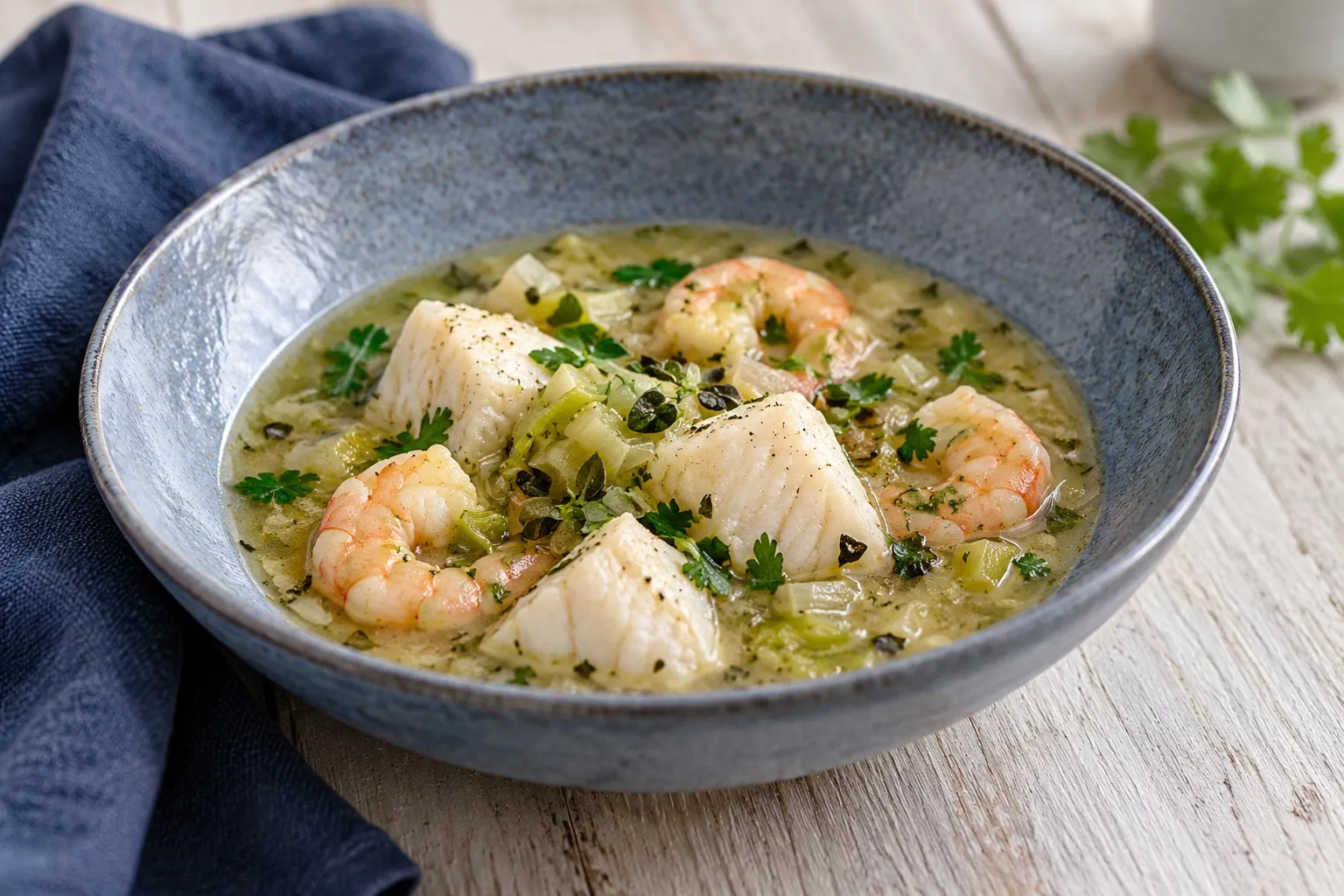
Minutal Marinum, our Roman-inspired seafood stew, is the most freely adapted dish in this selection. White fish and medium shrimp cook gently in a shallow mixture of wine, water, leeks, cilantro, oregano, fish sauce, and seasonings. Serve its four modest portions with bread if you want a fuller meal.
The ancient passage is busier: small fish dumplings, pieces of cooked fish, and sea anemones meet a separately pounded herb sauce. Crumbled tracta, a dough-based preparation, thickens the liquid. Our simpler fish-and-shrimp pot uses cornstarch and leaves out those other seafood preparations.
Pears, cumin, and pepper
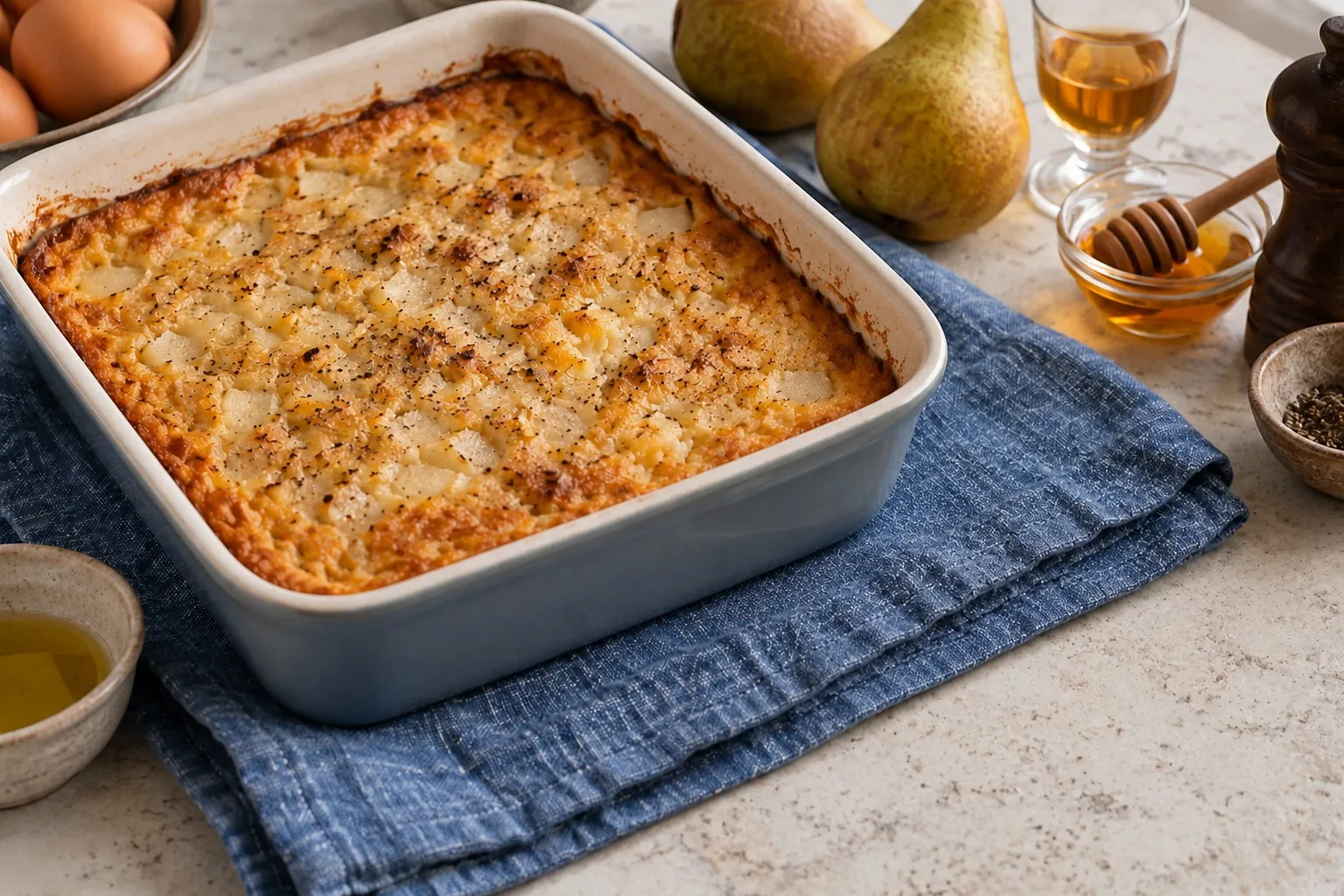
Patina de Piris, the spiced pear patina, returns us to the opening combination. Cooked pears are mashed, mixed with honey, sweet wine, cumin, pepper, fish sauce, oil, and eggs, then baked in a square pan. A final dusting of pepper echoes the source’s finish.
Expect a softly set fruit bake with some pear texture, not a smooth dairy custard. The sweet wine and fruit can vary in sweetness, while cumin, pepper, and fish sauce keep their places. Warm from the pan or chilled after prompt cooling, it gives a familiar pear a very different setting.
Choosing your first dish
For a first attempt, choose one main dish. Chicken with the egg starter and pear bake makes a varied menu; patties can take the chicken’s place if you prefer skillet cooking. The seafood adaptation is another main-course option. Putting all three on the table would mean more cooking and more food than most four-person dinners need.
The egg sauce and pear dish have make-ahead options in their recipes. The hot mains are better cooked near serving time, with individual temperature and texture checks taking precedence over the dinner schedule. Prepared weights for pears and leeks also make the shopping list more useful than a fixed fruit or vegetable count.
Bread and a simple green salad are enough alongside. This is a menu chosen for today’s dinner, not a recovered Roman sitting. The vinegar in the nut sauce, herbs around the chicken, and pepper over sweet pears provide the interest without an elaborate setting.
If you enjoy turning short historical directions into dinner, the five dishes from The Forme of Cury offer another collection to explore, with buttered pasta, spiced roots and a saffron cheese tart.
For the drinking side of the Roman table, explore what Romans drank besides wine on our sister site, Forgotten Drink.
Sources and adaptations
The companion recipes use De Re Coquinaria II.1.7 (patties), IV.2.35 (pears), VI.8.12 (chicken), IV.3.1 (seafood), and Book VII’s final egg-sauce passage (numbered VII.19.3 in some editions). The modern versions use the cited Latin passages and Vehling’s 1936 translation, with quantities and substitutions explained on each recipe page.
Read the Latin patties passage, pear passage, chicken passage, and seafood passage, alongside Vehling’s Book II, Book IV, Book VI, and Book VII, including the egg sauce. Quantities and modern cooking guidance are supplied in the companion recipes.