
- Vintage
- British cooking
- 1940s
- Wartime cooking
Cooking on the Kitchen Front: Five British Wartime Recipes
Explore five 1941 wartime adaptations that use vegetables, oats and careful portions of fat and meat, from Woolton pie to an eggless fruit cake.
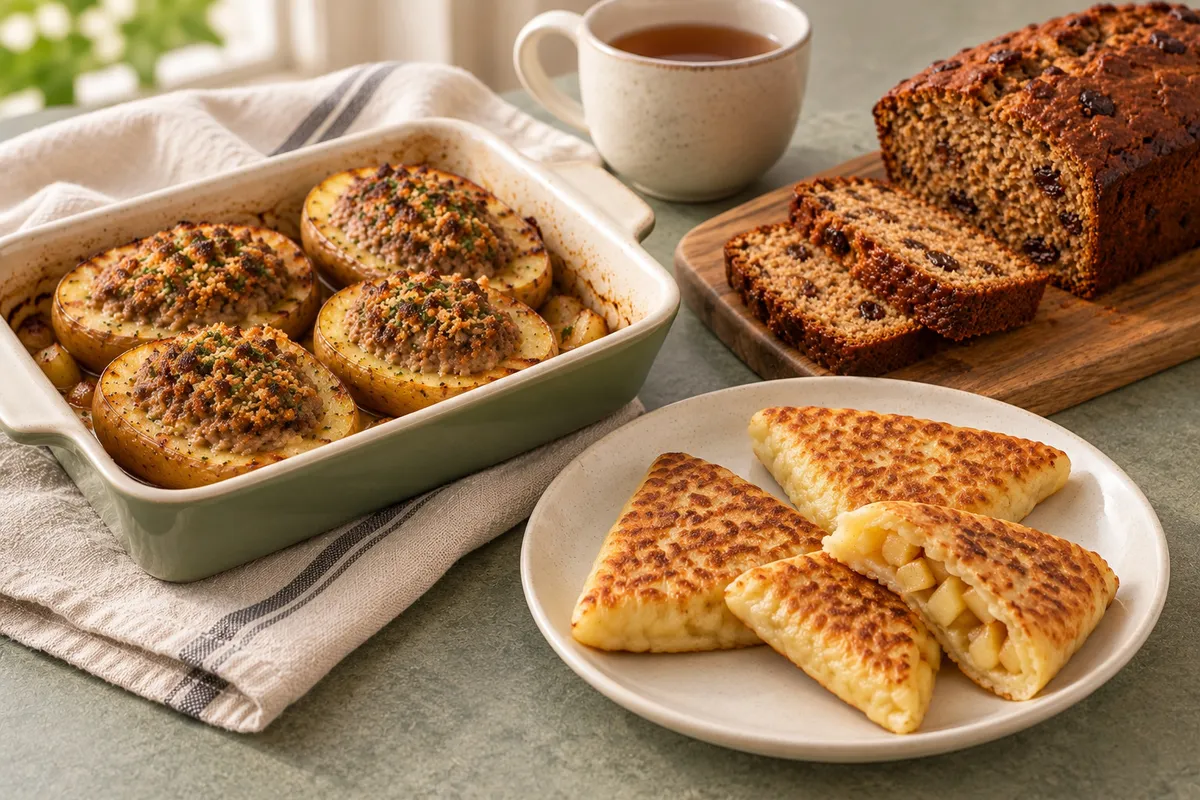
Ambrose Heath tells the cook to save the pieces scooped out of his sausage-filled potatoes and bake them alongside. He also encloses apple in potato dough and gives a fruit-and-spice cake batter an hour to stand before baking.
Four of the recipes come from Ambrose Heath’s Kitchen Front Recipes and Hints, published in 1941. The fifth, Lord Woolton Pie, belongs to the Ministry of Food recipe reproduced from The Times of April 26, 1941. In these adaptations, cooks use potatoes as sausage containers, a pie lid and dough for apple scones. Oats are used in the cake mixture and to thicken the pie filling.
Advice written for the kitchen
Heath’s foreword gives the book a more precise setting than its publication year alone. It collects material from the first seven months of his Kitchen Front broadcasts, June through December 1940. Some recipes had appeared in his scripts but were left out of the broadcasts for lack of time; others were included after requests from listeners. The printed book was therefore a way to return to details that could be difficult to catch over the radio.
His prologue, identified as an October 9, 1940 broadcast, argues for taking pleasure in food and paying attention to its preparation and appearance. The recipes include apple-filled potato scones and a fruit-and-spice cake to serve at tea, as well as the savory dishes.
Britain began food rationing in January 1940, with bacon, butter and sugar among the first foods controlled. Potatoes were unrationed, although cost and shop supplies still mattered. Heath uses that staple for both the sausage-filled main course and the apple-filled dough.
The adaptations below keep the dishes recognizable while providing modern measures and fuller methods. Their differences are useful when choosing what to cook: the potato pie needs a prepared lid, while the filled potatoes begin raw.
Potato lids, filled halves and apple scones
Lord Woolton Pie uses potato as a lid. The filling in our version is simmered root vegetables, with oats to thicken the liquid and yeast extract for savory flavor. Mashed potato goes over the top in a separate baking dish. Forked ridges give that final layer room to brown.
Our mix includes parsnips and turnips, and the mashed lid interprets the source’s potato-crust option. The pie comes from Foods of England’s reproduction of the Ministry recipe; the other four dishes come from Heath’s book.
For Deerfoot potatoes, the potato becomes a container. Heath offers two assemblies. One uses an apple corer to make a tunnel through a whole potato; the other halves the potato, scoops out a hollow and fills it with sausage meat. Our recipe follows the second route, with stock around the lower part of the potatoes while they bake.
Breadcrumbs make the sausage meat go farther. Heath also suggests keeping the pieces scooped from the potatoes and baking them alongside if they are large enough. The pieces removed to make the filling’s hollow can become part of the dinner too.
Lord Woolton Pie
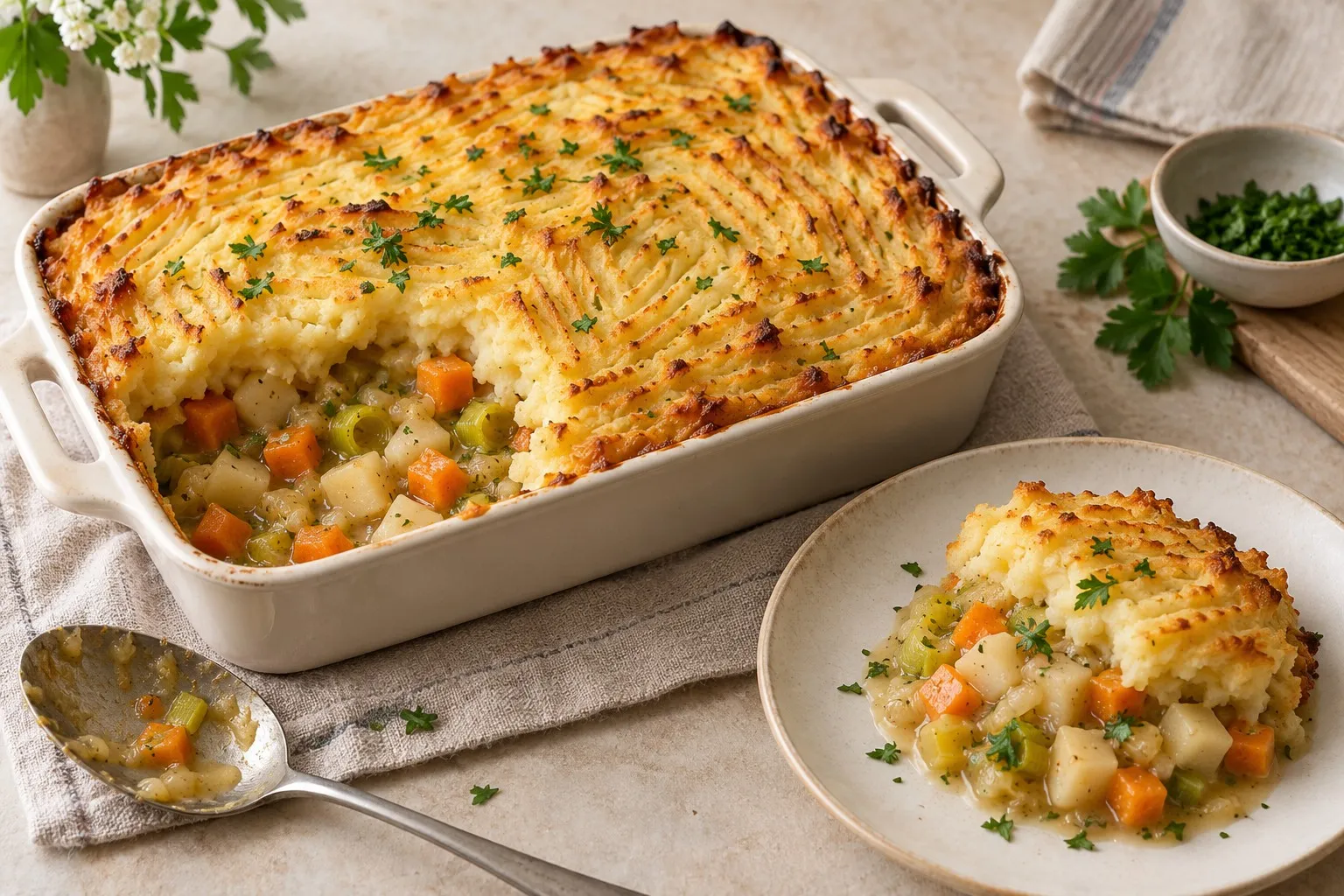
Source: Ministry recipe printed in The Times, April 26, 1941, via Foods of England; adapted vegetables, method and potato crust
Root vegetables, oats and yeast extract make a savory filling beneath mashed potato. This version uses parsnips and turnips among its vegetables and bakes the simmered filling in a separate dish. The ridged topping gives the surface room to brown.
Deerfoot Sausages in Potato Blankets
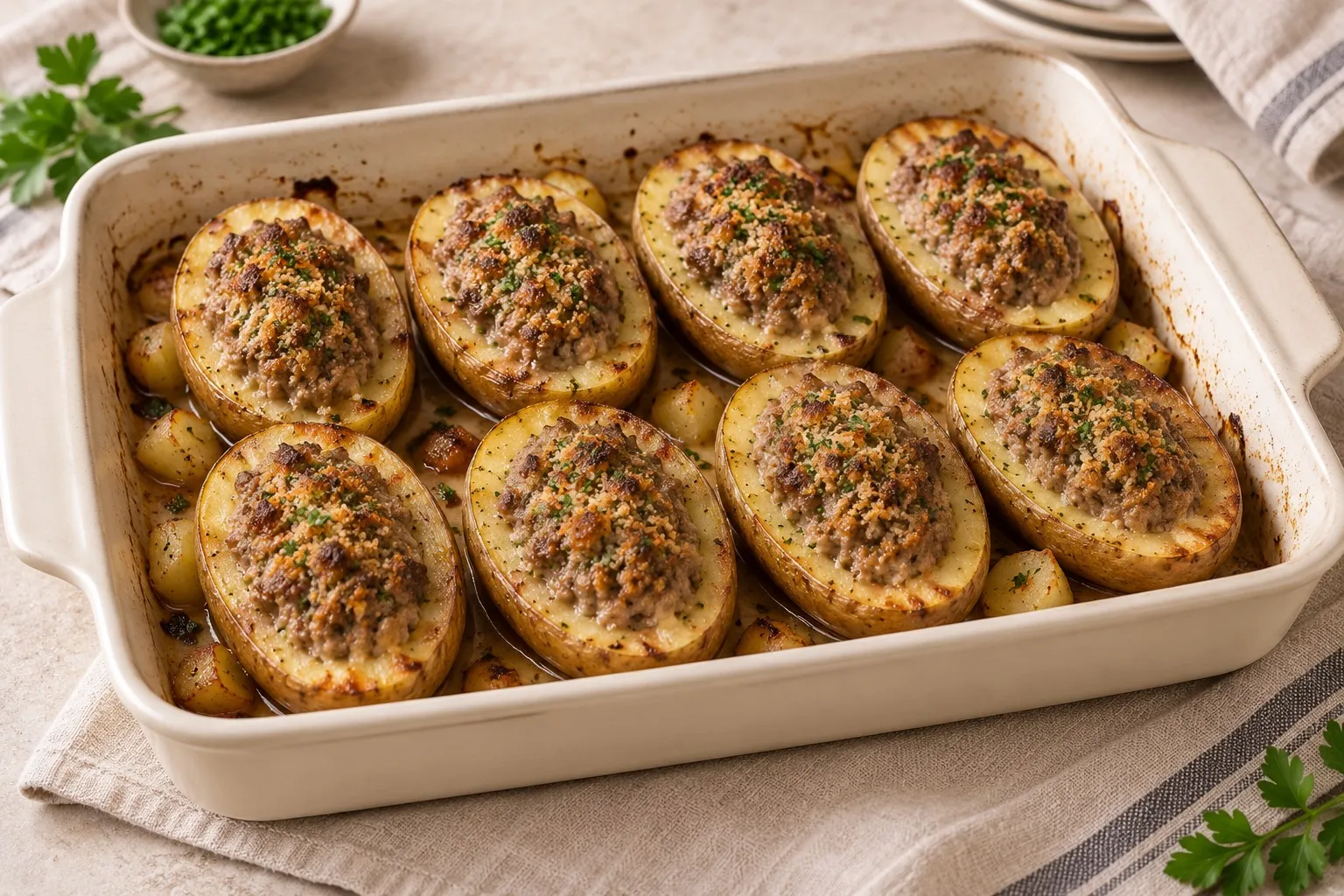
Source: Heath (1941), pp. 42–43
Hollowed raw potato halves hold pork sausage meat extended with breadcrumbs and parsley. Stock surrounds the lower part of the potatoes while the tops bake. Check both potato tenderness and the sausage-center temperature before serving.
The potato-apple cakes use a third approach: cooked potato becomes part of the dough itself. Heath describes thin rounds cut into triangular farls, with apple between paired pieces. Once cooked, they are opened to receive sugar and fat, closed again and returned to the heat.
Our scones simplify that sequence. Diced apple and sugar go inside folded dough before cooking, and the filled pieces are cut into wedges. The filled wedges go straight to the pan, without the source’s later reopening and reheating.
Heath’s comment about flour is especially practical. The amount depends on the potatoes: he distinguishes between wetter, “soapy” potatoes and floury ones, and warns against too much kneading. The modern method likewise adds flour gradually to warm mashed potato. Start with the cooked potato the recipe asks for, and pay attention to the dough as it comes together.
Wartime Potato-Apple Scones
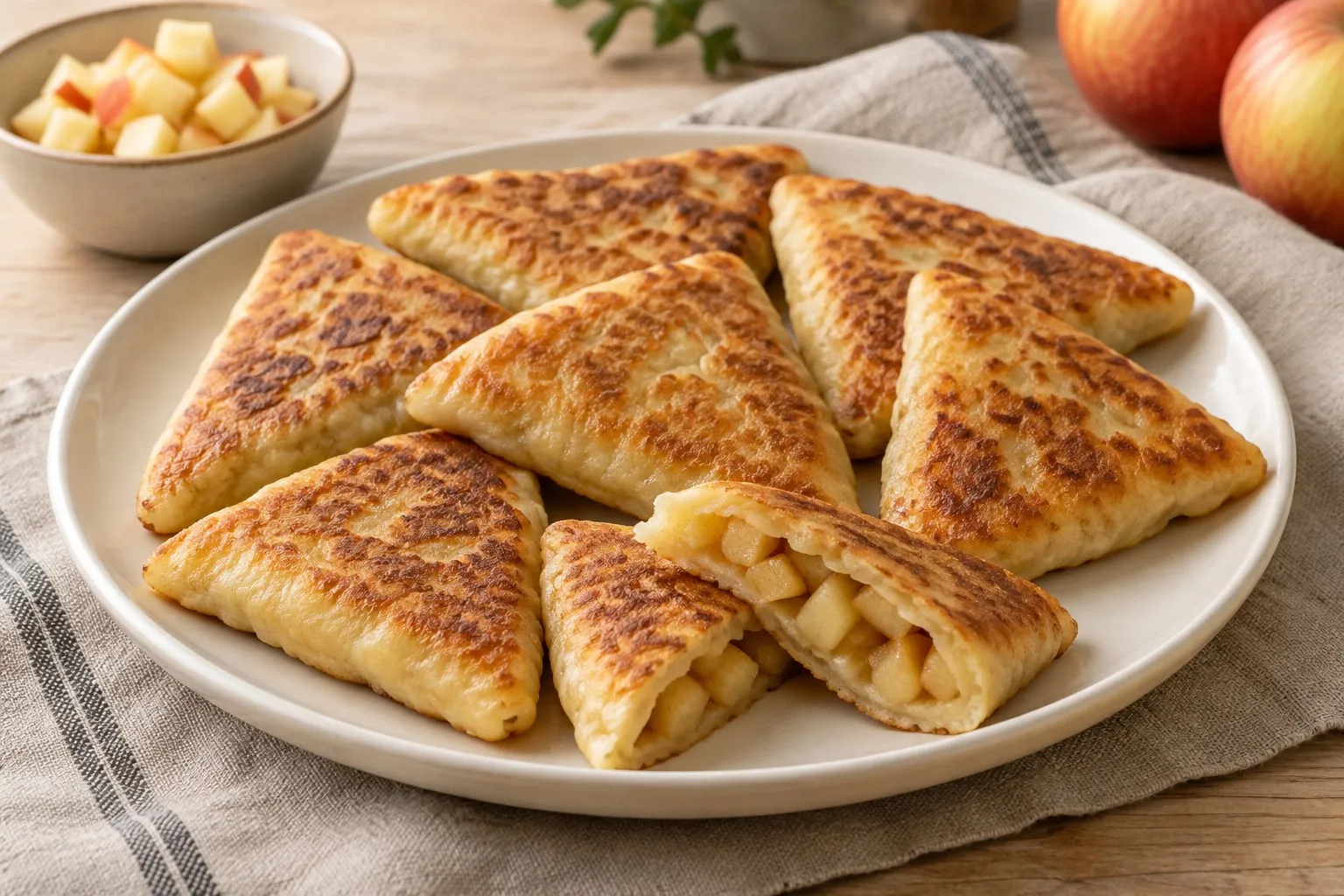
Source: Heath (1941), pp. 21–22; simplified Irish potato-cake assembly
Warm mashed potatoes and flour form a soft dough around diced apple and a little ginger. Our folded wedges simplify the source’s layered triangles and reheating sequence. Have the cooked potatoes ready before starting the recipe’s stated preparation time.
Two ways to approach baking
The cake leaves eggs out; the pastry uses oil instead of solid fat. Both fit the book’s attention to available ingredients, but they lead to different projects. One ends with a fruit loaf ready to cool, the other with an unbaked shell whose filling is still to come.
Heath’s cake includes an optional flour-and-fine-oatmeal mixture. Our loaf uses fine rolled oats, reduces the combined flour-and-oat amount while keeping about the source’s fat, sugar and fruit, and changes the pan and baking time. Those choices matter when comparing the two: the source’s covered tin and ninety-minute bake are not instructions to apply to the modern loaf.
One distinctive piece of the source sequence remains. The mixed cake batter rests for an hour before vinegar is added, then proceeds to baking. The modern recipe retains that pause. That quiet hour belongs in the afternoon’s plan, along with cooling before the first slice.
The pastry takes a shorter route. On the same page as a dripping-or-suet pastry, Heath gives a separate method using salad oil, tepid water and self-raising flour. The liquid goes into a well in the flour; the dough is brought together and rolled. Our single-crust version keeps the immediate rolling but adds oil and water separately, with a softer dough cue, for a 9-inch pie plate.
Wartime Eggless Fruit and Spice Cake
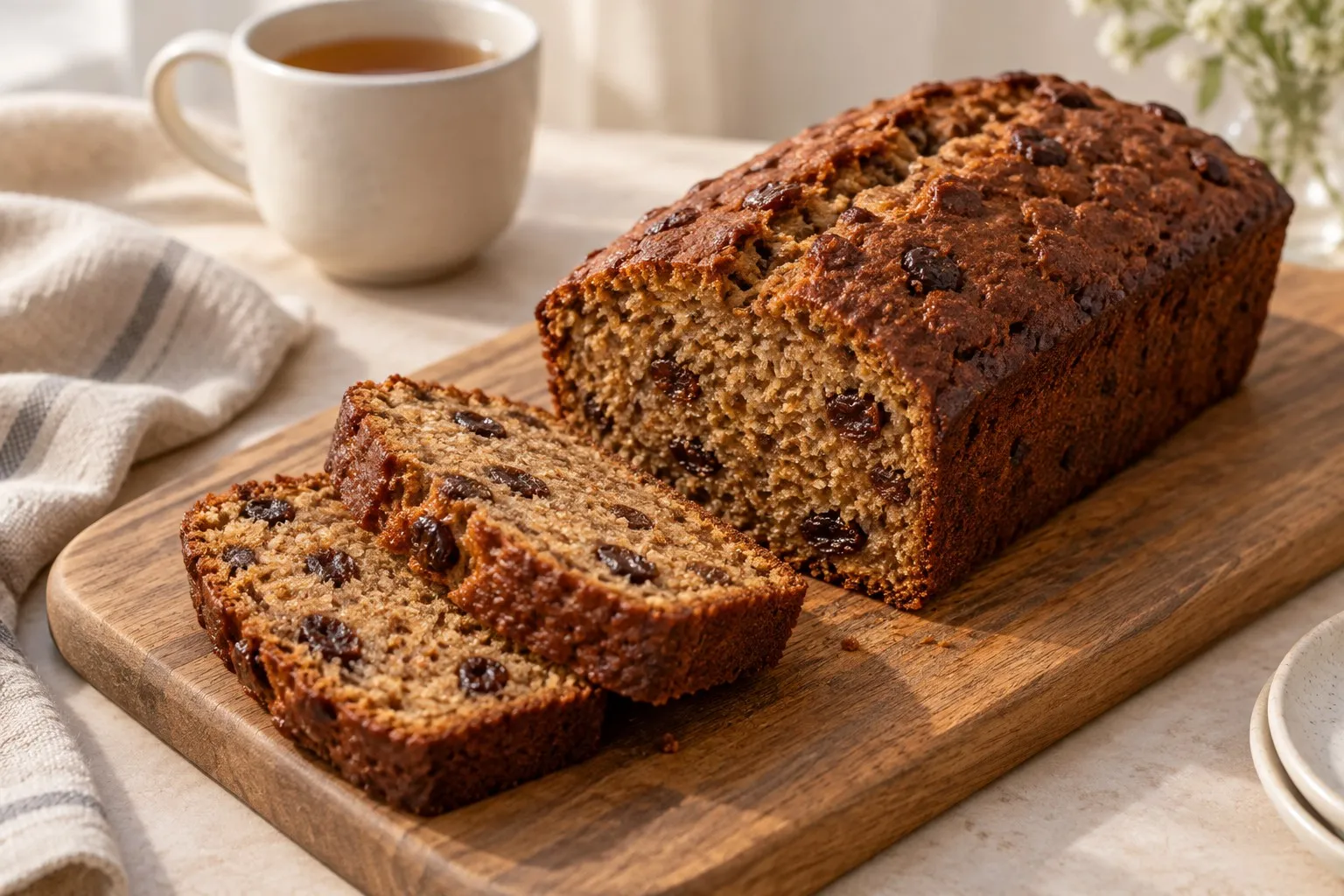
Source: Heath (1941), pp. 44–45
Oats, dried fruit and mixed spice make a dense tea loaf without eggs. The mixture rests before the vinegar is stirred in, then goes into the oven promptly. Allow for that rest and the cooling time when planning your afternoon tea.
Wartime Salad-Oil Pastry
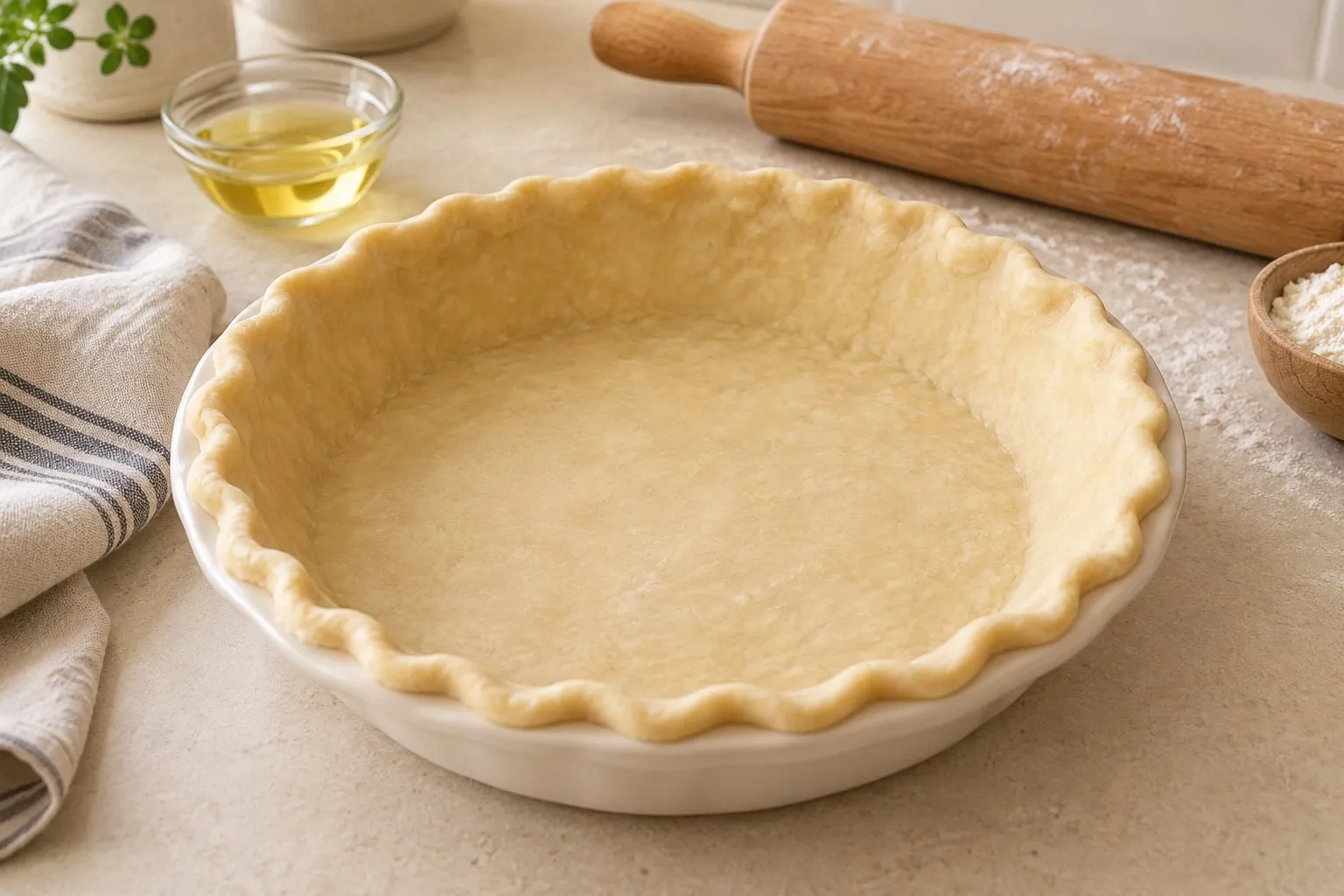
Source: Heath (1941), p. 47; modern single-crust quantities
Liquid oil, water and self-raising flour make a dough that can be rolled straight away. This recipe makes one 9-inch crust. Treat it as a component: choose your filling separately and follow that pie recipe’s baking and doneness instructions.
Planning: what to prepare ahead
For a savory main, the pie and sausage-filled potatoes make different demands on the cook. The pie starts with mashed potato already prepared for its topping. The sausage potatoes start raw and need enough time for both their shells and centers to cook as directed in the recipe. The scones also begin with cooked potato, while the oil pastry begins a pie that still needs a filling.
Boil and mash potatoes ahead for the pie lid and scones. Allow the cake batter its one-hour rest, then baking and cooling time before tea. Choose the filling before mixing the pastry so you know how the finished pie will bake.
For a main course, choose between the pie’s spoonable vegetable filling and the sausage potatoes’ individual halves. The potato-apple wedges are a shorter pan project once the hot mash is ready; the fruit cake asks for a much longer wait. The oil pastry is useful when a chosen pie recipe needs a crust, rather than as a finished dish on its own.
For another period’s approach to stretching a meal, the Depression-era USDA recipes combine meat with potatoes, cabbage and apples, and give beans and milk a larger part in dinner.
Source note
Ambrose Heath, Kitchen Front Recipes and Hints (London: Adam and Charles Black, 1941), foreword on printed page 9, prologue on pages 13–14, and recipes on pages 21–22, 42–45 and 47. The consulted copy states first publication in February 1941 and reprinting in May 1941. The foreword dates the collected broadcast material to June–December 1940.
Lord Woolton Pie draws on the Ministry of Food recipe attributed to The Times, April 26, 1941, in Foods of England’s reproduction. That is the source used here. It offers a potato crust or wheatmeal pastry. Our mashed-potato lid interprets the potato option; the vegetable mix, oat and extract balance and hot assembly are adaptations. The linked recipe pages distinguish their modern quantities and methods from the historical sources.