

Cheese Gingerbread No. 1 (1916)
Small molasses gingerbreads with mild Cheddar melted into the mixture, adapted from Langworthy and Hunt's June 1916 USDA bulletin.
- Original yieldYield
- Approximately 6 small gingerbreads, 1 per portionApproximately 6 small gingerbreads, 1 per portion
- PrepPrep time
- CookCook time
- TotalTotal time
Estimate includes preparation, about 5 minutes melting cheese, an 18 to 25 minute bake and a 5-minute rest; total allows the longer bake.
Published
Original recipe: Approximately 6 small gingerbreads, 1 per portion
The story behind the recipe
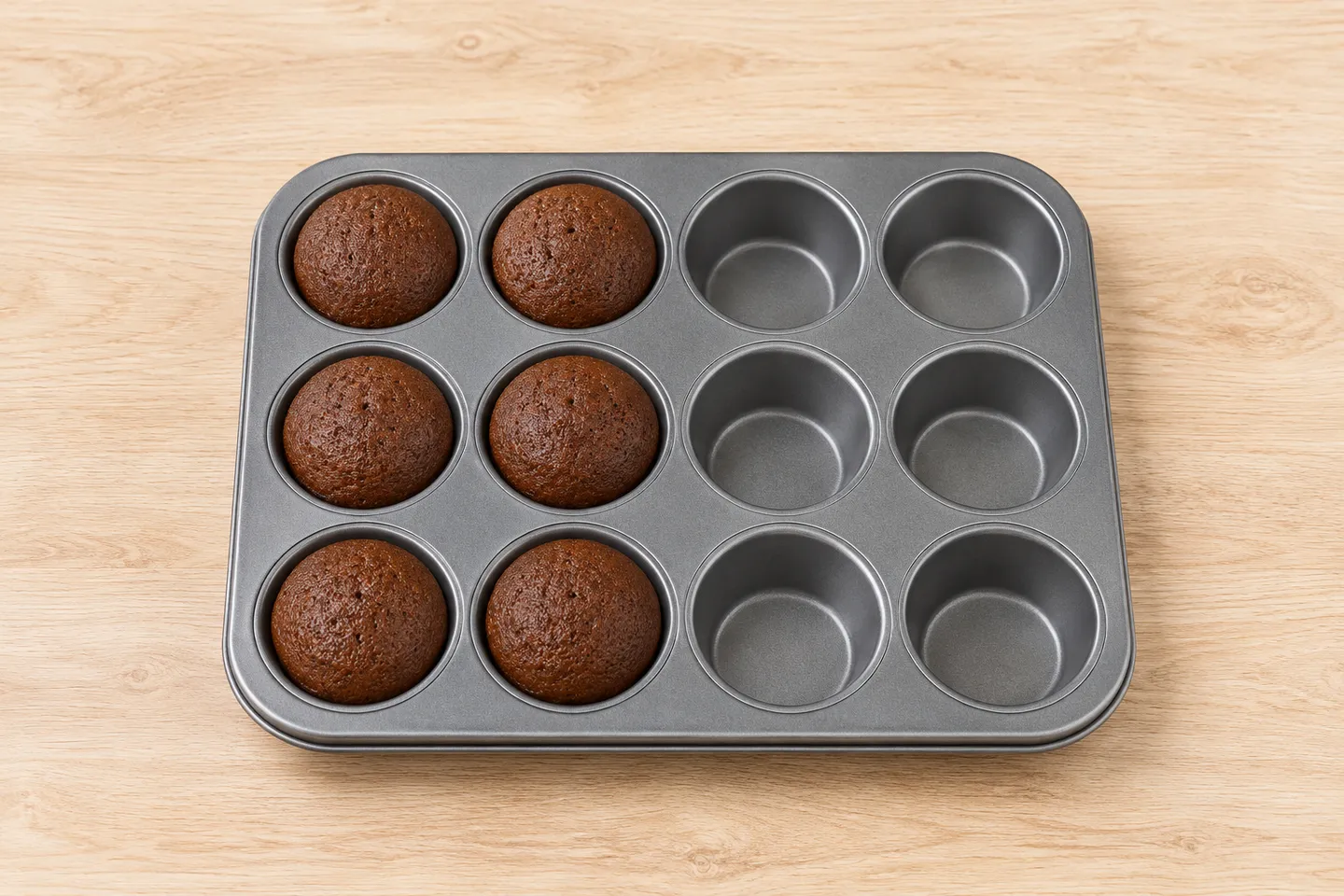
Cheese goes into warm molasses, not on top of the gingerbread. Finely grated mild Cheddar softens into the dark syrup before flour and water complete the mixture. Baked in small tins, these gingerbreads put ginger, molasses and cheese into one sweet bread rather than serving a wedge alongside it.
Look inside the mixture
There are no separately added eggs and no butter beaten into this batter. The butter allowance greases the tins. That makes the melting stage worth noticing: it incorporates cheese throughout the gingerbread instead of leaving distinct cubes or a grated topping. The cheese is an ingredient in the bread itself.
Read more about this recipe
An economical bulletin, a specific recipe
C. F. Langworthy and Caroline L. Hunt's Cheese and Its Economical Uses in the Diet offers this as Cheese Gingerbread No. 1. The copy used here is the June 1916 reprint of Farmers' Bulletin 487. Its title leaf also records the earlier issue date, February 26, 1912. The 1916 in our title identifies that printing, not an invention date.
The bulletin considers cheese alongside other foods and presents recipes for using it. That explains a cheese gingerbread's place in its pages. It doesn't tell us what this batch cost in a particular household, how much shortening was saved or how many eggs another gingerbread needed. Those questions require a comparable recipe, prices and a common serving basis.
Melt gently before mixing
The source places cheese and molasses in a double boiler. Gentle heat lets the cook work cheese through syrup while keeping the mixture away from direct burner heat. Use a heatproof bowl that sits securely above simmering water, with its base clear of the water, and stir as the grated cheese softens.
After the bowl comes off the heat, soda goes into the warm mixture. Flour, ginger and salt are prepared separately, then added alternately with water. Keep that order instead of treating this as an ordinary muffin recipe with all liquids mixed cold. The source supplies an operation as well as ingredients.
Small tins need a capacity
The historical direction ends with fifteen minutes in small buttered tins. It doesn't define their capacity or how full each should be. A modern muffin pan gives this version a clear vessel, with about 120 ml to each well's rim and space left above the mixture.
Our gem-pan and muffin-tin guide explains why cavity count alone doesn't establish portion size. Six filled wells in a twelve-well tray still make six cakes. There's no reason to stretch the batter across all twelve because the pan has room; the individual portion, not the tray's name, is the useful comparison.
Keep No. 1 distinct
The bulletin's No. 2 gingerbread is a different formula, with sugar and another handling sequence. It isn't a second name for this one. Keeping No. 1 together gives it a place beside the 1918 wartime recipes as an earlier comparison, rather than pretending it came from their books.
Serve a small cake warm or let it cool before eating. There is no icing, cheese glaze or invented historical accompaniment to shop for. The unusual choice is already inside the bread, where the recipe puts it.
Make it your wayOriginal: 6 servings · Makes Approximately 6 small gingerbreads, 1 per portion
Original recipe: Approximately 6 small gingerbreads, 1 per portion
Ingredients
For Approximately 6 small gingerbreads, 1 per portion. Quantities are shown as written.
Source measurement convention: Metric. Explicit unit definitions take precedence; unconfirmed measures must be checked before conversion.
Original quantities for Approximately 6 small gingerbreads, 1 per portion.
- All-purpose flour120 g
- Mild Cheddar cheese, finely grated57 g
- Baking molasses120 ml
- Water60 ml
- Baking soda1/2 tsp
- Ground ginger1 tsp
- Fine salt1/4 tsp
- Unsalted butter, for greasing5 g
Measurement notes
- baking soda, ground ginger, fine salt: US tsp: 1 = 4.9289 ml (rounded).
Measurement notes
Original ingredients
- 120 g all-purpose flour
- 57 g mild Cheddar cheese, finely grated
- 120 ml baking molasses
- 60 ml water
- 1/2 US tsp baking sodaUS tsp: 1 = 4.9289 ml (rounded).
- 1 US tsp ground gingerUS tsp: 1 = 4.9289 ml (rounded).
- 1/4 US tsp fine saltUS tsp: 1 = 4.9289 ml (rounded).
- 5 g unsalted butter, for greasing
Equipment
 12-cup metal muffin pan (about 120 ml per well)
 Small saucepan
- Heatproof bowl sized to sit securely over the saucepan
 Mixing bowls
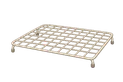 Wire cooling rack
Instructions
Prepare oven and muffin wells
Heat a conventional oven to 350°F (175°C). Grease the wells you will use with the listed butter. At the original batch, use about 6 wells holding approximately 120 ml each; changed quantities need more or fewer wells of that capacity. Prepare enough wells and oven space for prompt baking, or mix successive separate batches so warm soda-and-molasses batter doesn't wait through a full bake.
Melt cheese into molasses
Put the molasses and grated Cheddar in a heatproof bowl set securely above gently simmering water, with its base clear of the water. Stir until the cheese melts and disperses, about 5 minutes as a starting estimate. Carefully remove from the heat.
Add soda and combine dry ingredients
Stir the baking soda into the warm cheese-and-molasses mixture, leaving room for foaming. Separately sift or whisk the flour, ginger and salt thoroughly to remove lumps.
Finish and portion the mixture
Stir dry ingredients into the molasses mixture in two additions, alternating with the listed water, until combined. Don't taste raw mixture. Divide between prepared wells, leaving at least one-third empty; use another well rather than overfilling.
Bake until set
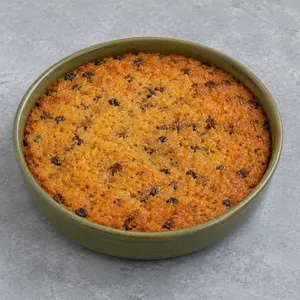
Bake about 18 to 25 minutes, checking from 18 minutes, until tops spring back gently and a central skewer has no wet batter. Keep the oven setting and cues for each separately mixed batch; don't multiply baking time with ingredients.
Cool and serve
Rest in the pan about 5 minutes, loosen carefully and transfer to a wire rack. Serve warm or cool, allowing approximately 1 small cake per portion.
Recipe notes
When adjusting quantities
Use the same well size, leaving expansion room. Prepare enough wells and oven space for prompt baking, or mix successive separate batches. Don't leave the warm soda-and-molasses batter waiting through a full bake. Oven temperature and baking time don't multiply with the ingredients.
Original recipe notes
These notes describe the original recipe. Quantities mentioned here do not change when you adjust servings.
This is a modern half batch of No. 1. A 240 ml working cup gives 120 ml molasses and 60 ml water; flour assumes 120 g per modern cup. Half the source's four weight ounces of cheese is 56.699 g, rounded to 57 g. Mild Cheddar, fine grating, US level spoons and greasing butter are specific modern choices. No measured saving or egg-equivalent amount is claimed.
The source gives small buttered tins and fifteen minutes without an oven setting or cavity capacity. The 120 ml wells, 350°F (175°C) conventional oven, checking window, headroom and six-cake estimate are supplied here. Follow this complete formula; No. 2 has a different balance.
Milk and wheat are present. No eggs are listed, but check actual ingredient labels. Don't taste raw flour mixture; see FDA flour guidance. Refrigerate leftovers promptly after cooling, within 2 hours or 1 hour above 90°F (32°C), following FDA food handling. No particular shelf life is established.
Storage
Refrigerate remaining cakes promptly after cooling, within 2 hours or 1 hour above 90°F (32°C). No room-temperature shelf life is established.
Read the scaling guide. Times, temperatures and equipment need their own consideration. Open the recipe tool to review and correct individual amounts.
Sources and attribution
C. F. Langworthy and Caroline L. Hunt, Cheese and Its Economical Uses in the Diet, Farmers' Bulletin 487, June 1916 reprint, Cheese Gingerbread No. 1, p. 37.
Adapted from Cheese Gingerbread No. 1, p. 37, in Langworthy and Hunt's Cheese and Its Economical Uses in the Diet, June 1916 reprint.
Recipe details
- Recipe tradition
- Vintage
- Course or meal
- Baking
- Source decade
- 1910s
- Cooking method
- Oven
- Browse category
- Baking & Desserts